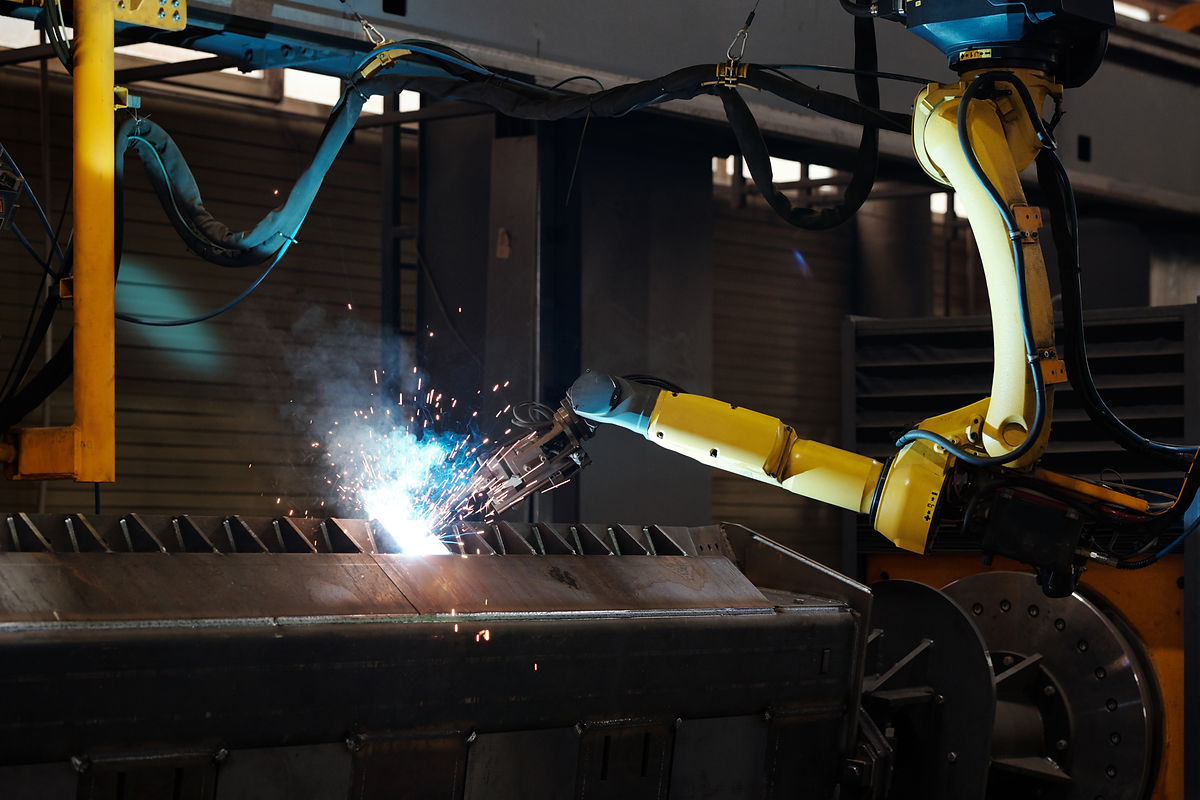
One of the things that has changed the manufacturing industry is robotic welding. It offers companies some of the best and unmatched results thanks to its precision, efficiency and speed.
According to a report by Business Wire, the robot used in the welding industry was valued at $5,450.5 million in 2018 and is expected to reach $10,784.4 million by 2026. As many companies are shifting towards automation and the technological revolution, many need to understand how robotic welding works.
Having become a critical part of manufacturing, anyone running an industry is interested in knowing this technology’s nitty-gritty aspects.
What Is Industrial Robot Welding?
It is the process of utilizing machines to assist in welding within the common. Welding is best defined as joining one or more pieces, a vital part of manufacturing. The welding robots are superior to many technical workers, so some companies have adopted vision-aided robotic welding, thus assisting in pre-weld calibrations.
In companies where machines aren’t part of the solution, welding is done by skilled workers. However, with the latest technological advancements, robots have taken a huge chunk of the work. That is quite effective for organizations with lots of tasks to handle. That ranges from automotive manufacturing to heavy machinery and aerospace industries.

Types Of Welding Robots
A couple of welding robots are suitable for a couple of different functions. Here are the most common types:
Shielded Metal Arc Welding Robots (SMAW)
These are also called stick welding and offer high-quality welds at an affordable rate. These items create an arc between a consumable electrode and the welding material. It uses a flux-coated electrode during welding. The robot is best known for its versatility. People can use it on different alloys and metals.
Gas Tungsten Arc
It uses a consumable tungsten electrode to produce gas. The method is best known for producing high-quality welds, offering clean finishes and incredible quality. This type of robotic welding automation is crucial in nuclear plant and aerospace engineering.
Plasma Welding Robot
With this type of robot, a plasma arc will be useful as a heat source to melt two metals. It uses a plasma jet known as a constructed arc to melt metal, thus creating a controlled weld. In the robotic tool, plasma gas prevents oxidation and stabilizes the arc.
Hybrid Laser Welding
Hybrid laser welding combines arc and light welding. With this method, laser welding penetrates deeper with amazing gap-bridging techniques. Thus, the technique offers high-speed production, ensuring people get accurate results.
Resistance Spot Welding
It involves having a strong electric current pass through two metallic pieces. The heat melts the metal, thus putting the two pieces together. With resistance welding, the welders concentrate on welding individual spots instead of just dealing with one line.
The automotive industry, for instance, greatly utilizes resistance spot welding thanks to its high-resolution encoder that controls the motion of the welding robot gun.
Collaborative Robot Welding
These are also referred to as cobots. Cobot’s market share value in 2024 was valued at $1.9 billion and is bound to reach $11.8 billion by 2030. Therefore, if industrial welding involves humans, these are the ideal robots to incorporate into your workspace.
You are not expected to house them in a welding robot cell; the only safety preventive measures to take is to deal with splatter and flash. Having cobots in your industrial working space means you can deploy and redeploy them to handle a few tasks since they are easily programmable.

How Does Robotic Welding Work?
There are a couple of components useful in automated robotic welding. These are all the things that assist in perfecting tasks to precision and improving efficiency. Here is what to expect during robo weld:
The Robot
At the heart of any robotic welding application is the robot itself. An industrial robot will have multiple joints and articulated arms, offering flexibility and the ability to move in different directions. The best part about these items is that they make the welding process easy and smooth.
The Controller
The controller works as the robot’s brain. It is the one thing that is useful in carrying out all the welding activities. That includes speeds, specific movements, and handling of all the required welding parameters. Most industries program their controller using a handheld device that ensures the operators easily put all the robotic movements’ instructions.
The Welding Torch
A welding torch assists in all the welding operations happening in different companies so that the welders can conduct the operations smoothly. Every company will determine which welding torch is crucial. In most cases, the welding torch will be equipped with several sensors. That allows the welding process to yield the right results at all times.
The Power Supply
The power supply is crucial in creating the ideal welding arc. The only way to know which power supply is crucial for the welding process is by looking at the materials, the thickness, and the welding process the company uses. Using the right power supply means getting consistent welds and maintaining an incredible arc.

The Welding Process
The next steps involve welding. Here is how it’s done:
Program The Automated Welding Robot
The first and crucial step in welding is programming the machine. That involves creating a detailed program that handles the specific robotic speeds, movement, and welding parameters. The program is often created using offline programming software.
Load The Workpiece
Your next thing should be handling the workpiece. Put it into the welding cell and ensure it is properly positioned. You can position the workpiece manually or find a machine to help place it accurately.
Start The Welding Process
After your workpiece is in place, you should begin the welding process. Luckily, a robot is programmed to move on a specific axis, having a welding torch align the welding joint and applying the necessary heat when needed, thus adding filler materials to have a perfect weld.
Monitoring And Adjustment
When welding, the robot monitors various parameters, such as heat input, weld quality and arc stability. If you detect a few issues, the system will help make real-time adjustments, thus making sure there are consistent welds.
What Are The Benefits Of Robotic Welding?
A couple of added advantages of utilizing robots in your welding industry exist. Having an automated welding machine in your industry means there are a couple of things to consider if this has seemed like an attractive option for most people. Here are some of the advantages:
Increased Productivity
Robotic welders have a lot done in a few hours compared to those manually doing the chores. With robotic welding systems, one can operate continuously without fatigue, allowing you to rest, increasing production times and output. Unlike humans, robots make fewer mistakes and can achieve up to 85% efficiency compared to people. A robot that doesn’t tire won’t need a break or vacation, so you will have all the operations running throughout the year.
Improved Quality
In the robotic world, there are no distractions, and the robot is constantly running at the same speed. The best thing about robots is that they can perform welds with high precision and consistency. As a result, you are assured of high-quality welds every single time. Welding robots assist with projects that have to follow stringent quality requirements.
According to a report by Gartner, 60% of firms believed that robots were an added advantage to their businesses, thus improving quality and curbing chronic labor shortages.
Reduces Waste
The goal is to ensure minimal or no waste products at all costs. With robotic welding automation, you’re assured of a reduction in welding mistakes that are often associated with humans.
Notably, since with robots you don’t experience fatigue problems, companies can comfortably weld and get great results at all times. Avoiding mistakes means you don’t have to worry about the budget being overboard or using more money to correct the mistakes. Robotic welders offer effective results, thus increasing the consumable’s lifespan.
Enhanced Safety
All companies put their workers’ safety at the top. U.S. Bureau of Statistics states that there are over 560,000 workers who get injured while working in the welding industry. Automating the welding process means the workers are no longer actively working in hazardous environments, reducing the risk of injury.
If robots were in the welding industry, it would be easier for humans and machines to interact in a safe environment while carrying out all the tasks effectively. Notably, robotic welding systems can be easily reprogrammed to handle different tasks, thus making them versatile tools for various applications.
Data Collection And Analysis
Every company wants to know which areas require improvement, especially in the welding industry. There is no better way to collect data to analyze than using robotic welding systems.
With these machines, you can easily collect data during the welding process, thus allowing for real-time monitoring and analysis. Therefore, this data would be useful in optimizing the welding process, thus improving quality and reducing downtime.
Unlocking Precision in Robotic Welding: The Role of Force Torque Sensors
Force torque sensors play an important role in enhancing the effectiveness of robotic welding systems. By providing precise feedback on the force and torque applied during welding operations, these sensors enable robots to adjust in real time, ensuring optimal welding parameters and superior weld quality.
This level of precision not only boosts productivity but also reduces waste, enhances safety, and leads to improved consistency in welds, addressing common challenges faced in traditional welding processes.
As the demand for automated solutions in manufacturing continues to grow, incorporating force torque sensors into welding robots will be essential for industries aiming to stay competitive and deliver high-quality results.
If you’re looking to elevate your welding operations through advanced robotic solutions and force torque sensor integration, contact Bota Systems today to explore how our sensors can transform your manufacturing processes. Let’s work together to enhance efficiency and precision in your operations!
Sources
Global Robotic Welding Market (2019 to 2026) – by Type, End User and Payload – ResearchAndMarkets.com https://www.businesswire.com/news/home/20200318005371/en/Global-Robotic-Welding-Market-2019-to-2026—by-Type-End-User-and-Payload—ResearchAndMarkets.com
A review of vision-aided robotic welding https://www.sciencedirect.com/science/article/abs/pii/S0166361520305601?via%3Dihub
Collaborative Robot Market https://www.marketsandmarkets.com/Market-Reports/collaborative-robot-market-194541294.html
Humanoid Robots Have Potential to Fully Automate Warehouse Processes https://www.gartner.com/en/newsroom/press-releases/2024-04-02-humanoid-robots-have-potential-to-fully-automate-warehouse-processes
U.S Bureau Of Labor Statistics https://www.bls.gov/