
In 2019, the global construction robot market was valued at roughly $2.4 billion and analysts project it will reach an impressive $7.9 billion by 2027, representing a compound annual growth rate (CAGR) of about 23%. So, what’s driving the interest in robots for construction?
Previously viewed as slow to embrace technological change, many construction companies now employ robots to perform various tasks and streamline operations.
In this blog post, we’ll explore some types, applications, and benefits of construction robots and how they’re transforming building processes.
Common Types of Construction Robots
Construction companies and workers use a variety of robots in building projects. Let’s explore common construction robots and their use cases:
Bricklaying Robots
Traditional construction projects relied heavily on masons to lay bricks. Not anymore. Now, modern construction projects use bricklaying robots. These robots can independently lay bricks with utmost precision, accelerating the building process and reducing the likelihood of human error.
For instance, the Hadrian X bricklaying robot can lay up to 200 bricks per hour. In contrast, the average human bricklayer lays between 300 to 500 bricks daily.
Drones
Drones have a variety of applications in different industries, including construction. Construction professionals use drones to perform the following tasks:
Inspect construction sites to prevent theft, vandalism, and intrusion
Identify potential hazards to workers on site
Capture images and videos for project documentation
For example, Pomerleau, a Canadian construction firm, uses drones for inspections, photography, and surveying.
Demolition Robots

Construction involves dangerous tasks such as demolition. Human workers require specialized training and protective gear to perform demolition safely. As a result, modern construction projects often use remote-controlled demolition robots to safeguard construction workers.
It’s no wonder the global demolition robot market size was valued at $412.4 million in 2023, and analysts project it will reach a remarkable $1.28 billion valuation by 2032, representing a CAGR of 13.42% between 2023 and 2032.
3D Printing Robots
3D printing in construction is a process that uses 3D printing robots to create construction components by layering materials on top of each other. It’s also known as additive construction.
Unlike traditional methods that can take months, 3D printing robots can complete tasks within just a few days. These construction robots are typically found in prefab facilities where constructors produce columns, beams, and other components.
Diamond Age, an American construction firm, has successfully built 25 houses using 3D printing technology, and the firm’s co-founder and CTO predicts robots will build all our homes in the future.
Layout Robots
Construction layout is vital in the building process because it lays the foundation for subsequent steps. Unfortunately, the traditional layout process takes substantial time because it’s done manually using rudimentary tools and methods. Additionally, it puts construction workers at risk of strain injuries.
That’s where construction layout robots come in. These specialized robots can autonomously print design plans directly onto site floors. This expedites the layout process and alleviates contractors from performing strenuous tasks.
The FieldPrinter is a prime example of a layout robot. The compact layout robot that was launched in 2019 can navigate around obstacles easily and be controlled remotely via iPad.
Autonomous Construction Vehicles
Autonomous or semi-autonomous construction vehicles use sensors, cameras, radar, and other sophisticated technological features to navigate around construction sites with minimal or no human intervention.
Common types of autonomous or semi-autonomous construction vehicles include bulldozers, trucks, and excavators. These vehicles perform tasks such as paving, excavation, and compacting with exceptional precision, allowing human workers to focus on other important tasks.
Exoskeletons
Construction involves many burdensome tasks, such as lifting and carrying heavy loads. These tasks jeopardize the safety of human workers. That’s where exoskeletons come in.
Exoskeletons provide workers with mechanical support, reducing the physical strain of performing strenuous tasks.
While it’s still rare to come across construction workers in exoskeletons on construction sites, there’s a huge investment in them. For instance, in a bid to promote the adoption of exoskeletons in the construction industry across Europe, the European Union launched the Exskallerate project that offers trial exoskeletons to construction SMEs for free.
Welding Robots
Manual welding takes substantial time and compromises the safety of human workers. Human welders are also prone to making errors, resulting in inconsistent results. Welding robots resolve these issues.
Compared to human welders, welding robots are faster, more accurate, and work tirelessly. As a result, many construction professionals now use them on sites to perform tasks such as welding steel beams. For instance, in Japan, construction firms are using welding robots to cope with labor shortages.
Benefits of Construction Robots
Employing robotics in construction offers numerous benefits. These benefits include:
Tackling Labor Shortages
Many construction companies face staffing challenges. In fact, about nine out of ten construction firms are struggling to find talent.
Construction robots can mitigate this challenge, ensuring projects don’t stall or delay. This is especially beneficial for large-scale projects requiring many skilled workers.
Lower Operating Costs
Labor accounts for roughly 20 to 35% of total construction costs, while materials account for 65 to 80%. However, labor costs can spike to up to 40% of total expenses if highly skilled workers are required.
Construction robots can lower labor costs by automating labor-intensive tasks. Additionally, they can perform tasks with remarkable precision, reducing material waste and reducing material expenses.
Enhanced Worker Safety
Construction workers are more susceptible to workplace injuries than workers in many other industries. In fact, it’s estimated the industry accounts for just over two out of ten of all fatal workplace accidents.
Fortunately, robotic innovations such as exoskeletons can improve worker safety. In fact, companies that use robots have experienced a 4.7% decline in workplace injuries compared to those that don’t use them.
Increased Workplace Efficiency
Human workers can take substantial time to perform tasks such as bricklaying, excavating, and welding. Construction robots can perform these tasks faster, minimizing downtime and delays.
Improved Quality Control
Construction robots perform tasks such as bricklaying, welding, and construction layout with exceptional precision. This accuracy results in high-quality work, eliminating the need for rework. Additionally, drones can spot issues early, allowing construction project managers to resolve them before they worsen.
Enhanced Productivity
Construction robots can work tirelessly without experiencing fatigue, unlike human workers. Robots can handle physically demanding tasks such as lifting and transporting heavy loads without getting tired, allowing construction professionals to handle other higher-level, important tasks.
Enable On-Demand Tasks
Robots facilitate on-site tasks. For instance, with 3D printing robots, it’s possible to prefabricate components on-site, eliminating the need to prefabricate them elsewhere. This accelerates the building process.
Sustainability
The construction sector accounts for a whopping 37% of global emissions. Robots can reduce emissions by reducing material waste and optimizing material use. For instance, painting robots can reduce the need for rework and reduce the amount of scrap that ends up in landfills. This means robots aren’t just good for businesses but also for the planet.
Future Trends to Watch for in Construction Robotics

The tech industry is dynamic. As the industry evolves, here are key trends to watch for in construction robotics:
Closer Collaboration Between Humans and Robots
Many construction professionals worry about robots displacing them. While these worries aren’t entirely unfounded, it’s more likely robots will complement humans. Robots will handle mundane and risky tasks, allowing humans to focus on other core tasks.
Increased Robot Adoption
Robots are becoming cheaper to produce due to advancements in robotic technology. As robotic technology becomes more affordable, more SMEs in the construction industry will adopt robotics to streamline their operations and compete favorably with larger firms.
Enhanced Robot Efficiency
Robots will become ”smarter.” As artificial intelligence (AI) and machine learning (ML) develop rapidly, robots will continuously become better at performing multiple tasks.
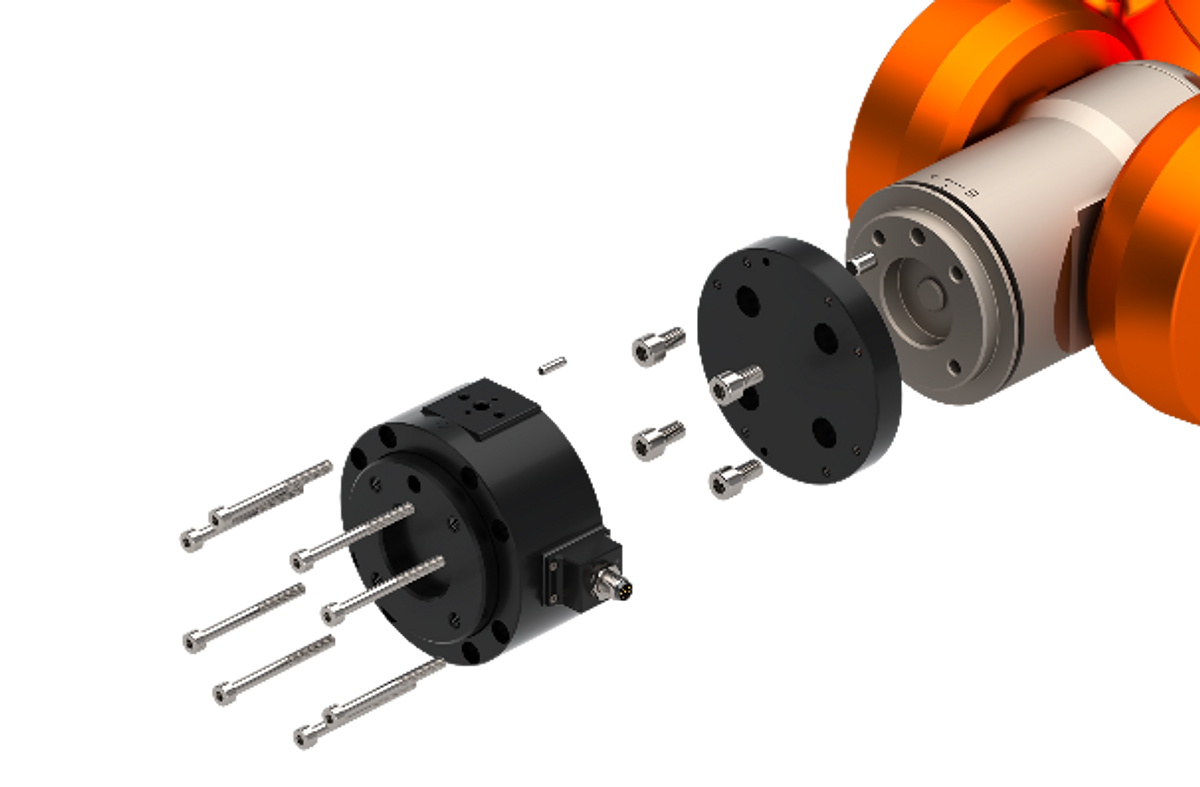
Enhancing Construction Robotics with Precision: The Role of Force Torque Sensors
Force torque sensors are revolutionizing the capabilities of construction robots by providing precise force control, allowing them to perform tasks such as bricklaying, welding, and demolition with greater accuracy and safety.
These sensors enable robots to handle heavy or delicate materials, improving efficiency, enhancing quality control, and reducing material waste. As construction sites increasingly adopt automation, integrating force torque sensors ensures that robots can adapt to the complex, variable conditions of the construction environment, promoting both productivity and worker safety.
To learn how Bota Systems’ advanced force torque sensors can enhance your construction robotics projects, contact us today to discuss tailored solutions!
Sources
- Allied Market Research. (n.d.). Construction robotics market size, share, competitive landscape and trend analysis report, by application, sales type, and end user: Global opportunity analysis and industry forecast, 2020–2027. Link
- Associated General Contractors of America. (2023, September 6). New survey shows significant flaws in nation’s approach to preparing workers for construction careers and how that hurts the economy. Link
- CNET. (2020, June 24). Bricklaying robot hits new milestone: 200 bricks in an hour. Link
- Cyngn. (2024, August 21). How robots are transforming the construction industry. Link
- Euronews. (2024, January 17). How robots and 3D printers will build your next house. Link
- EXSKALLERATE, Interreg VB North Sea Region Programme. (n.d.). EXSKALLERATE. Link
- Heater, B. (2024, January 23). Dusty introduces a new version of its construction layout robot. Link
- Health & Safety International. (2024, September 18). Industrial robots could lower workplace injuries but increase stress. Link
- Kizilkan, K. (2024, May 16). 75 workplace injury statistics: Trends, causes, and more. Link
- Mail Online. (2018, April 23). Construction robots weld, bolt, lift to beat worker shortage. Link
- Research and Markets. (n.d.). Demolition robot market report by product type, sales type, application, and region 2024–2032. Link
- Richer, M. (2024, July 31). Labor vs. material cost in construction: 6 things to keep in mind. Link
- United Nations Environment Programme. (2023, September 12). Building materials and the climate: Constructing a new future. Link