Ultra-Slim Torque Sensors for Next-Generation Robot Joints
High-bandwidth, EtherCAT-enabled torque sensing designed to integrate seamlessly with strain wave gearing and compact robotic actuators.
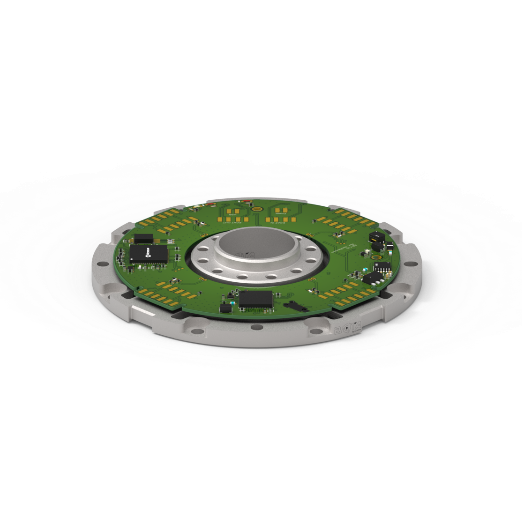
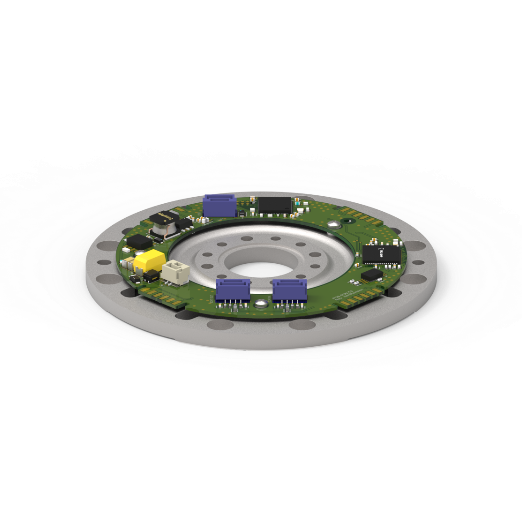
Engineered for humanoid, medical, and collaborative robots, Bota Systems’ torque sensors combine extreme thinness, high stiffness, and integrated electronics for safe, high-performance joint control.
Our torque sensors are purpose-built for OEM robotic actuator design, with mechanical and electronic integration in mind from day one.
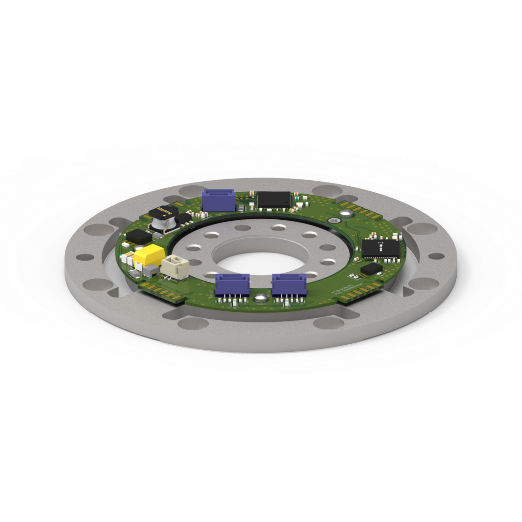
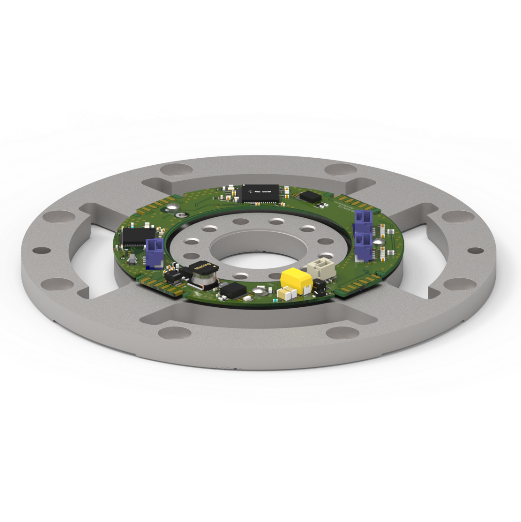
The ultra-slim hollow-shaft form factor allows direct integration with harmonic drives and other strain wave gearing, either inside the actuator or mounted externally, without compromising stiffness or bandwidth.
Fits standard strain wave gear flange patterns
Hollow-shaft architecture for clean mechanical routing
Integrates directly into compact joint stacks
High Bandwidth. High Stiffness. Real-Time Control.
Robotic safety and performance demand fast, accurate torque feedback. Our sensors use a high-stiffness spring steel design combined with high-speed EtherCAT communication to deliver precise torque and bending moment data at control-loop speeds required by modern robots.
Features enabling reliable torque sensing for high-performance robot actuators and control architectures:
Structure
High stiffness
Communication
EtherCAT IN/OUT
Max. sampling rate
4kHz
Capacity
500%
Power supply
5-60V, 1.5W
Internal latency
0.5 μs
Torque Sensor Models & Specifications
The torque sensor family is available in multiple sizes and torque ranges to support a wide variety of robotic joint architectures. All models share the same ultra-slim design philosophy, integrated EtherCAT electronics, and high-bandwidth performance.
BTS-T25
Nominal Torque Range
± 25 Nm
Max Overload
500 %
Outer Diameter
60.5 mm
Thickness
7 mm
Weight
60 g
Communication
EtherCAT In / Out
BTS-T50
Nominal Torque Range
± 50 Nm
Max Overload
500 %
Outer Diameter
70 mm
Thickness
7 mm
Weight
76.5 g
Communication
EtherCAT In / Out
BTS-T75
Nominal Torque Range
± 75 Nm
Max Overload
500 %
Outer Diameter
80 mm
Thickness
7 mm
Weight
104 g
Communication
EtherCAT In / Out
BTS-T100
Nominal Torque Range
± 100 Nm
Max Overload
500 %
Outer Diameter
85 mm
Thickness
7 mm
Weight
150 g
Communication
EtherCAT In / Out
BTS-T150
Nominal Torque Range
± 150 Nm
Max Overload
500 %
Outer Diameter
95 mm
Thickness
7 mm
Weight
225 g
Communication
EtherCAT In / Out
BTS-T300
Nominal Torque Range
± 300 Nm
Max Overload
500 %
Outer Diameter
115 mm
Thickness
9 mm
Weight
380 g
Communication
EtherCAT In / Out
Interested in Torque Sensing for Your Robot?
Get in touch with our team to discuss your actuator design and torque sensing requirements.
Accurate and fast torque feedback is essential for safe physical interaction. Our sensors are ideally suited for collaborative, medical, and service robots, enabling reliable force control, collision detection, and compliant behaviors.
Humanoid robots
Medical and surgical robots
Collaborative robots (cobots)
Mobile and service robots
Intralogistics and human-safe automation
KEY ADVANTAGES
Why Bota Systems Torque Sensors
Thinner and lighter than competing solutions
Integrated electronics — no external amplifier
EtherCAT IN/OUT on board
High sampling rates for advanced control
Measures torque and bending moments
OEM-ready design philosophy
Tailored to Your Actuator Architecture
Every robot joint is unique. Our torque sensors can be customized to fit virtually any gearbox, helping OEMs optimize packaging, performance, and cost without redesigning their actuator architecture.
Our engineering team responds quickly—providing an initial feasibility assessment within days and first prototypes within weeks.
1
Submit Your Application
Connect with Bota engineers through the form below.
2
Feasibility Study
Bota engineering will conduct a feasibility study to evaluate the technical requirements and feasibility of the project.
3
Proposal and Quote
You will receive a project proposal and quotation including the final specifications and development timeline.
GET IN TOUCH
Start Your Custom Torque Sensor Project
Describe your application and system requirements using the form below. Our engineers will review your request and contact you with a feasibility assessment and next steps.