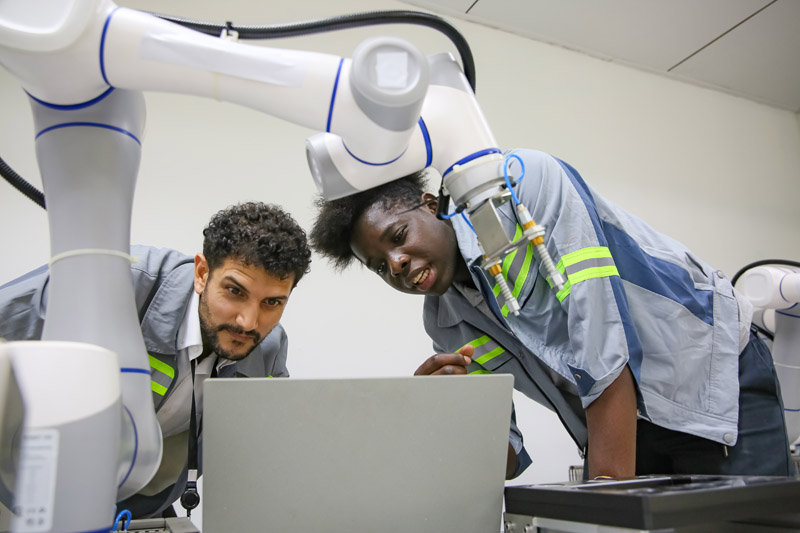
Every year, thousands of workers die in jobs that robots could do instead. Mining alone kills around 12,000 people annually according to the ILO. Firefighters, bomb disposal technicians, and nuclear plant workers face risks that no safety protocol fully eliminates.
Robots don’t get fatigued. They don’t lose concentration at hour six of a hazardous task. And when something goes wrong, it’s hardware that gets damaged, not a person.
Below are 10 real-world examples of robots working in dangerous jobs right now, with specific robots, the companies deploying them, and what they’re actually doing.
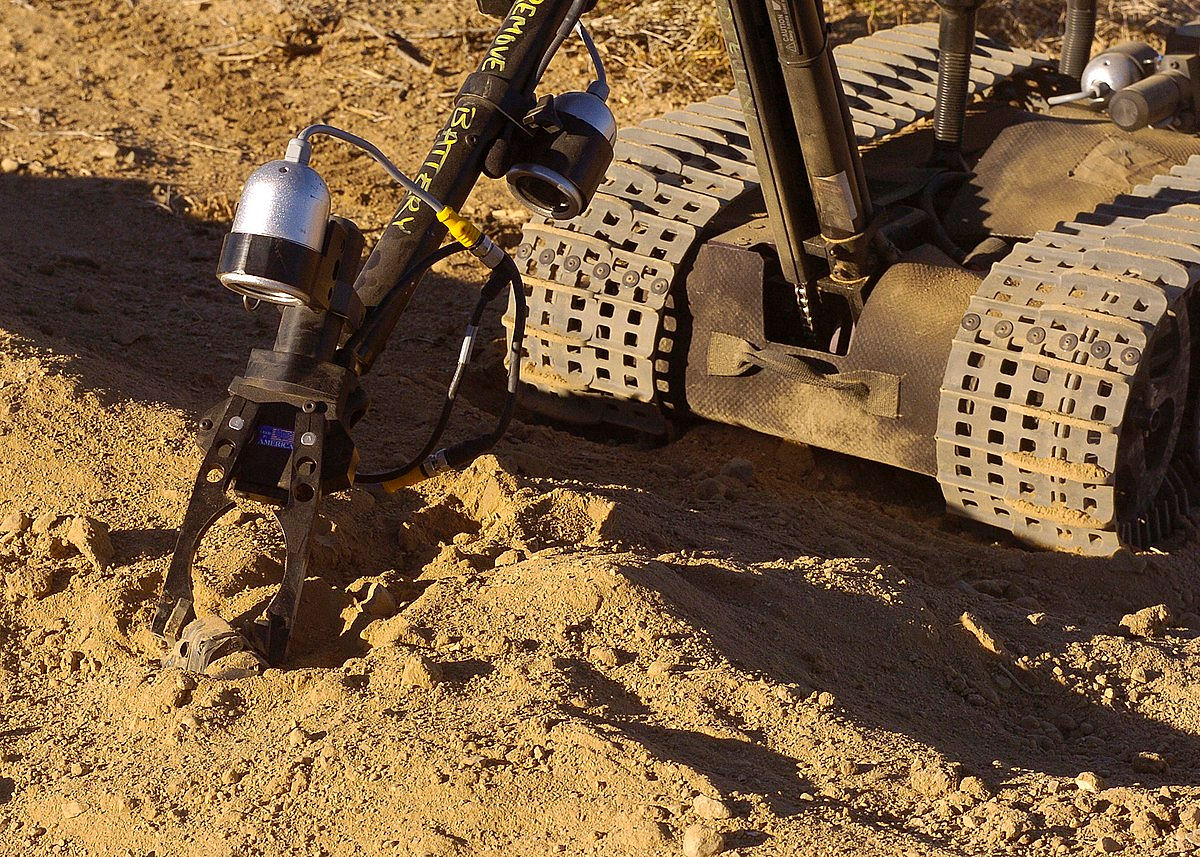
Disarming explosives is a risky task that requires incredible courage. Fortunately, it doesn’t need human intervention.
Quick Reference: Robots Doing Dangerous Jobs
| Dangerous Job | Robot Example | Key Capability |
|---|---|---|
| Bomb disposal | TALON (iRobot) | Camera, sensors, robotic arm for IED handling |
| Deep-sea exploration | Stanford OceanOneK | Haptic feedback, operates at 500m+ depth |
| Waste management | Oshkosh HARR-E | Autonomous electric collection, app-controlled |
| Firefighting | Pilotless units (Japan FDMA) | Thermal imaging, autonomous fire assessment |
| Space exploration | NASA Perseverance Rover | Mars surface research, 4+ years continuous operation |
| Chemical handling | Pharma dispensing robots | Precision mixing, contamination reduction |
| Construction | Hadrian X (Fastbrick) | 1,000 bricks/hour vs. 300–500 by a human per day |
| Nuclear maintenance | Oxford Dynamics Strider | Radioactive object retrieval, semi-autonomous |
| Industrial welding | FANUC collaborative arc robot | Works alongside humans without guarding |
| Mining operations | Rio Tinto autonomous vehicles | Self-driving ore transport in narrow tunnels |
For a broader taxonomy of what these systems are, see our guide to types of robots.
Robots in Hazardous Environments
Bomb Disposal
Explosive Ordnance Disposal (EOD) robots can handle, inspect, and defuse explosives without putting human operators in risky situations. These robots are equipped with cameras, sensors, and robotic arms to assess and safely neutralize potential threats.
One notable example is the TALON robot, used by military and law enforcement agencies worldwide.
For example, the United States Marines use the TALON robot to assess perilous situations and identify possible explosives before sweeping danger spots with an improvised explosive device (IED) detector. This enables them to get visuals of threats without endangering themselves.
Deep-Sea Exploration
Deep-sea exploration presents significant challenges for human explorers due to the deep sea’s extreme pressures, darkness, and frigid temperatures. Robots can overcome these obstacles. As a result, they have enabled scientists to investigate previously unreachable areas.
One prime example of a deep-sea exploration robot is Stanford’s OceanOneK robot. The robot that was developed by Mark Cutkosky’s lab at Stanford allows operators to ”feel” underwater objects remotely through haptic feedback.
On one of its expeditions, the OceanOneK managed to travel nearly 500m (about a third of a mile) below the Mediterranean’s surface to explore the sunken Italian steamship — Le Francesco Crispi.
Waste Management
Sorting and handling waste can be a dangerous job due to the presence of sharp objects and toxic substances in waste. For instance, in the United Kingdom, about 3,000 workers in the waste management sector get workplace injuries — higher than in both the construction and manufacturing sectors.
Sophisticated trash-sorting robots with cameras and sensors can identify specific objects, safeguarding human workers and enhancing operational efficiency.
For instance, in the United States, the Oshkosh Corporation introduced HARR-E. This autonomous electric garbage collection robot offers on-demand trash and recycling pickup via a smartphone app or virtual home assistants like Alexa or Google Assistant.
Firefighting
Firefighting is a dangerous job that exposes firefighters to hazardous conditions such as extreme heat, toxic fumes, and collapsing structures. Heat-resistant firefighting robots can venture into blazing infernos that humans can’t and put out fires.
They are also equipped with cameras and thermal imaging cameras that enable them to assess situations and relay information to firefighters, allowing them to make life-saving decisions. It’s no wonder many fire departments worldwide are integrating robots into their operations.
For instance, Japan’s Fire and Disaster Management Agency plans to use pilotless firefighting robots to enhance its emergency response strategies.
Space Exploration
Space exploration presents significant challenges due to space’s extreme conditions. Robots can overcome the harsh conditions in space, making them essential for conducting research and performing tasks that would be too risky or impossible for humans.
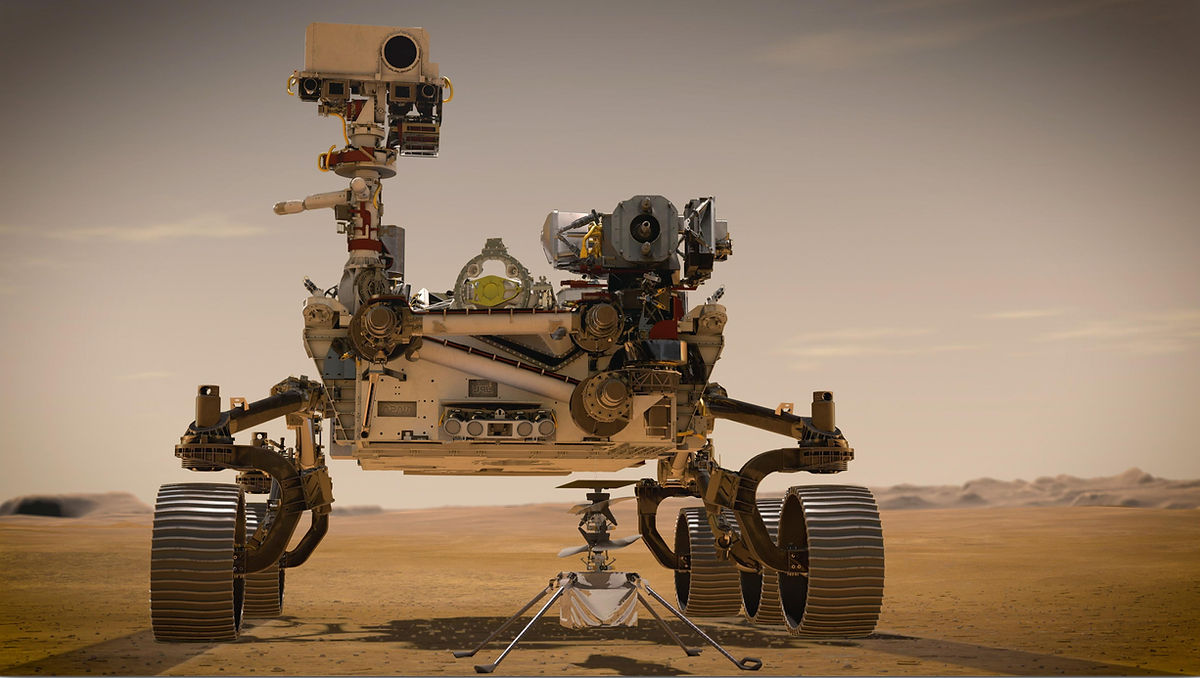
NASA’s Perseverance Rover is arguably one of the most famous space exploration robots. The robot landed on Mars in February 2021, and it has managed to research the planet’s volcanic history, climate, and surface, paving the way for possible human inhabitation on Mars someday.
Chemical Handling
Many industries, such as the manufacturing industry, use chemicals like paints and sealants that can harm workers if they come into contact with them. As a result, many sectors are integrating robots like paint robots into their chemical handling processes to safeguard workers.
That’s why it should come as no surprise that market analysts predict the chemical manufacturing robotics market will reach a valuation of $678.79 million in 2025, with a compound annual growth rate (CAGR) of 0.45% between 2025 and 2029.
Companies in the pharmaceutical industry often use robots to mix and handle chemical compounds with utmost precision while reducing contamination risks and protecting human workers from coming into contact with harmful compounds.
Construction Site Operations
Construction sites put construction workers at risk of various hazards, such as falling debris and heavy machinery accidents. Construction robots can safeguard construction workers from these perils and boost their productivity.
For instance, the Hadrian X, a bricklaying robot developed by Fastbrick Robotics, can lay up to 1,000 bricks per hour. In contrast, human bricklayers typically lay about 300 to 500 bricks daily.
As a result, the robot has protected workers from physical injuries due to performing repetitive and expedited project completion.
Nuclear Plant Maintenance
Nuclear plants are critical to energy production, but they put human workers at high risk of radiation exposure. Robots can perform tasks that would be too dangerous for human workers, such as handling radioactive materials, inspecting reactors, and conducting decontamination procedures.
Oxford Dynamic’s Strider robot is a notable example of a robot that’s built to work in nuclear plants. The robot can retrieve radioactive objects, put them in sealed containers and perform semi-autonomous tasks that would be too dangerous for humans wearing personal protective equipment.
The robot can also maneuver in challenging and unknown terrain because it’s equipped with infrared, radar and lidar systems.

Industrial Welding
Welding is a crucial part of many manufacturing processes. However, welding poses various risks to human workers and a slight lack of concentration can lead to a serious injury like severe burns.
Robots don’t lose concentration when in operation. They can work tirelessly and perform tasks accurately, relieving human workers from dangerous welding tasks.
FANUC’s collaborative arc welding robot is a good example of an industrial welding robot. With built-in sensors and a wide range of motion, the collaborative welding robot can work safely alongside people without the need for costly guarding.
Mining Operations
The International Labor Organization (ILO) estimates that mining accidents kill about 12,000 people annually, with the mining industry contributing about 8% of fatal workplace accidents yearly despite employing less than 1% of the global workforce.
Companies in the mining industry have employed robots to perform dangerous expeditions and monitor air quality to improve worker safety.
For instance, Rio Tinto, one of the world’s largest mining companies, deploys self-driving ore-carrying vehicles to transport materials at its mining sites. These autonomous vehicles can navigate through narrow tunnels quickly and safely, protecting human workers from venturing into dangerous environments.
Improve Human Worker Safety With Robots
Robots are revolutionizing industries where workers take on significant risks. From bomb disposal and deep-sea exploration to construction and mining, robots are proving invaluable in environments that are dangerous for human workers.
Additionally, beyond these high-risk tasks, automation is also transforming daily work. Many jobs with repetitive tasks, such as waste sorting and welding, are now being performed by robots, enhancing efficiency and safety.
While some people worry about robots replacing human workers, the reality is that automation won’t make human workers obsolete. Instead, it will primarily take over dangerous and super-easy jobs, allowing people to focus on more complex and creative tasks.
As more companies continue to innovate and deploy robots, the list of jobs robots can do will only grow. That’s why you can’t afford to treat them as an afterthought if you want to stay ahead of the competition and improve operational efficiency.
Integrating robots into your operations will not only improve workplace safety but also create new opportunities for your team members to focus on high-level tasks.
Ready to integrate robots into your operations and enhance worker safety? Contact us to discover how our robotic solutions can boost worker safety, productivity, and morale.