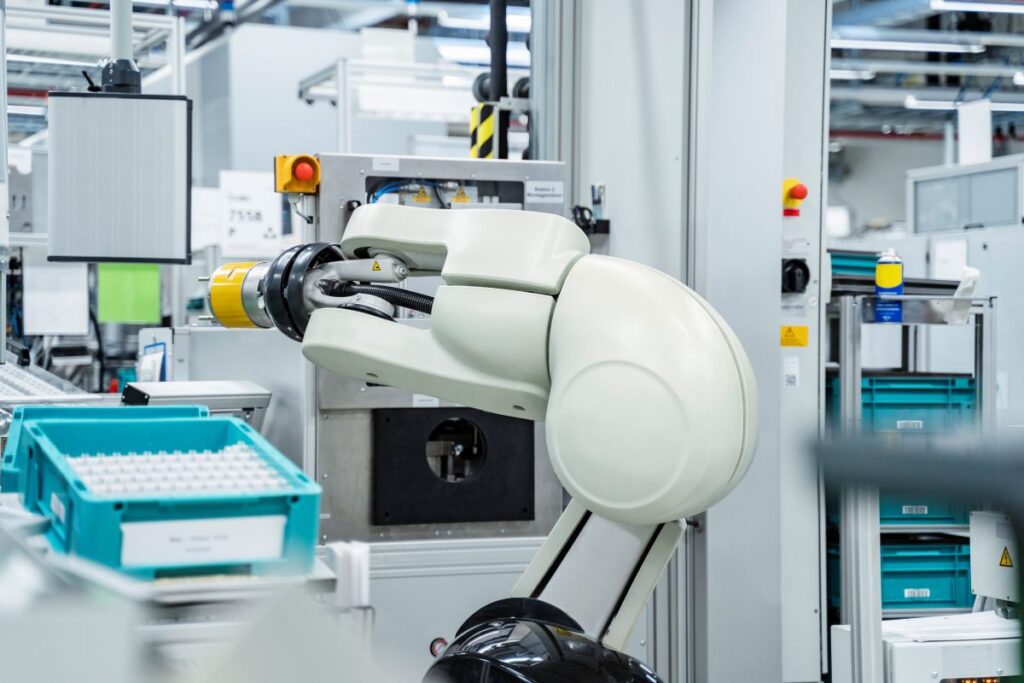
When robots first became commonplace, their primary use was on assembly lines. However, that has significantly changed.
With advancements in robotics, these machines are now utilized across a diverse range of sectors, including healthcare, agriculture, logistics, and beyond. In this blog post, we’ll delve into the most common applications of robotics today.
Applications of Robotics in 2024
Many industries require humans to perform repetitive, mundane tasks with utmost precision. On the other hand, some industries require workers to carry out risky tasks that could endanger their lives. Robots are better suited for these tasks as they can work diligently and tirelessly. Additionally, they can easily conduct tasks that pose safety risks to humans.
While the uses of robots today are vast, here we’ll explore 10 popular robotics applications.

1. Agriculture
Agriculture involves many repetitive tasks. Agriculture robots can automate various tasks, enabling farmers to boost their productivity and efficiency. Some common applications of robotics in the agricultural industry include:
Harvesting: Farmers employ agricultural robots with sensors and cameras to identify and pick fruits and vegetables without bruising them. For example, in California, farmers use automated robots to harvest strawberries.
Weeding: Agricultural robots can use machine vision to distinguish between weeds and crops. For instance, in the United States, farmers use farm robots to remove weeds, reducing pesticide dependence.
Crop monitoring: Farm robots can use cameras and sensors to track crop health. For example, researchers from the University of Bonn developed a robot dubbed BonnBot-I that can allow farmers to monitor crops more efficiently.
Sowing: Agriculture robots can plant seeds, eliminating the need for manual labor. For example, researchers from Japan developed a robot called SynRobot that can sow seeds without affecting nearby plants.
2. Manufacturing and Automation
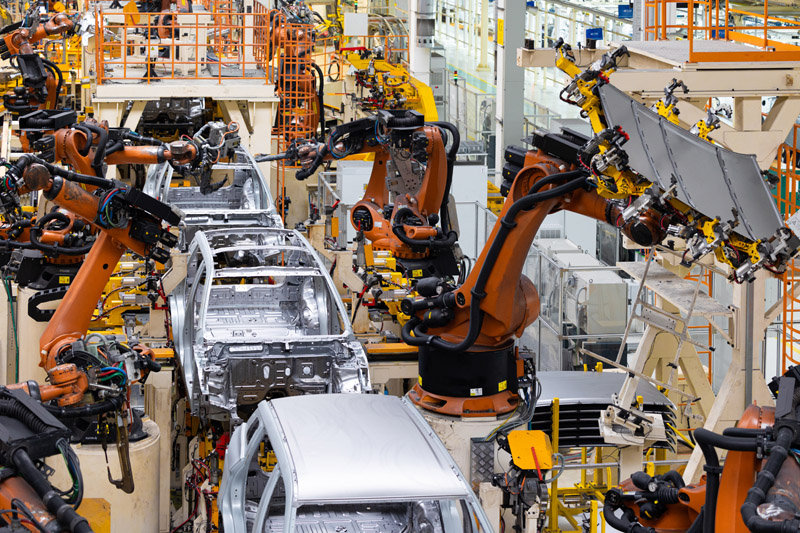
Robots have been commonplace in the manufacturing industry for nearly seven decades. And for good reason. Industrial robots can perform a variety of repetitive tasks that would take workers ages with utmost precision, allowing them to focus on more mentally stimulating tasks. Common industrial robot applications in the manufacturing industry include:
Welding: Welding requires a high degree of accuracy and can endanger workers. Manufacturers often use welding robots to enhance welding accuracy and protect workers from potential hazards.
Palletizing and packaging: Palletizing and packaging products can take human workers substantial time due to the repetitive nature of the task. To boost efficiency manufacturers often use robots for palletizing and packaging.
Painting: Painting requires a high level of accuracy and may expose workers to harmful fumes. Many manufacturers use paint robots to ensure consistency across products, improve worker safety, and minimize waste.
Assembly: Assembly involves mundane, repetitive tasks. Assembly robots can assemble products faster than humans, enhancing efficiency.

3. Healthcare
Robots aren’t just automating processes. They’re saving lives. Surgical robots like the da Vinci Surgical System allow surgeons to perform minimally invasive procedures like general laparoscopic and thoracoscopic surgeries, enabling patients to recover fast and with less discomfort.
Robotic exoskeletons also offer support to people with mobility issues. For instance, researchers from the University of Stanford developed a robotic exoskeleton that helps people with mobility challenges walk faster and expend less energy.
In the healthcare sector, healthcare facilities also use cleaning and disinfection robots to protect healthcare workers from dangerous pathogens. For instance, the Texas A&M Veterinary Medical Teaching Hospital (VMTH) has a disinfection robot called Trudy that uses ultraviolet (UV) light to sterilize surfaces.
4. Logistics
Today, consumers expect to receive ultrafast deliveries. About nine out of ten consumers expect up to three-day shipping to be standard, while nearly three out of ten expect same-day delivery. As a result, several retailers use autonomous robots in their warehouses to pick products, transport them, manage inventory, and fulfill orders.
For example, Amazon uses collaborative robots (cobots) in its operation facilities to perform various tasks, such as identifying inventory, picking and sorting orders, and delivering packages to warehouse employees.
5. Education
In many schools, robots are rapidly gaining popularity as a teaching aid, particularly in teaching STEM (science, technology, engineering, and mathematics) concepts.
For instance, Pepper — a humanoid robot developed by the SoftBank Group — interacts with students to enhance their problem-solving, logical thinking and emotional skills. It also keeps comprehensive data on its interactions with students, enabling teachers to keep tabs on student progress.
6. Construction
Professionals working in the construction industry use robots for a variety of applications, ranging from bricklaying and drilling to 3D printing and demolition. These uses of robotics in the industry have allowed professionals to boost efficiency, accelerate production time, and safeguard worker safety.
A prime construction robotics example is the Liftbot. The robot that the German company Kewazo developed helps with scaffolding installation by automating material transportation.
Aside from assisting with scaffolding installation, another construction robot, Dogbot, helps construction workers navigate difficult-to-access places. The robot was explicitly designed for the construction sector and uses machine learning algorithms to help construction workers navigate potentially dangerous environments.

7. Customer Service
Today, some establishments that receive many guests, like hotels, restaurants, and retail stores, use service robots to assist clients. In hotels, robots provide room service, help with check-in and handle routine inquiries, allowing staff to focus on more challenging tasks.
For instance, the Hilton uses a robot concierge, Connie, to assist guests with simple inquiries. The robot concierge, developed through a partnership with IBM, can help guests find nearby restaurants and tourist attractions and provide hotel information.
On the other hand, restaurants use service robots to take customer orders, deliver meals, and even cook simple dishes. For example, CaliExpress — a burger joint in California — uses a grill robot that can cook about 100 burger patties in an hour.
8. Space Exploration
Robots aren’t just transforming the way we do tasks on Earth. They’re also employed in space to explore harsh terrain, gather data, and maintain spacecraft.
NASA’s OSAM-1 is a perfect example of a space robot employed in space. The satellite repair robot has three robotic arms that enable it to grasp, refuel, and relocate malfunctioning satellites, extending their lifespans.
ClearSpace-1 is another excellent example of a space robot. The debris-gathering robot developed by Swiss startup ClearSpace in partnership with the European Space Agency is scheduled to execute its first mission in 2026. If successful, the groundbreaking mission will remove dangerous debris and clean up outer space, making it safer for future generations.
9. Autonomous Vehicles
Autonomous vehicles are expected to transform the transportation industry. As of 2024, the autonomous vehicle market is valued at $41.10 billion, and it is anticipated to reach a valuation of $114.54 billion by 2029, growing at a compound annual growth rate (CAGR) of 22.75% from 2024 to 2029.
Also known as self-driving cars, autonomous vehicles have the potential to minimize road accidents, reduce congestion, and change the way we travel and deliver products. It’s no wonder autonomous driving is expected to create up to $400 billion in revenue by 2035.
10. Entertainment
Robots aren’t solely valued for their practical purposes. They also entertain people in theme parks, live performances, and other recreational venues. For example, Disney World uses droid robots that can walk, match, and even dance to entertain park visitors.

Leverage Robots to Stay Ahead of the Curve
Robots are transforming how we live and are expected to become an integral part of our daily lives. Why? Robots can perform boring, repetitive tasks with remarkable accuracy, allowing humans to perform tasks that require critical thinking.
To further enhance the capabilities of robots across these diverse applications, incorporating force torque sensors can be a game-changer. Force torque sensors provide robots with the ability to perceive and respond to physical interactions with their environment, offering enhanced precision and safety.
Whether it’s in delicate tasks such as surgical procedures in healthcare, accurate welding in manufacturing, or precise crop handling in agriculture, these sensors play a critical role. If you’re looking to integrate cutting-edge force torque sensors into your robotic systems, contact Bota Systems.