SHARE:
Table of Contents
As of mid-2026, you can order a humanoid robot that will sort warehouse totes, fold laundry, or staff a hotel reception desk. That is not a projection. It is what Figure 03, Agility Digit, and UBTECH Walker S2 are doing right now.
The question is no longer whether robots can complete human-scale tasks. It is which systems are capable enough to deploy at scale.
This article covers ten of the most advanced robots in the world as of 2026, evaluated on AI capability, physical dexterity, and real-world deployment status.
What Makes a Robot “Advanced”?
Before we jump into examples, here are the major technologies that elevate a robot into advanced-status:
| Capability | What it means in practice |
|---|---|
| AI & machine learning | Learns and adapts to new tasks rather than following fixed routines |
| Perception & sensing | Cameras, LiDAR, or depth sensors for navigating human-scale spaces |
| Mobility & dexterity | Bipedal walking, dynamic balance, multi-DOF manipulation |
| Actuators & materials | High-torque servo motors, lightweight composites, efficient power systems |
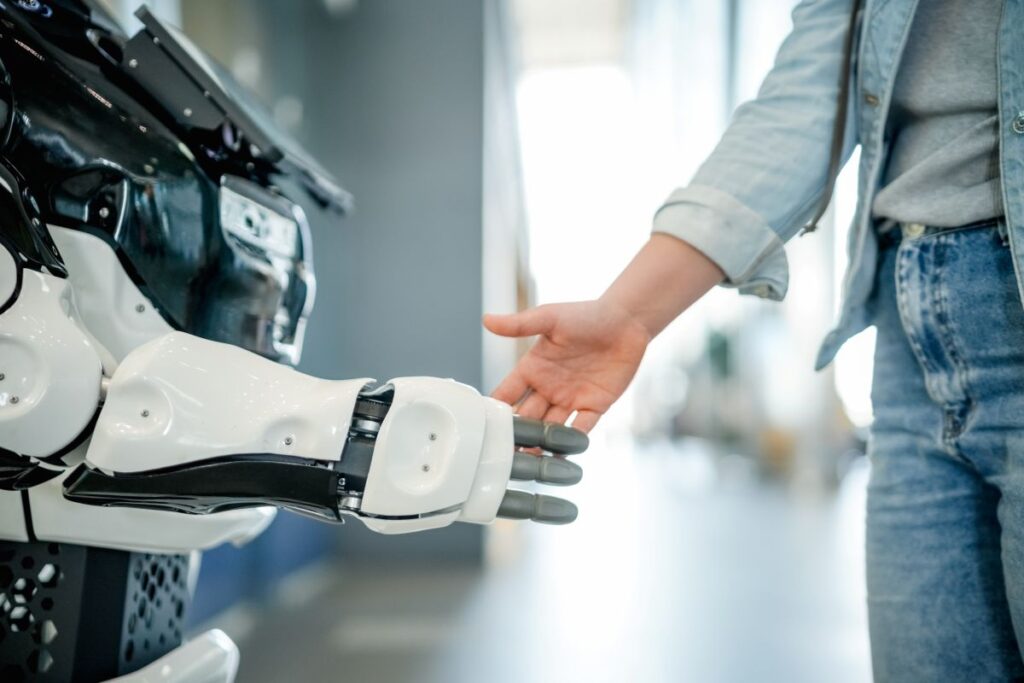
| Human-robot interaction | Natural language, gesture recognition, safe contact detection via force-torque sensors |
| Task versatility | Operates across manufacturing, logistics, healthcare, and home environments |
1. Figure 03
Figure 03 is the newest generation robot developed by Figure AI, engineered as a scalable, general-purpose platform for both home and commercial environments.
This model focuses on improved dexterity, perception, and real-world adaptability, enabling it to perform a wide range of everyday tasks with greater efficiency and safety than previous versions.
Features & Capabilities:
Full-sized design approximately 1.73 m tall and weighing around 61 kg, making it compatible with human-scaled spaces.
Payload capacity of roughly 20 kg, allowing the robot to pick up, move, and handle various household and workplace objects.
Walking speed of about 1.2 m/s and an operational runtime near 5 hours per charge for extended activity.
Upgraded sensory system with double the vision frame rate, significantly reduced latency, and a much wider field of view for improved navigation.
Highly advanced hands featuring palm cameras and tactile sensors capable of detecting extremely small force changes for delicate manipulation.
Designed with scalable manufacturing in mind, including die-cast and injection-molded components, soft-touch exterior materials, and wireless charging compatibility.
Uses & Applications
- Household support: Loading dishwashers, folding laundry, and tidying up.
- Commercial service: Reception assistance, hotel/office support, and light logistics.
- Industrial assistance: Flexible machine tending and tool handling.
- Research: Advanced platform for studying AI and human-robot collaboration.
Figure 03 stands out for its leap toward true scalable deployment, offering advanced mobility, high-precision hands, and a design optimized for real-world use-positioning it as one of the most capable general-purpose robots entering the market.
2. Tesla Optimus Gen 3
Optimus Gen 3 is Tesla’s vision for a fully autonomous, general-purpose humanoid robot. Built using Tesla’s expertise in AI, actuation, and large-scale manufacturing, Optimus aims to handle a wide range of physical tasks while learning and improving over time.
Features & Capabilities:
Human-scale design around 1.73 m tall and approximately 57 kg.
Ability to deadlift ~68 kg and carry roughly 20 kg dynamically.
Lifelike motion through custom-designed actuators and tendon-like structures.
AI powered by Tesla’s vision-based training infrastructure used for autonomous driving.
Demonstrated fine motor control such as handling fragile objects and performing basic manipulation tasks.
Rapid development cycle driven by Tesla’s large engineering and manufacturing resources.
Uses & Applications
- Industrial tasks: Sorting, assembly support, and repetitive labor.
- Logistics & Retail: Object movement and eventual service roles.
- Domestic: Assisting with household tasks in the long term.
Optimus Gen 3 stands out due to Tesla’s unmatched ability to scale production, making it one of the most anticipated humanoid platforms for mainstream adoption.
3. Agility Robotics Digit
Digit by Agility Robotics is one of the world’s first humanoids designed specifically for warehouse and logistics operations. Its bird-inspired leg design and functional upper body allow it to navigate human spaces while performing repetitive handling tasks.
Features & Capabilities:
Height of ~1.75 m and weight around 65 kg for human-compatible operation.
Payload capacity of approximately 16-18 kg for lifting totes and packages.
Bipedal mobility that supports stair climbing, dynamic balancing, and structured indoor navigation.
Comprehensive perception system including LiDAR, depth cameras, and environmental mapping.
Designed for repetitive logistics tasks with optimized energy efficiency.
Uses & Applications
- Warehouse automation: Tote movement, sorting, and staging.
- Logistics: Automated material handling in distribution centers.
- Operates under a Robot-as-a-Service (RaaS) commercial model.
Digit stands out because it is one of the first humanoid robots actually deployed in commercial logistics workflows rather than remaining in research environments.
4. Boston Dynamics Atlas
Atlas, created by Boston Dynamics, is widely recognized as the most agile and dynamically capable humanoid robot ever built.
Although not commercially sold, it serves as a powerful research platform for advanced locomotion and manipulation.
Features & Capabilities:
Fully electric humanoid platform approximately 1.5-1.8 m tall.
Advanced actuation enabling running, jumping, parkour, and highly dynamic motion.
Exceptional balance and coordination across uneven terrain.
Lightweight composite structure for strength, durability, and high agility.
High-level perception and control enabling complex whole-body manipulation.
Uses & Applications
- R&D: Unstructured environment robotics and next-generation control systems.
- Disaster Response: Exploration of legged mobility for construction and rescue scenarios.
Atlas stands out as the pinnacle of dynamic motion, consistently redefining what humanoid robots are physically capable of achieving.
5. Sanctuary AI Phoenix
Phoenix from Sanctuary AI focuses on combining human-level reasoning with humanoid embodiment.
Designed as a general-purpose worker, Phoenix uses an advanced cognitive architecture to understand tasks, make decisions, and interact with complex environments.
Features & Capabilities:
Stands around 1.7 m tall with a weight near 70 kg, suitable for human-centered spaces.
High-DOF dexterous hands featuring tactile sensing for precise manipulation.
“Carbon” AI architecture allowing language understanding, reasoning, and action planning.
Ability to perform a wide variety of tasks through AI-driven generalization.
Integrated perception system for object recognition, task execution, and workspace interaction.
Uses & Applications
- Retail & Logistics: Stocking, organizing, picking, and sorting workflows.
- Manufacturing: Roles requiring fine manipulation and high adaptability.
Phoenix stands out because it merges cognitive AI with robotics more deeply than almost any other system, making it a leader in intelligent humanoid automation.
6. Fourier Intelligence GR-1
The Fourier Intelligence GR-1 is one of the world’s first humanoid robots designed specifically for mass production, marking a major step toward commercially scalable humanoid robotics.
Built for healthcare support, rehabilitation, domestic assistance, and light-industrial tasks, the GR-1 places strong emphasis on mobility, balance, and real-world usefulness.
Features & Capabilities:
Approximately 1.65-1.70 m tall with a 45-55 kg weight range, allowing it to operate seamlessly in human environments.
Capable of walking 5 km/h and handling slope and uneven-ground traversal, making it highly adaptable indoors and outdoors.
40+ degrees of freedom, enabling sophisticated whole-body movement, coordinated arm control, and human-like mobility.
High-performance actuators developed in-house by Fourier Intelligence, giving the robot stability, smooth joint motion, and power-efficient operation.
Robust perception system using multiple cameras and sensors for navigation, obstacle avoidance, and environment mapping.
Payload capacity up to ~50 kg, making it one of the strongest humanoids in its class and suitable for assisting with mobility support or carrying items.
Uses & Applications
- Healthcare: Assisting patients with mobility training and rehabilitation.
- Elderly Care: Helping with household tasks and physical aid in residential care.
- Industrial: Light-duty item handling and transporting materials.
Fourier Intelligence’s GR-1 stands out because it bridges the gap between prototype humanoids and real, ready-for-deployment robots. With mass-production scaling and a focus on practical applications, it represents one of the most impactful humanoids entering the market in 2026.
7. Pal Robotics ARI
ARI, developed by PAL Robotics, is a sophisticated humanoid designed for social interaction, communication, and public-facing service roles.
Its expressive capabilities and AI-driven perception make it ideal for environments that require natural and engaging human-robot interaction.
Features & Capabilities:
Human-friendly height of ~1.60 m and weight around 60 kg.
Long battery life, enabling extended operation in public spaces.
Advanced sensors including RGB-D cameras, LiDAR, microphones, and speakers.
AI modules for speech recognition, emotion understanding, and gesture interaction.
Smooth autonomous navigation and obstacle avoidance in indoor environments.
Uses & Applications
- Hospitality & Retail: Reception roles in hotels/offices and visitor guidance.
- Events: Exhibition engagement, presentations, and public demonstrations.
ARI stands out because it excels in natural, human-like interaction, making it one of the most advanced social humanoid robots available.
8. Unitree H2
The Unitree H2 is the next evolution of Unitree’s high-performance bipedal robots, designed for exceptional speed, strength, and whole-body agility.
Built with a powerful actuator system and a lightweight frame, the H2 represents one of the most advanced mobility platforms available today.
It is engineered for challenging research, real-world navigation, and high-intensity movement tasks.
Features & Capabilities:
Full-sized structure standing approximately 1.80 m tall with a redesigned mechanical frame for increased stability and strength.
Powerful custom actuators, delivering significantly higher torque than previous generations, enabling explosive movement and controlled dynamic motion.
Impressive locomotion performance with fast walking and running speeds, balanced turning, and rapid directional changes.
Advanced perception system using depth sensing and wide field-of-view cameras for real-time navigation and environmental awareness.
High-efficiency joint design, allowing smoother motion, better energy management, and improved durability under demanding conditions.
Capable of complex movement demonstrations such as jumping, fast recovery from disturbances, and athletic body coordination.
Uses & Applications
- Search & Rescue: Rapid, stable movement across unpredictable terrain.
- Industrial Inspection: Operations in large facilities or outdoor campuses.
- Locomotion Research: Testing platform for advanced balance algorithms.
Unitree H2 stands out for its combination of powerful actuation, advanced mobility, and athletic performance, setting a new benchmark for speed and dynamic capability in modern bipedal robots.
9. Apptronik Apollo
Apptronik’s Apollo is a next-generation humanoid robot designed specifically for safe, reliable operation in commercial environments such as warehouses, manufacturing floors, and logistics centers.
Built with a strong emphasis on modularity, serviceability, and human-centered design, Apollo is one of the most practical humanoids engineered for real workforce deployment.
Features & Capabilities:
Full-sized humanoid design standing approximately 1.75 m tall with a slim, balanced frame built for industrial environments.
Payload capacity of up to 25 kg (55 lbs), enabling it to lift, carry, and move materials efficiently.
Swappable battery system offering continuous operation with quick battery changes, minimizing downtime.
Advanced perception suite featuring depth cameras, 3D vision, and real-time environment mapping for safe navigation.
Series elastic actuators providing smooth, controlled movements ideal for working near humans.
Modular hardware architecture, allowing quick servicing, part replacement, and long-term maintenance.
Uses & Applications
- Logistics: Picking, sorting, and pallet handling.
- Manufacturing support: Tool delivery and inventory management.
Apollo stands out because it focuses on practical, deployable humanoid labor, combining real industrial capability with a design optimized for safety, serviceability, and high-value commercial use.
10. UBTECH Walker S2
UBTECH’s Walker S2 is the newest evolution of the company’s long-running Walker humanoid line, designed for indoor service environments such as homes, offices, hotels, and commercial facilities.
With enhanced mobility, upgraded manipulation abilities, and more advanced AI-driven perception, Walker S2 represents a major step forward in practical service robotics. The robot focuses on safety, smooth operation, and reliable human-robot interaction.
Features & Capabilities:
Full-sized humanoid body with improved balance, joint control, and smooth bipedal locomotion tailored for indoor use.
Upgraded dual-arm manipulation system allowing the robot to grasp, lift, and interact with everyday household and office objects.
Advanced perception suite combining RGB-D cameras, depth sensing, and AI-powered object recognition for navigating dynamic environments.
Natural voice interaction support integrated with smart-home and IoT ecosystems, enabling seamless task coordination.
Reinforced actuation and control algorithms for stable walking, precise arm movement, and safe operation near people.
Intelligent planning and task execution for multimodal service activities across varied indoor settings.
Uses & Applications
- Hospitality: Guest greeting, check-in assistance, and guided tours.
- Office & Retail: Meeting-room preparation, internal deliveries, and inventory checks.
- Residential: Light household assistance and environment monitoring.
Walker S2 stands out as a polished, human-friendly service robot engineered for reliability and comfort, positioning it as one of the most advanced indoor service humanoids available today.
The Future of Advanced Robotics
Having surveyed ten standout robots, what comes next in the world of advanced robotics? The next wave of innovation will be defined by adaptability, intelligence, safety, and large-scale deployment.
Bota Systems, company behind some of the field’s most precise 6-axis force-torque sensors, is part of this shift.
Its sensors support generative AI in robotics by helping robots connect AI-driven decision-making with real-world force, torque, and contact feedback during physical tasks.
General-purpose humanoids will continue getting smarter, lighter and more affordable. The “most advanced robot” will likely be one that can perform a wide variety of tasks in homes, factories and services.
Materials and power: Improvements in battery density, actuator efficiency, and lightweight materials will enable longer runtime and more mobile robots.
AI + body integration: The next generation of advanced robots will depend on physical AI, where large language models, vision-language models, sensors, and robotic bodies work together to improve real-world autonomy.
Human interaction & safety: As robots enter everyday spaces, safe HRI, natural language, predictability and trust will become more important than raw capability.
Mass deployment: Many of today’s advanced robots are still prototypes or pilot deployments. The next key milestone is large-scale production, cost reduction and real-world service.
For a broader look at where humanoids fit in the taxonomy, see our guide to types of robots.
Conclusion
The robots highlighted in this article represent a turning point in the development of intelligent machines.
Their versatility, strength, responsiveness, and reasoning abilities mark the beginning of a profound transformation across sectors like logistics, construction, retail, elder care, and home assistance.
These systems aren’t confined to static workstations or rigid routines; they adapt, learn, and respond to unpredictable environments much like humans do.
As innovations in AI, actuation, sensors, and energy systems continue to accelerate, the next decade will witness an explosion of automation capable of performing tasks once thought unattainable for machines. This transformation will reshape how businesses operate, how services are delivered, and how people interact with technology daily.
The breakthroughs emerging in 2026 are not simply incremental-they are foundational. They set the stage for a new generation of intelligent automation poised to elevate productivity, safety, and efficiency on a global scale. And with companies like Botasy Systems guiding organizations through this transition, adopting advanced robotics has never been more achievable.
Ready to explore how advanced robotics can transform your business? Contact Botasy Systems today to get a quote.
Frequently Asked Questions
What is the most advanced robot in the world right now?
As of 2026, Figure 03 and Boston Dynamics Atlas are widely cited as the most technically advanced humanoid robots. Figure 03 leads on dexterity and commercial deployment readiness.
Atlas leads on dynamic locomotion, including running, jumping, and whole-body manipulation at a level no other platform currently matches. The “most advanced” robot depends on the metric being evaluated, whether that is manipulation, mobility, or commercial viability.
Which robot has the most advanced AI?
Sanctuary AI’s Phoenix runs the most deeply integrated cognitive AI of any robot on this list. Its “Carbon” architecture combines language understanding, task reasoning, and physical action planning in a single system.
Tesla Optimus benefits from the same vision-based AI infrastructure that powers Autopilot, including broad training data and fast iteration.
Are humanoid robots available to buy in 2026?
Yes, selectively. Agility Robotics offers Digit under a robot-as-a-service model for warehouse operators. Fourier Intelligence ships GR-1 units to research institutions. Most others, including Figure, Tesla Optimus, and Apptronik Apollo, are still in limited commercial pilot or pre-order phases rather than open consumer availability.
What’s the difference between a humanoid robot and a cobot?
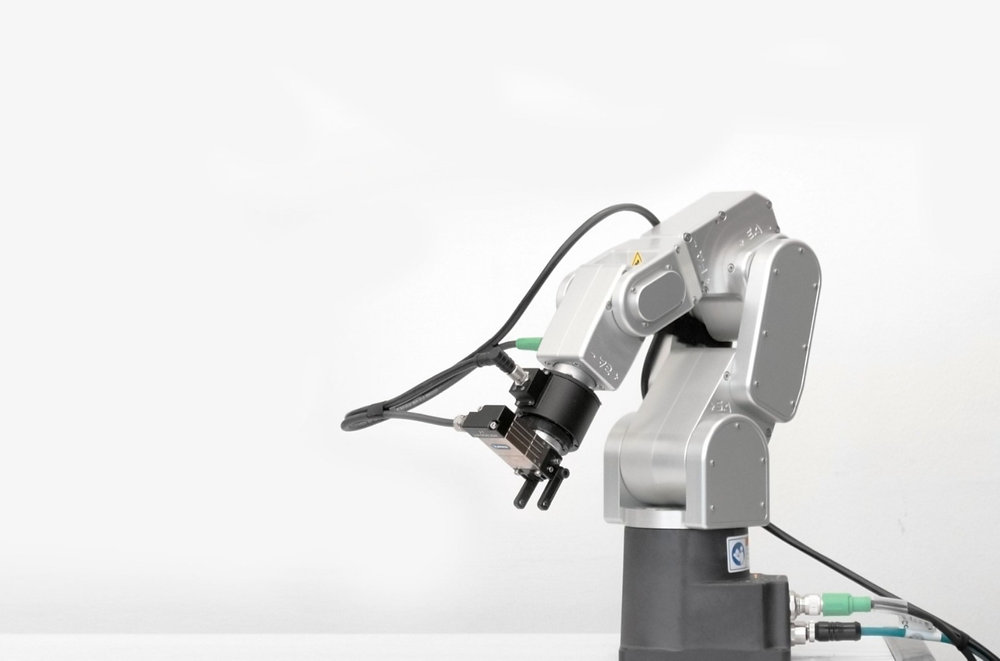
A cobot (collaborative robot) is typically a fixed robotic arm designed to work safely alongside humans on a production line. A humanoid robot is a full-body system that can walk, navigate, and operate in unstructured environments.
Cobots handle precision tasks in defined workspaces; humanoids are built for mobility and task versatility. For more, see our guide on human-robot interaction.
author