
Sensors are critical components in various fields, from industrial automation and environmental monitoring to consumer electronics.
Understanding sensor terminology is crucial for engineers, technicians, and enthusiasts alike, as it helps in selecting the right sensor and interpreting its readings accurately.
This article provides a comprehensive overview of the fundamental terms used in sensor technology, focusing on sensitivity, accuracy, precision, and other essential metrics.
Key Terms in Sensor Terminology
1. Sensitivity
Sensor sensitivity refers to how much a sensor’s output changes in response to a change in the measured quantity. It is often represented as a ratio, such as volts per degree Celsius for temperature sensors.
Higher sensitivity means the sensor can detect smaller changes in the measured quantity. For example, a highly sensitive pressure sensor will produce a significant output shift even with minor pressure changes.
Example: In a pressure transducer, the sensitivity might be expressed as the change in output (in volts or mA) per unit of pressure (psi or bar). If a pressure sensor has a sensitivity of 0.1 V/psi, each psi change in pressure would alter the output by 0.1 volts.
2. Accuracy
The accuracy of a sensor measures how close a sensor’s output is to the true value of the quantity being measured.
It is typically expressed as a percentage of the sensor’s full-scale range or as an absolute error. High accuracy is crucial in applications where precise measurements are necessary, like in medical devices or scientific research.
Example: A temperature sensor with an accuracy of ±1°C can provide readings that deviate by up to 1°C from the actual temperature, within its specified range.
3. Precision
Precision, also called repeatability, is the sensor’s ability to produce the same reading when measuring a constant input multiple time.
Unlike accuracy, precision does not indicate closeness to the true value but rather the consistency of repeated measurements. Precision is critical when consistent readings are more important than perfectly accurate readings, such as in relative humidity sensors for trend analysis.
Example: A pressure sensor with a precision of ±0.2% will provide readings that vary by no more than 0.2% each time it measures the same pressure level.
4. Resolution
Resolution is the smallest change in the measured quantity that the sensor can detect. This metric is typically determined by the sensor’s design and the limitations of its signal processing circuitry.
Higher resolution enables the detection of fine changes in the measured quantity, which is crucial for applications like image processing or position sensing.
Example: A temperature sensor with a resolution of 0.01°C can detect temperature changes as small as 0.01°C.
5. Linearity
Linearity describes how closely the sensor’s output follows a straight line over its measurement range.
If a sensor is perfectly linear, any change in the input should result in a proportional change in output. Non-linearity can lead to measurement errors, especially when measurements are taken near the sensor’s upper or lower range.
Example: If a sensor measuring force outputs a 1V change for every 10N applied, its response is linear if this relationship holds across the sensor’s range.
6. Range
Range, or full-scale range, indicates the maximum and minimum values the sensor can measure.
The range is essential to ensure the sensor can handle the anticipated measurement extremes. Selecting a sensor with an appropriate range prevents overloading, saturation, or inadequate resolution in the expected measurement environment.
Example: A strain gauge with a range of 0 to 500 psi can accurately measure pressure up to 500 psi without distortion or loss of accuracy.
7. Offset
Offset is a baseline shift in the sensor output when the measured quantity is zero. Ideally, a sensor should output zero when the input is zero, but manufacturing imperfections may cause a slight offset.
Understanding offset is necessary for calibrating the sensor accurately and for compensating in applications where precise zero-point measurements are required.
Example: A load cell may have an offset of 0.05 volts, meaning that even with no load, the output signal starts at 0.05 volts.
8. Hysteresis
Hysteresis is the sensor’s tendency to provide different outputs for the same input depending on the input’s prior values.
This means the sensor may exhibit “memory” of past measurements. Hysteresis can lead to inconsistent readings, especially in applications where the input fluctuates around a specific value. It is vital in temperature sensors used in HVAC systems.
Example: A pressure sensor with a hysteresis error may show different readings if the pressure increased to a set point versus if it decreased to that same set point.
9. Response Time
Response time is the time it takes for a sensor to respond to a change in the measured quantity and reach a stable output.
Fast response time is essential in applications that require real-time monitoring, like gas detection or dynamic force measurement.
Example: A temperature sensor in a climate control system may have a response time of 2 seconds, meaning it takes this long to reflect temperature changes accurately.
10. Drift
Drift is the gradual change in a sensor’s output when the input remains constant. It often results from factors like temperature changes or component aging.
Drift is crucial in long-term applications such as environmental monitoring, where accurate measurements over time are required without frequent recalibration.
Example: A humidity sensor might show a 1% increase in output each year due to drift, which would need correction for accurate long-term use.
11. Noise
Noise refers to random fluctuations in the sensor’s output that are not caused by changes in the measured quantity. It is typically caused by electrical interference or thermal fluctuations.
Low noise levels are essential for applications that require high accuracy and stability, such as laboratory measurements.
Example: A pressure transducer with 0.01V of noise may require additional filtering to ensure reliable readings.
12. Sensitivity Error
Sensitivity error occurs when a sensor’s sensitivity deviates from its specified value.
This means the output may be slightly higher or lower than expected based on the input change. Minimizing sensitivity error is crucial for applications that depend on precise scaling of measurements.
Example: If a sensor with a rated sensitivity of 1V/psi shows 1.02V/psi, it has a sensitivity error, which may need correction in post-processing.
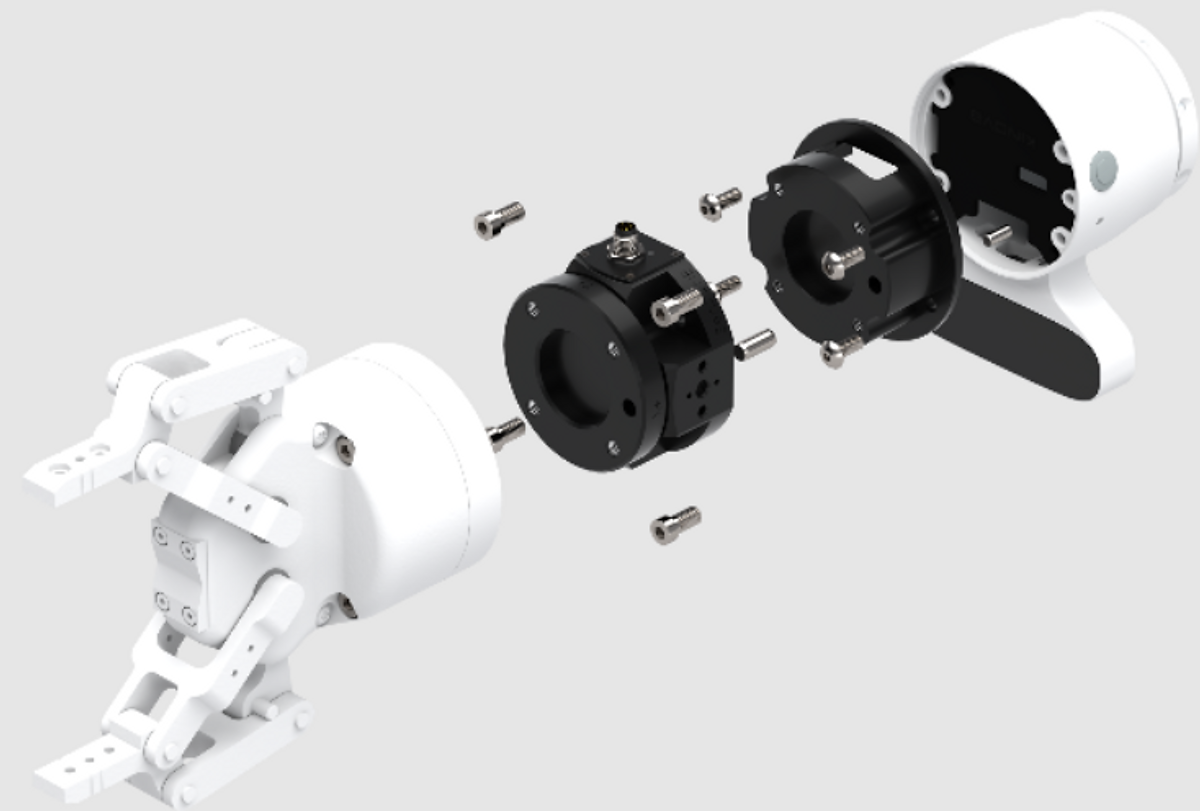
Sensor Terminology in Robotics
In robotics, sensors play a critical role in enabling precise control, navigation, and environmental interaction.
Beyond standard metrics like accuracy, sensitivity, and precision, there is additional sensor terminology and metrics particularly relevant in robotics:
1. Dynamic Range
Dynamic range is the range between the smallest and largest values a sensor can detect.
For robotics, a wide dynamic range allows sensors to capture details in both low and high signal environments, which is crucial in varying lighting or sound conditions.
For example, in autonomous navigation, a camera with a high dynamic range can handle scenes with both bright sunlight and deep shadows, ensuring obstacles are detected accurately in all lighting conditions.
2. Field of View (FoV)
Field of view refers to the extent of the observable area that the sensor can capture or detect at any given moment.
Cameras, lidar, and radar systems with a large FoV are essential for robots that require spatial awareness, like autonomous vehicles. A wider FoV means fewer blind spots and improved obstacle detection.
3. Sampling Rate
Sampling rate is the frequency at which a sensor captures and outputs data, typically measured in Hertz (Hz).
In robotics, high-speed update rates are critical for sensors involved in motion control and real-time decision-making.
For example, lidar sensors with high update rates help autonomous drones maintain stability and navigate quickly through obstacles.
4. Signal-to-Noise Ratio (SNR)
SNR measures the level of the desired signal relative to the background noise. A higher SNR indicates a clearer signal.
In environments with high interference or background noise (such as industrial settings), high SNR sensors ensure that data remains usable, leading to more reliable decisions in noisy environments.
5. Latency
Latency is the time delay between a sensor detecting a change in the environment and when that information is processed and used.
In robotics, low-latency sensors are crucial for real-time applications, like collision avoidance or robotic arm control. High latency could lead to outdated information being processed, resulting in errors or collisions.
6. Power Consumption
Power consumption refers to the amount of energy a sensor uses to operate, often measured in watts or milliwatts.
For mobile robots and drones with limited battery life, choosing low-power sensors helps extend operational time, ensuring that essential components remain functional throughout the task.
7. Temperature Stability
Temperature stability refers to the sensor’s ability to maintain consistent performance under varying temperatures.
For robots that operate outdoors or in industrial environments, sensors need to be temperature-stable to avoid drift or performance degradation when exposed to temperature fluctuations.
8. Range Resolution
Range resolution is the sensor’s ability to distinguish between two closely spaced objects, measured in terms of distance.
In autonomous navigation, lidar and radar sensors with high range resolution enable robots to accurately detect obstacles and map complex environments with closely spaced objects, like trees or traffic cones.
9. Cross-sensitivity
Cross-sensitivity measures a sensor’s susceptibility to factors unrelated to the measured quantity. For instance, a sensor might respond to changes in temperature when it’s designed to measure humidity.
Low cross-sensitivity is ideal in robotics, as environmental factors (e.g., vibrations or magnetic fields) should not affect sensor data. This is particularly important in industrial settings where multiple factors could interfere with readings.
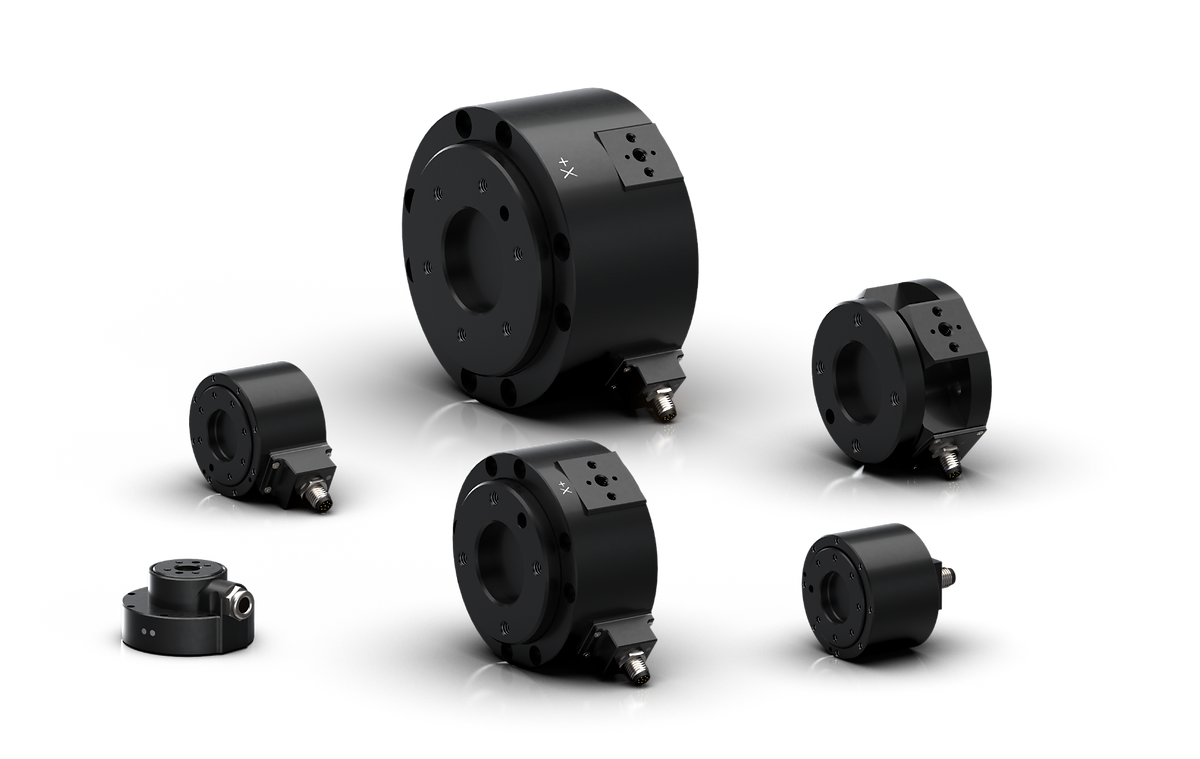
Sensor Terminology Summary
Understanding Sensor Terminology is vital for designing, deploying, and maintaining reliable systems in robotics and beyond.
By mastering key sensor terms and metrics like sensitivity, accuracy, resolution, and environmental robustness, you can select the best sensors to enhance performance and ensure precise measurements.
These insights form the foundation for smarter, more efficient robotic solutions.
Summary of Sensor Terminology
Metric | Definition |
Sensitivity | Change in sensor output per unit of measured quantity |
Accuracy | Closeness of sensor output to the true value |
Precision | Consistency of sensor readings for repeated measurements |
Resolution | Smallest detectable change by the sensor |
Linearity | Degree to which sensor output follows a straight line across range |
Range | Maximum and minimum values a sensor can measure |
Offset | Baseline shift in sensor output when input is zero |
Hysteresis | Different outputs for same input based on input history |
Response Time | Time for a sensor to react to a change in input |
Drift | Gradual change in output despite constant input |
Noise | Random fluctuations in sensor output unrelated to input |
Sensitivity Error | Deviation from specified sensitivity value |
Dynamic Range | Range between smallest and largest detectable values |
Field of View (FoV) | Observable area that the sensor captures |
Update Rate (Sampling Rate) | Frequency of data capture |
Signal-to-Noise Ratio (SNR) | Ratio of desired signal to background noise |
Latency | Delay between sensor detection and output |
Power Consumption | Amount of energy sensor requires |
Temperature Stability | Consistency of sensor performance across temperatures |
Range Resolution | Ability to distinguish between two close objects |
Cross-sensitivity | Susceptibility to unrelated environmental factors |