Human-robot interaction (HRI) is a rapidly evolving field that explores how humans and robots communicate, collaborate, and coexist. With advancements in artificial intelligence (AI), robotics, and machine learning, interactive robots are increasingly integrated into various industries, including healthcare, manufacturing, customer service, and personal assistance.
This article explores the key components of human robot interaction, its core principles, practical applications, and the future of this dynamic field.
What Is Human Robot Interaction?
Human-robot interaction refers to the study and design of systems that enable robots and humans to interact efficiently and naturally. It draws from multiple disciplines, including cognitive science, engineering, psychology, and human-computer interaction.
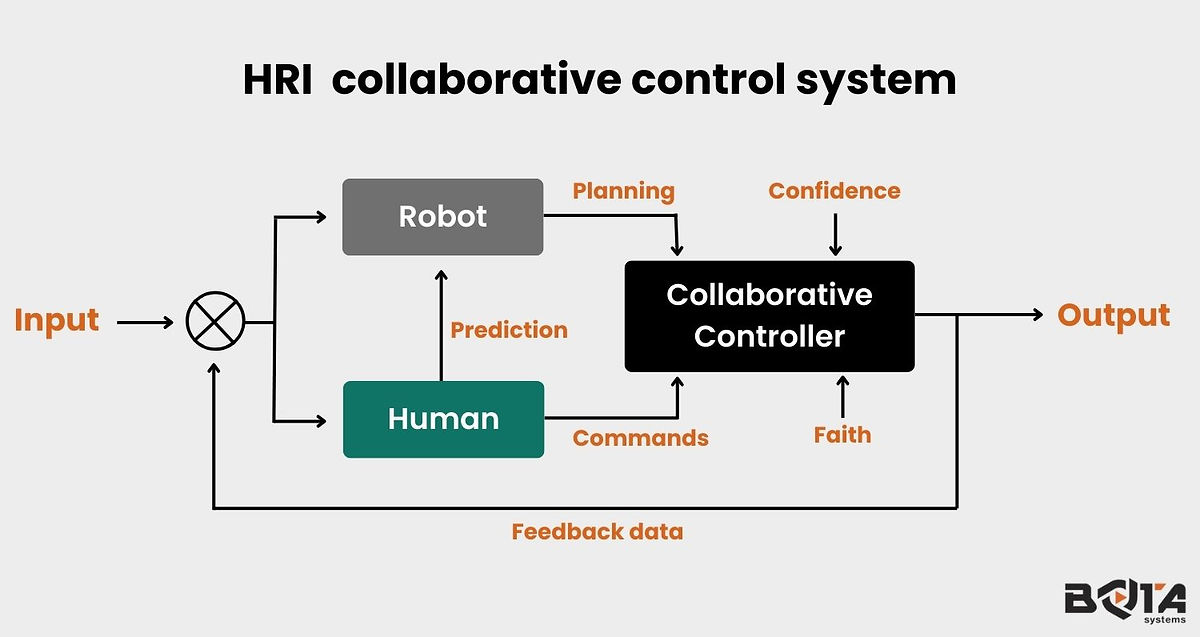
The primary goal of human-robot interaction is to develop robots that can understand human behavior, adapt to dynamic environments, and collaborate effectively while ensuring safety and usability. The figure shows a simplified HRI collaborative control system.
Imagine a factory where robots and humans collaborate to assemble electronic devices. A worker picks up a circuit board and places it on a conveyor belt, while a robotic arm equipped with force-torque sensors carefully screws in tiny components with precision.
If the robot detects an irregular force, it automatically adjusts its grip to prevent damage. Meanwhile, a collaborative robot (cobot) assists another worker by handing over the right tools at the right time, following voice commands and recognizing hand gestures.
This example of robots interacting with humans seamlessly shows how Human robot interaction improves efficiency, reduces strain on workers, and ensures precision in complex tasks.
Key Components and Core Concepts of Human-Robot Interaction
A successful human-robot interaction system integrates multiple components that enable seamless collaboration between humans and robots.
1. Sensing and Environmental Awareness
For robots to interact meaningfully with humans, they must first perceive their surroundings accurately. This involves a combination of visual, auditory, and tactile sensors that allow robots to process and interpret environmental stimuli.
Advanced computer vision systems enable robots to detect objects, recognize faces, and interpret gestures, while auditory sensors facilitate speech recognition and natural language processing. Haptic sensors enhance physical interaction by enabling robots to respond to touch and pressure.
Additionally, force-torque sensors play a critical role in enhancing a robot’s environmental awareness. These sensors allow robots to detect and measure forces applied during interactions, enabling precise control over movements and ensuring safe human-robot collaboration.
In applications such as industrial automation and assistive robotics, force-torque sensing helps robots adapt to varying loads, maintain stability, and execute delicate tasks with human-like precision
2. Communication and Interaction Mechanisms
Effective communication is central to human robot interaction
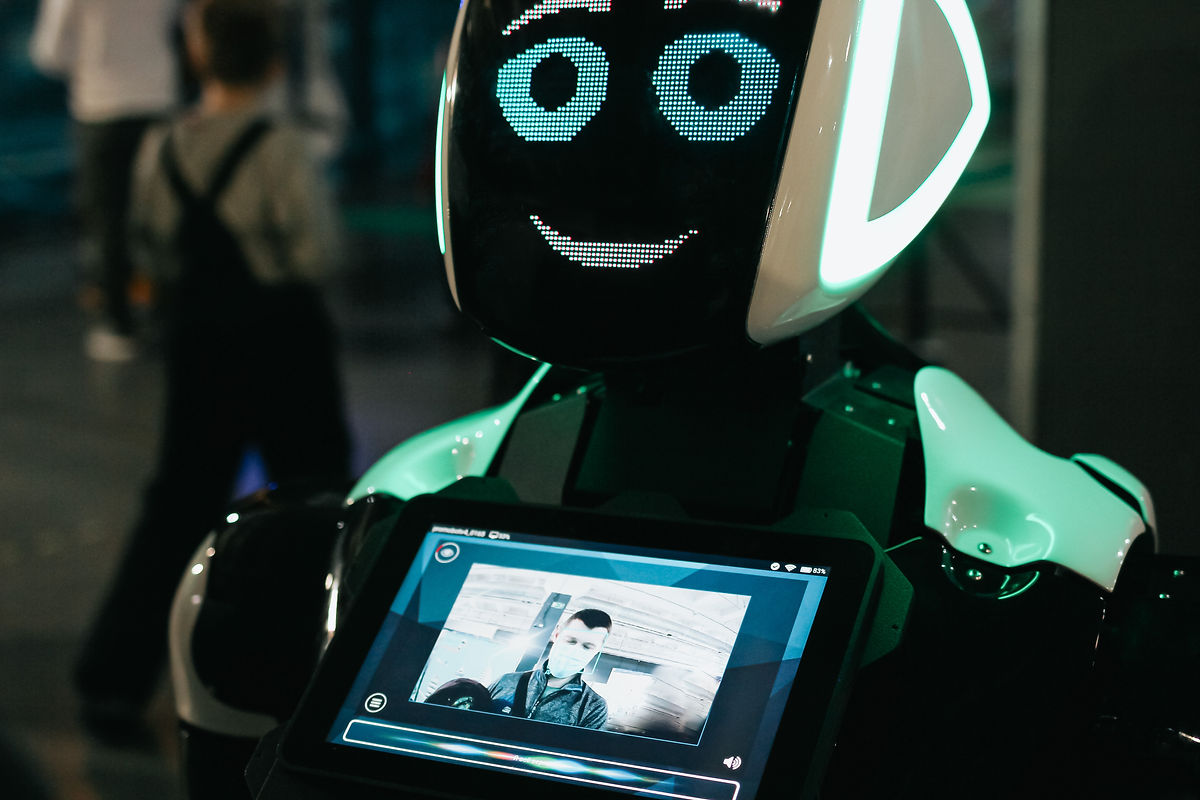
Robots utilize multiple interaction methods, including speech recognition, natural language processing, touchscreens, and gesture-based controls to engage with users.
Facial expression recognition and non-verbal cues further enhance human-like communication, making interactions more intuitive and accessible across different user groups and applications.
3. Adaptive Behavior and Learning
A key factor in human robot interaction is adaptability. Robots must be able to adjust their responses and behaviors based on context and user input.
Machine learning and AI-driven algorithms allow robots to recognize patterns in human behavior, predict user intentions, and improve their decision-making processes over time.
By continuously learning from interactions, robots can offer personalized assistance, making them more effective in diverse applications such as customer service, healthcare, and collaborative workspaces.
4. Autonomy and Decision-Making
The level of autonomy in HRI systems varies depending on the application. Some robots are fully controlled by human operators, while others function independently using AI-driven decision-making.
Autonomy in robots relies on sophisticated algorithms that process sensor data, analyze situational context, and execute appropriate actions.
The ability to navigate environments, avoid obstacles, and make real-time adjustments ensures that robots operate efficiently alongside humans.
5. User Experience and Human-Robot Interface Design
The usability of human-robot systems heavily depends on the design of user interfaces. A well-designed human-robot interaction system should be intuitive, minimizing the learning curve for users.
Voice commands, touchscreens, wearable interfaces, and motion-based controls all contribute to a seamless user experience. The goal is to create interfaces that enable natural and effortless interactions, reducing cognitive load and enhancing accessibility for users of all skill levels.
6. Trust, Safety, and Ethical Considerations
As robots become more integrated into daily life, ethical concerns surrounding their interactions with humans are growing.
Questions about data privacy, job displacement, and AI decision-making bias are central to discussions on responsible robotics.
Socially, robots are beginning to influence human behaviors, raising concerns about dependency and emotional attachment to machines.
Ensuring transparent and fair AI systems, establishing regulatory frameworks, and designing robots that complement rather than replace human capabilities will be critical for sustainable human robot interaction development.
Latest AI Techniques Shaping the Future of Human Robot Interaction
Advancements in Artificial Intelligence are playing a crucial role in shaping the future of human robot interaction.
As AI human interaction evolves, robots are becoming more capable of understanding and responding to human emotions, making them more effective in collaborative environments.
Some of the latest techniques include:
Generative AI for Human-like Interaction: AI models such as ChatGPT and other generative algorithms enable robots to produce more natural conversations, improving user engagement.
Reinforcement Learning for Adaptive Behavior: Robots learn from trial and error, enhancing their ability to respond to complex, real-world scenarios.
Computer Vision with Deep Learning: Enhanced image and video processing allow robots to recognize objects, interpret emotions, and navigate spaces more efficiently.
Natural Language Understanding (NLU): Robots are improving their ability to understand human intent beyond simple voice commands, leading to more seamless communication.
Edge AI and Real-Time Processing: Faster AI computation at the edge allows robots to make instant decisions without relying on cloud-based processing, improving autonomy and responsiveness.
Collaborative Robots (Cobots) and Industry 5.0
As we progress toward Industry 5.0, collaborative robots (cobots) are playing a crucial role in reshaping how humans and machines work together and rely heavily on effective human machine interaction.
Unlike traditional industrial robots that operate in isolated environments, cobots are designed to work alongside humans, enhancing productivity and safety. Industry 5.0 aims to integrate human creativity and problem-solving with the efficiency of AI and robotics, creating more personalized and intelligent automation systems.
Key aspects of cobots and Industry 5.0 include:
Human-Centric Automation: Unlike Industry 4.0, which focused on full automation, Industry 5.0 emphasizes a balance between human intelligence and machine efficiency.
Enhanced Safety Features: Cobots come with built-in safety measures such as force sensors and real-time obstacle detection.
Customization and Flexibility: These robots can adapt to various tasks in manufacturing, healthcare, and even creative fields, offering greater operational flexibility.
Sustainability and Ethical AI: Industry 5.0 promotes sustainable manufacturing and ethical AI deployment to ensure a more responsible technological ecosystem [9].
Key Applications of Human-Robot Interaction
1. Healthcare and Assistive Robotics
Robots are transforming the healthcare industry by enhancing patient care and medical procedures.
Surgical robots provide higher precision and minimal invasiveness, rehabilitation robots aid patients in recovery, and AI-powered caregiving assistants support elderly and disabled individuals.
Imagine a scenario where a humanoid robot assists elderly individuals in a care home, recognizing their emotions, responding to voice commands, and even engaging in simple conversations to provide companionship. These advancements improve efficiency while reducing the burden on healthcare professionals.
2. Manufacturing and Industrial Automation
The manufacturing sector has significantly benefited from robotics. Collaborative robots enhance production efficiency by working alongside human workers on assembly lines.
Automated warehouse systems streamline logistics operations, while AI-powered quality control systems ensure product consistency and reliability.
3. Service and Customer Assistance
In retail and hospitality, robots are enhancing customer experiences through automated kiosks, interactive service bots, and AI-driven concierge services.
These systems reduce wait times, offer personalized assistance, and improve overall operational efficiency in service industries.
4. Education and Personal Assistance
Educational robots are being integrated into classrooms to support interactive learning, particularly in STEM education.
Additionally, AI-driven personal assistants help users manage daily tasks, set reminders, and automate various aspects of home management, making everyday life more convenient.
The Future of Human-Robot Interaction
The future of human robot interaction is being shaped by ongoing research, emerging AI capabilities, and real-world implementations.
Some key developments expected in the coming years include:
Socially Intelligent Robots: Future robots will possess enhanced emotional intelligence, allowing them to respond to human emotions and build deeper connections in caregiving and education.
Human-AI Collaboration Frameworks: Researchers are working on advanced frameworks that enable seamless teamwork between humans and AI-driven robotic systems in workplaces.
Fully Autonomous Service Robots: From automated medical assistants to self-navigating delivery robots, human-robot interaction is moving toward robots that require little to no human supervision.
Wearable Robotics and Exoskeletons: The development of robotic wearables will enhance human mobility, particularly in healthcare and industrial applications.
Regulatory and Ethical Standardization: Governments and research institutions are developing ethical frameworks and legal regulations to ensure responsible AI-powered human robot interaction implementations.
Bota Systems and Its Role in Human Robot Interaction
Bota Systems is at the forefront of innovation in human-robot interaction, offering advanced robotic solutions that enhance collaboration between humans and machines.
Bota Systems force torque sensors are designed for diverse applications, from industrial automation to assistive robotics, ensuring efficiency, safety, and seamless integration with human operators.
Conclusion
Human-robot interaction is reshaping industries and everyday life, turning robots into collaborative partners rather than mere tools.
As AI, robotics, and sensor technology continue to advance, more intuitive and sophisticated interactions will emerge. However, responsible development and ethical considerations will be crucial in ensuring a future where humans and robots coexist harmoniously, improving efficiency, safety, and quality of life.