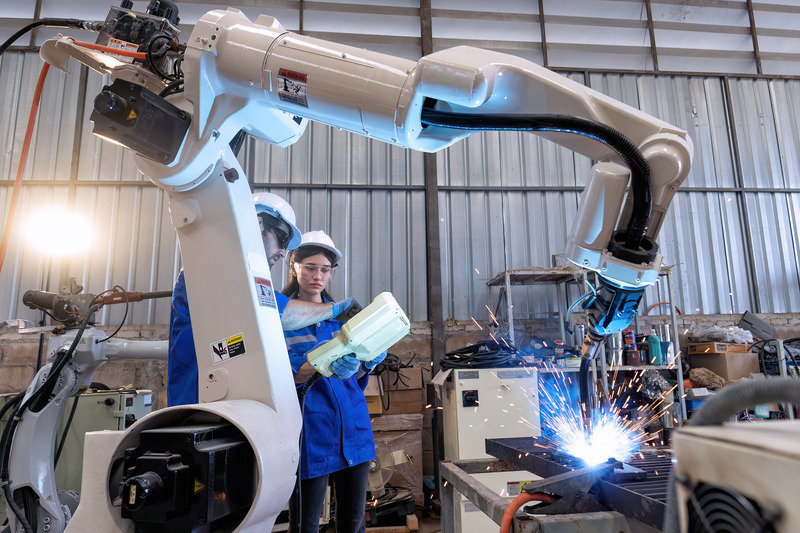
Think beyond the Moon and into the wider solar system. With advances in autonomous robotics, space exploration is becoming faster, safer, and more efficient. Space robots are robotic systems designed to assist humans or operate independently during space missions.
These machines are engineered to perform high-precision tasks while operating reliably in extreme environments such as radiation, vacuum, dust, and temperature swings. The space robotics market was valued at $5.5 billion in 2023 and is estimated to reach $7.67 billion by 2032 as governments and private companies invest in lunar, Martian, and satellite servicing missions.
Historically, the purpose of robotics in space exploration has been massive due to the uninhabitable conditions of some of the non-terrestrial objects within our solar system. Robotic technology has improved, with space robots reaching space faster and in better conditions than humans.
Between May 2018 and December 2022, a robot named Insight explored Mars, detecting over 1300 earthquakes, looking at the Earth’s crust, and collecting detailed weather data. Here’s a proper guide to space robotics, including the type, their roles, and some of the best examples.

Types Of Space Exploration Robots
Different types of space exploration robots come in different designs and are made for specific tasks. These include:
Orbiters: These robots continuously circle celestial bodies such as the moon and other planets, thus gathering data about the objects around them. Some of their features are cameras, spectrometers, and other instruments that help with magnetic fields and collecting atmospheric condition levels.
Sputnik 1 was the first ever orbiter. At the start of 2024, there were over 28,000 satellites orbiting the Earth, leading to an increase of 6.8% from 2023.
Flyby Probes: These spacecraft move close to any celestial body without getting into its orbit. They are equipped with cameras and sensors that assist in capturing data during the flybys as they are often designed for more extended-range missions within the solar system.
Autonomous Space Drones & Hopers: These robots have a compact design and specialize in navigating in low gravity. They can also move through large areas by hopping around on low-gravity bodies like asteroids.
Landers: A lander refers to a gadget that goes through a robotic space exploration mission and then descends towards the astronomical body before landing on the surface.
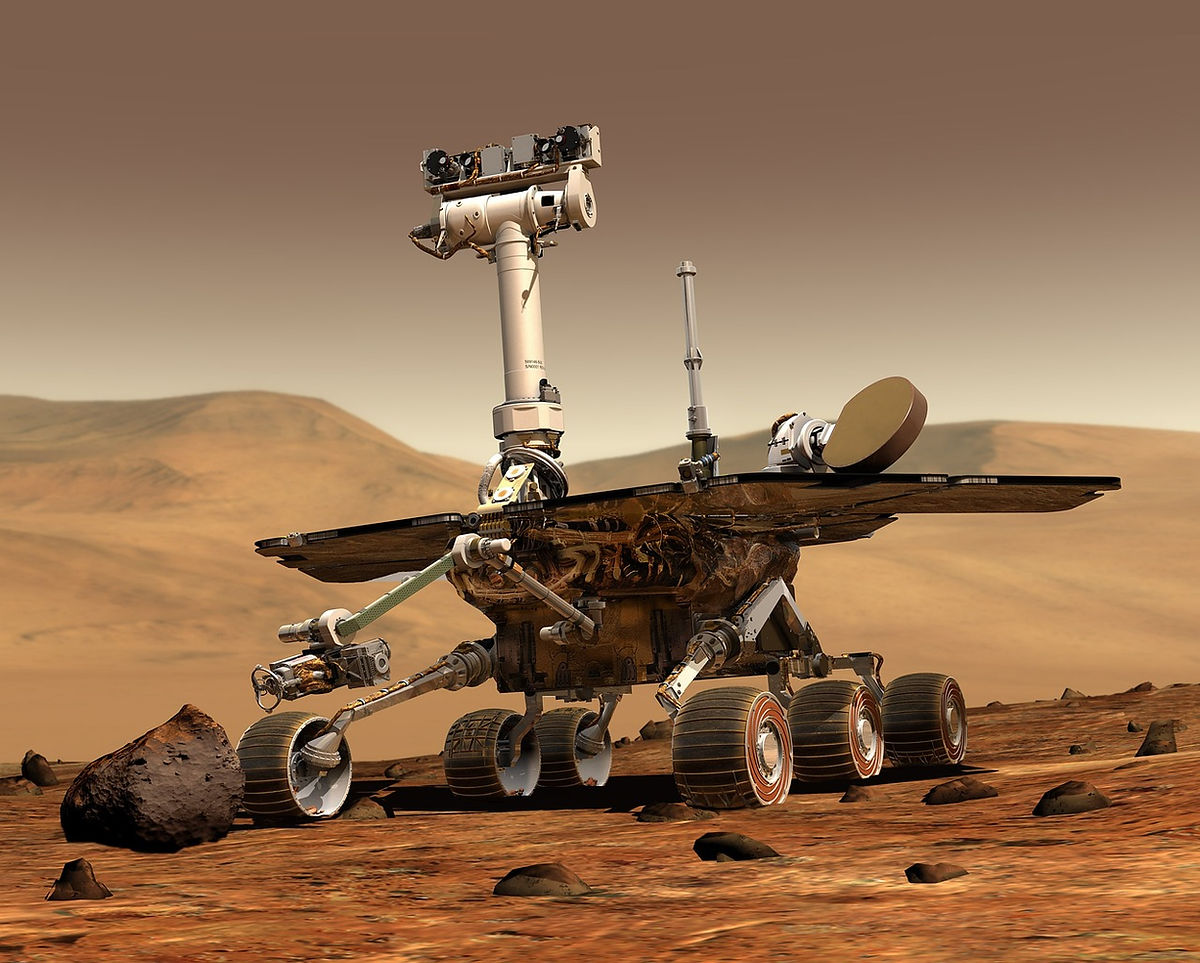
Rovers: Rovers use wheels or tracks to move across planetary surfaces, carry scientific tools, search for signs of past life, and study terrain. They have helped scientists better understand Mars and its history.
Robotic manipulators: These work as robotic hands in space, thus extending human capabilities past the physical reach. This allows the robot to handle delicate operations, including fixing satellites and spacecraft, collecting samples, and conducting complex investigations.
Roles Of Robots In Space
Robotics are indispensable in space exploration and assist in performing different tasks, thus enhancing missions that humans can later engage in. Here are some of the more profound roles of these machines in robotic space exploration missions:
Prepared For Human Missions
Robotic missions often prepare the way for human exploration by mapping terrain, testing equipment, and identifying risks before astronauts arrive.
Sample Collection
Robotic arms and tools can collect soil, rock, ice, and asteroid samples for analysis or return to Earth. Such samples provide vital data necessary for studying celestial bodies.
Exploration
The majority of the robotics are used in space. Therefore, space robots such as landers and rovers navigate to unknown territories, collecting samples, images, and data. That information offers valuable insights into the planet’s condition and assists in analyzing other planets’ rock and soil samples.
Research
Robotic instruments help analyze soil, geology, atmosphere, and scientific equipment to learn about some of the mysteries of other worlds. This data is part of why people know more about how a planet forms, its atmosphere, and the potential way to sustain life.
Repairs
Space robots assist in serving and repairing space station spacecraft and carry out heavy tasks without putting people at risk. It is the best way to protect humans from hostile environments and also help monitor water and track celestial events.
10 Real Space Robot Examples
1. Robonaut 2, NASA’s Humanoid Space Assistant
Robonaut 2 became the first ever humanoid sent to the International Space Station in 2011. It was developed by NASA to help astronauts with repetitive or hazardous tasks in microgravity.
According to NASA’s robotics team leader, humanoid robots might have all the ways of dealing with serious things, such as inspecting all the malfunctioning equipment outside the spacecraft and cleaning the solar panels. This would make the astronauts’ world easier, ensuring that their only priority would be exploration and discovery.
2. Dextre, Canada’s Space Maintenance Robot
Dextre is a versatile robot that remains in space to assist with a couple of tasks, including inspecting the space station’s surface, replacing small equipment pieces, and replacing batteries. The Canadarm2 robotic arm is attached, allowing Dextre to perform the tasks effectively.
3. Lunar Roving Vehicle, Apollo’s Moon Buggy
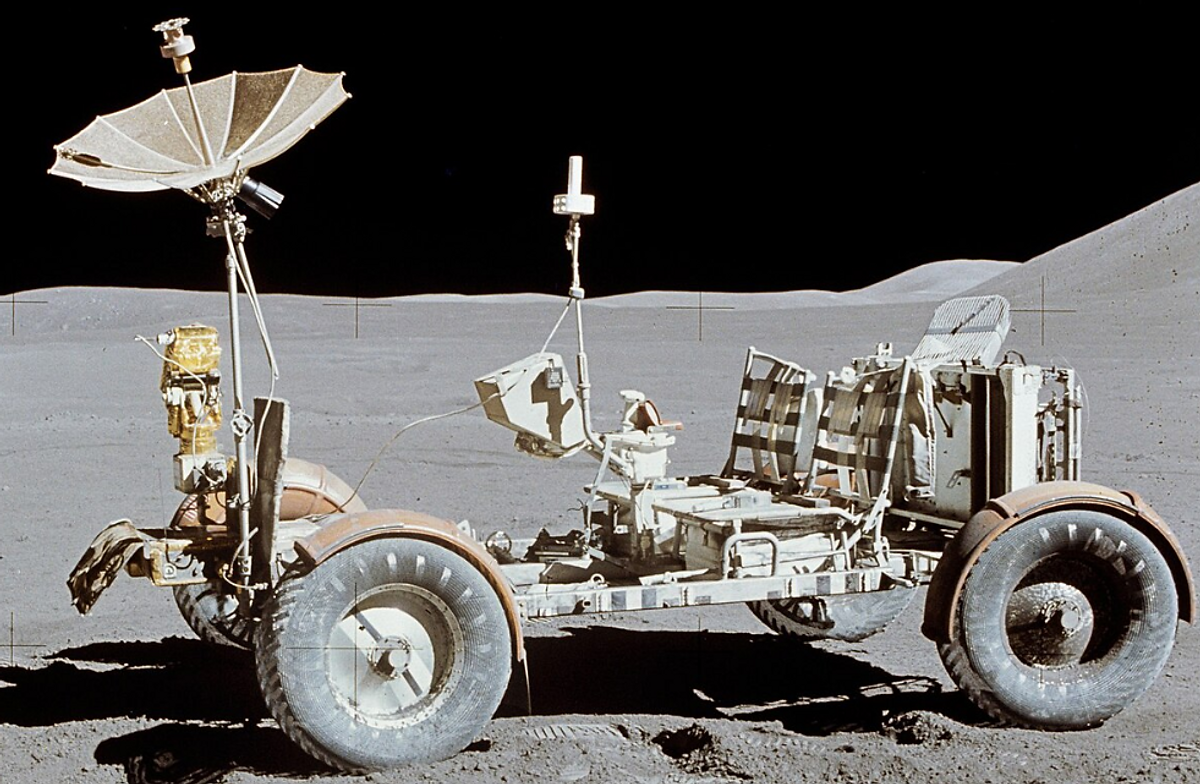
The Lunar Roving Vehicle (LRV), often called the Moon Buggy, was a battery-powered rover used during Apollo 15, 16, and 17 to help astronauts explore the Moon’s surface. It allowed crews to travel farther from the landing site, carry equipment, and move across rough terrain in low gravity more efficiently than on foot.
NASA’s Artemis program is now developing new lunar mobility vehicles, including next-generation electric rovers designed for longer missions and expanded surface exploration.
4. MIRA, The First Surgical Robot in Space
As technology continues evolving, other aspects of space exploration are also changing. MIRA stands for miniaturized in vivo robotic assistant and became the first surgical robot in space. This could pave the way for medicine during space exploration.
5. LASSIE Project, NASA’s Robotic Space Dog
NASA is currently working on training a dog-like robot LASSIE to carry out different missions in space. Unlike wheeled robots, LASSIE uses legs to move more effectively across uneven terrain, rocks, slopes, and obstacles. This design could make it especially useful for exploring the Moon, Mars, lava tubes, and other rugged planetary surfaces.
6. ClearSpace-1, Orbital Debris Removal Robot
Space debris has become a growing challenge due to inactive satellites, spent rocket stages, and fragmented hardware left behind from decades of space activity.
ClearSpace-1 is a European-led mission designed to capture and remove debris from orbit, helping create a safer and more sustainable space environment for future missions. The project has received major support from the European Space Agency as interest in orbital cleanup continues to grow.
7. EELS, NASA’s Snake Robot Explorer
EELS (Exobiology Extant Life Surveyor), is an experimental snake-like robot being developed by NASA for challenging planetary exploration missions.
Its flexible design could help it move through difficult environments such as rocky terrain, icy surfaces, narrow passages, and other areas that traditional wheeled rovers may struggle to reach on the Moon, Mars, and beyond.
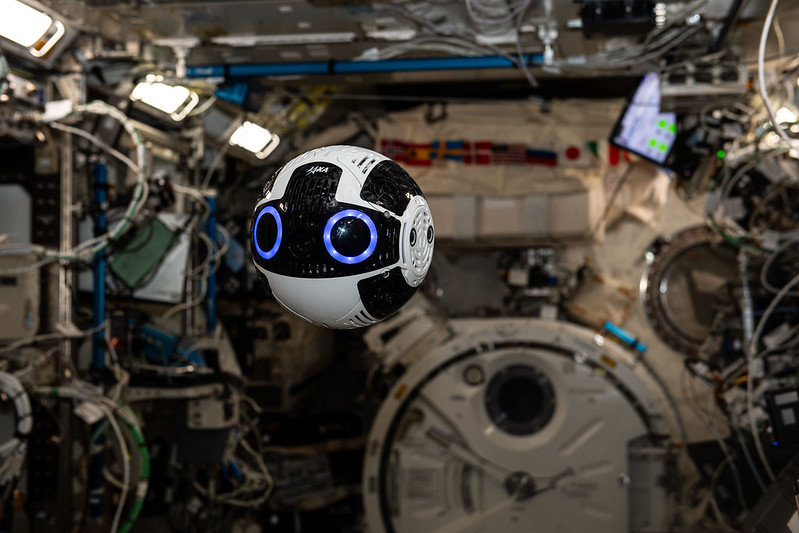
8. Astrobee, NASA’s Free-Flying Space Assistant
Astrobee is a cube-shaped autonomous robot developed by NASA to assist astronauts aboard the International Space Station.
It can move freely in microgravity, monitor inventory, capture images, and support routine tasks, allowing astronauts to focus on higher-priority mission work.
9. Curiosity Rover, NASA’s Mars Science Explorer
NASA’s Curiosity rover landed on Mars in 2012 and continues to explore the Martian surface. Equipped with cameras, drills, and scientific instruments, Curiosity studies geology, climate, and whether Mars once had conditions suitable for microbial life.
10. VValkyrie, NASA’s Humanoid Robot for Future Missions
Valkyrie is a humanoid robot developed by NASA to support future space missions and hazardous operations. Designed to work in environments built for humans,
Valkyrie can use tools, manipulate objects, and assist with maintenance tasks that may one day help astronauts on the Moon, Mars, or other space habitats.
Challenges Of Space Robots
There are communication delays: At times, it can take minutes to hours to communicate with space robots, depending on their distance from Earth. Therefore, this makes it hard for the space robots to function independently.
- Harsh Environment: There’s no denying that space robots endure radiation, low gravity, and temperature extremes. That means they should always be highly resilient and low-maintenance and go through regular maintenance.
- Power Limitations: Most space robots use solar power, but in low-light environments, they need energy-efficient designs to last as long as possible. Thus, these power limitations could, at times, affect their functionality.
- Maintenance difficulty: Repairs are often impossible once deployed.
The Future of Robotics in Space Exploration
There are lots of things shaping the future of robotics. Although robots exist in non-human form, there is a growing demand for robots that mimic human behavior and appearance.
That includes having a new way for robots to interact with humans. Robotics has provided unparalleled resilience and given people indispensable tools to assist with future exploration.
Force Torque Sensors for Space Robots
Bota Systems’ force torque sensors empower space robots with unparalleled precision, enhancing their autonomy and adaptability in extreme environments. These advanced sensors enable space robots to perform tasks such as precise sample collection, intricate repairs, and efficient material handling, even under the most challenging conditions.
By integrating our force torque sensors, you can ensure your robots navigate and operate with optimal efficiency, even on uneven terrains or in low-gravity environments.
Contact us now to explore how our innovative solutions can elevate space robotics projects and drive the next frontier of exploration.
FAQs About Space Robots
What are space robots?
Space robots are machines designed to perform tasks in outer space or on other planetary surfaces. They are used for exploration, repairs, scientific research, sample collection, and supporting astronauts during missions.
What robots are used on Mars?
Several robots have been used on Mars, including rovers such as Curiosity, Perseverance, Spirit, and Opportunity, as well as landers like InSight. These robots study the planet’s surface, climate, geology, and potential signs of past life.
Why are robots important in space?
Robots are important in space because they can operate in dangerous and extreme environments where human survival is difficult or costly. They help reduce mission risk, gather valuable scientific data, and prepare locations for future human exploration.
Can robots repair satellites?
Yes. Robots are increasingly being developed to inspect, service, refuel, and repair satellites while in orbit. These systems can extend satellite lifespan, reduce replacement costs, and help manage space debris more efficiently.