
The industrial landscape is drifting rapidly, shifting from traditional machines to collaborative robots, often called cobots. Cobots are integrated advanced systems such as AutoStore/AS that assist in the working space, thus paving the way for the new automation era.
Cobot welding is the thing with the collaborative robots market expected to reach $2.9 billion by 2031, driven by the advancement in the human-machine interface and other government initiatives to promote industrial automation.
Cobots are designed to work alongside humans instead of an isolated environment. They are versatile and are helpful in different applications, including picking, painting, screwing, welding and more, to enhance precision and efficiency.
Therefore, the successful integration of cobots in your industry needs careful planning to ensure they are compatible with the existing systems. In this blog post, we will dive into cobot applications and their advantages for the company.
Cobot Welding Definition
Cobot welding is best described as integrating collaborative robots into the welding method, thus making your work easier. It differs from traditional robots that need extensive safety measures and should always work away from humans.
The best part about cobots is that they are designed to work alongside humans, thus streamlining welding processes. With this technology, you are assured of overall productivity, accuracy and efficiency when carrying out different tasks.
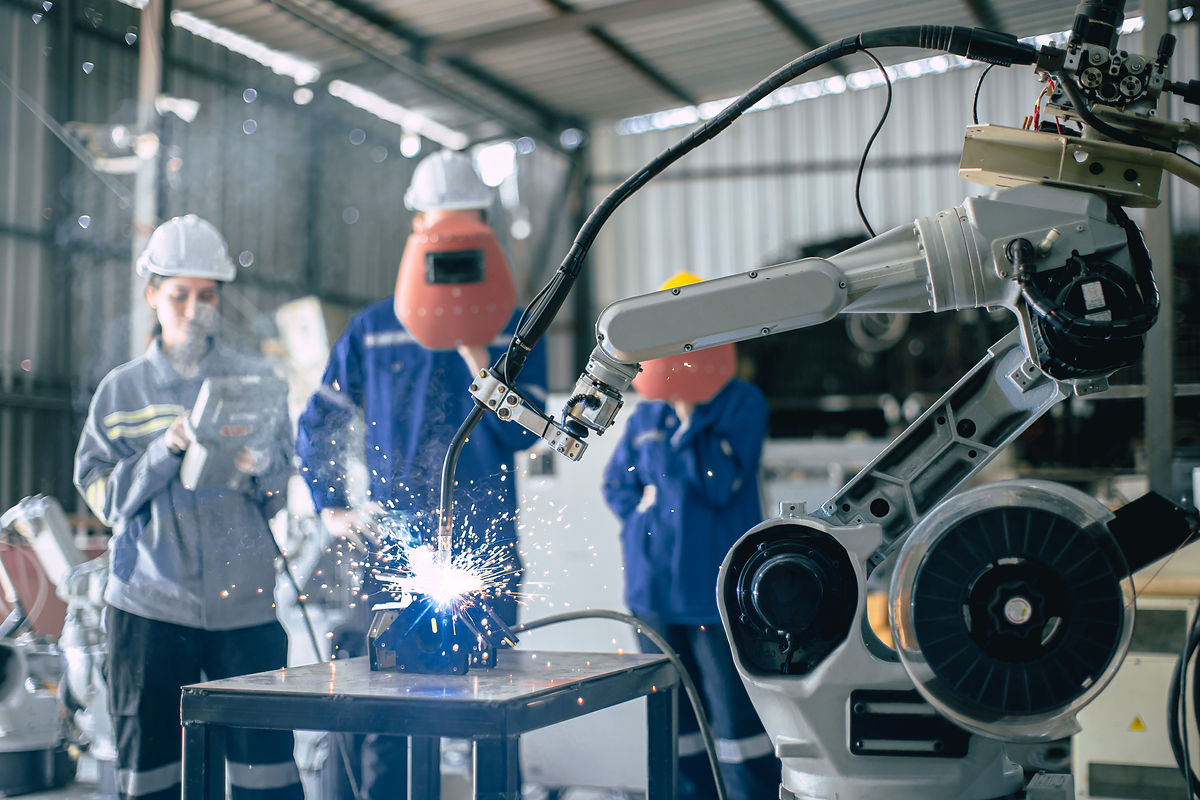
Cobot Applications In Welding
A welding cobot is useful when looking for high-quality welds on different workpieces. These gadgets have increased the repeatability of other actions without compromising the output quality. A collaborative welding robot is an ideal solution for weld operations that need to work on different workpieces.
In Automotive Industry
Cobot welding is extensively used in the automotive industry to carry out different tasks, including body panel welding and chassis welding.
According to an Association for Advancing Automation report, manufacturers ordered over 39,708 robots in 2021, with increased use of cobots in Europe and Asia-Pacific due to an aging workforce and rising wages. Therefore, they are invaluable in the automotive industry.
Aerospace
One of the industries that has ideally benefited from cobot welding is aerospace manufacturing, mainly because of the precision that comes with it. Aerospace market share was valued at 2.7 billion in 2023 and is expected to register over 13% between 2024 and 2032. Cobots uses high-quality standards necessary in aerospace manufacturing to make the process fast and smooth.
Shipbuilding
Cobots can handle heavy lifting and reduce the physical strain, thus improving overall efficiency in the shipbuilding process. The cobots focus primarily on welds, and other welders work on finishing other details.
Metal Fabrication
Cobot welding does an incredible job welding different frames, structures and components. The flexibility that welding robots offer ensures the efficient handling of different materials and that all welding specifications are met.
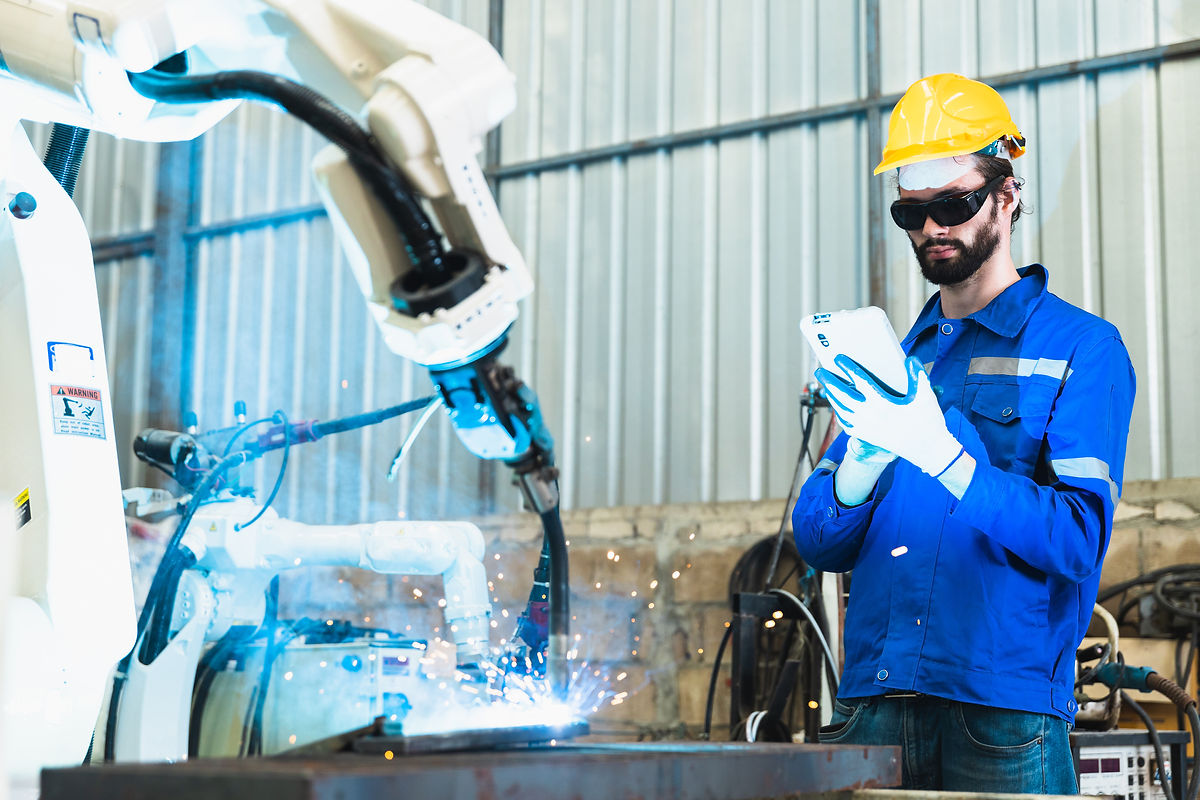
What Are The Benefits Of Collaborative Robot Welding?
Reduced Labor Shortages
Most welding companies have been experiencing a severe labor shortage, with just a few qualified people on their radar. If companies automate their welding processes, it becomes the easiest way to maintain productivity instead of having additional staff members. There will be less turnover in the workforce since people do not feel overwhelmed.
There’s Less Wastage
Although an experienced welder can give fantastic results, they sometimes make mistakes. Therefore, some products will have to be thrown away, resulting in an unexpected cost. However, with an automated machine, few cases, if any, reduce waste.
Increases Productivity
A cobot doesn’t regularly need breaks like people do. So, it can operate for 24 hours and still give perfect results. If you are working with seasoned clients in need of welding services or returning ones and looking for faster results, having cobots in your workplace makes the process fast. It can also be moved from one location to the next, thus ensuring no tasks remain undone.
Consistent Result
If you are working on a repetitive task, a robot will always perform an identical task until you change the operation. It doesn’t matter how experienced your workers are; they can’t perform repeated tasks as accurately as a weld cobot.
Easy To Maintain
Industrial welding robots are enormous and take up a lot of space. You must have them enclosed in robot cells and go through programming in advance before setting up. However, that’s different for cobots, which are easy to install. You do not need a robotics specialist to come to your company and program it. Instead, you could efficiently train some of the welders in your facility to use a cobot welding package.
Offer Flexibility
Industrial robots are bolted to the floor and often used for specific operations. A cobot welding robot works alongside humans and does not have to run when people aren’t around. This gadget ensures that you will be using welding cobots for large assembly lines and other small tasks within your company.
In 2021, there were over 11,500 supply chain disruptions. Therefore, having conventional robots might be a hindrance. Reprograming welding cobots is straightforward since many plug-and-play functionalities can make your work easier.
Job Security
Instead of having conventional robots, it helps prevent social issues regarding job security. The automation process creates more positions, ensuring that displacement doesn’t happen. Cobots are different and do not lead to human layoffs.
Long-Term Cost-Effectiveness
Purchasing a cobot weld isn’t cheap. The average price of a cobot is $25,000 to $50,000, excluding installation charges. However, it comes in handy depending on model, size, sensor, etc.
Comparing the rates for a one-time installation to the welders’ salary and benefits, it is worth investing in cobot welding in the long run.
Features Of Cobot Welding Robot
Collaboration: They are designed to work with human welders in proximity without adding safety barriers.
Sensors: Cobots are equipped with safety sensors to detect human presence and automatically shut down, thus preventing accidents.
Flexible: With different cobot welding systems, you are assured of having items that can be programmed and reprogrammed to adapt to various environments, and they are versatile for a couple of other applications.
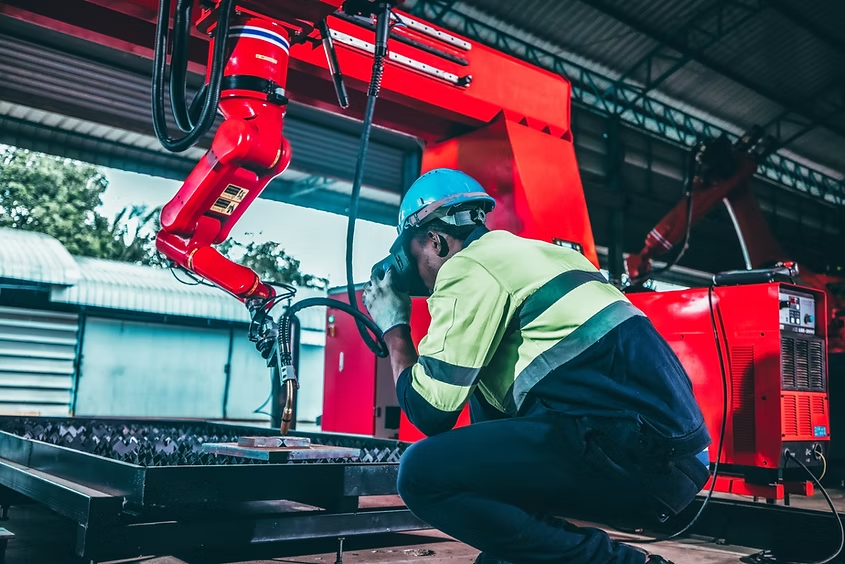
What Is The Difference Between Collaborative Welding And Manual Welding?
There is a whole difference between cobot welding and traditional manual welding. Cobot welding provides a balance between accuracy and speed that manual welding lacks. With manual welding, you need to work with skilled welders, which can be dangerous if you fail to take the proper precautions.
However, manual welding is the least expensive and excels in a high mix of welding tasks; thus, it becomes less efficient when dealing with big batch sizes.
How To Incorporate Welders To Work With Cobots
When it comes to cobot welding, it becomes easy to train your welders to use the program and still ensure your final welds are incredible. Using cobot welding means that your people will spend less time on simple welds and more time finishing complicated welding tasks.
That increases productivity and efficiency. With the technology, welders quickly begin working with cobots after learning a few tactics. Investing in a cobot welder is not a waste of time or money but will be a great investment for future tasks.
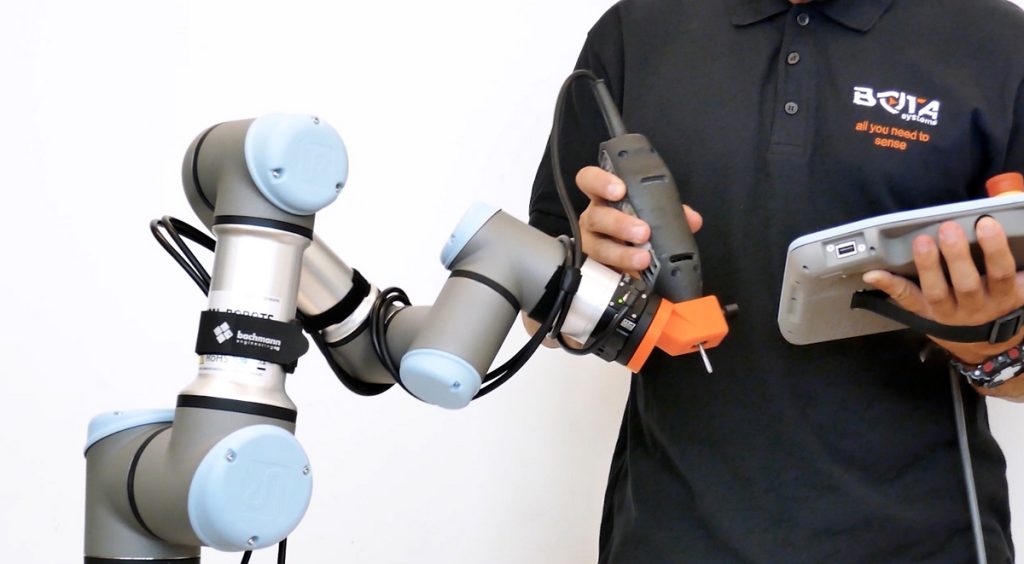
Enhance Welding Precision with Bota Systems’ Force Torque Sensors
Collaborative robots (cobots) are revolutionizing welding, combining human expertise with automation’s precision. To maximize your cobots’ efficiency and adaptability, equip them with Bota Systems’ force torque sensors.
Our sensors ensure precise force control, enabling cobots to handle intricate welds with consistent quality across various industries—from automotive to aerospace. With Bota Systems, you can reduce waste, improve safety, and boost productivity without sacrificing accuracy.
Stay ahead in the evolving welding industry. Contact us today to integrate our force torque sensors into your cobot workflow and unlock unparalleled performance.