
From the factory floor to surgical suites, industrial robots are everywhere and robotic arms play a key role as we move into an era where automation has become the norm.
But with a wide variety of robotic arms out there serving a diverse range of robotic arm applications, navigating the world of these mechanical arms can be a daunting task.
This guide aims to take the mystery out of what is a robotic arm, exploring their different types and showing how they shape our world.
Deciphering the Mechanics: How Robotic Arms Work
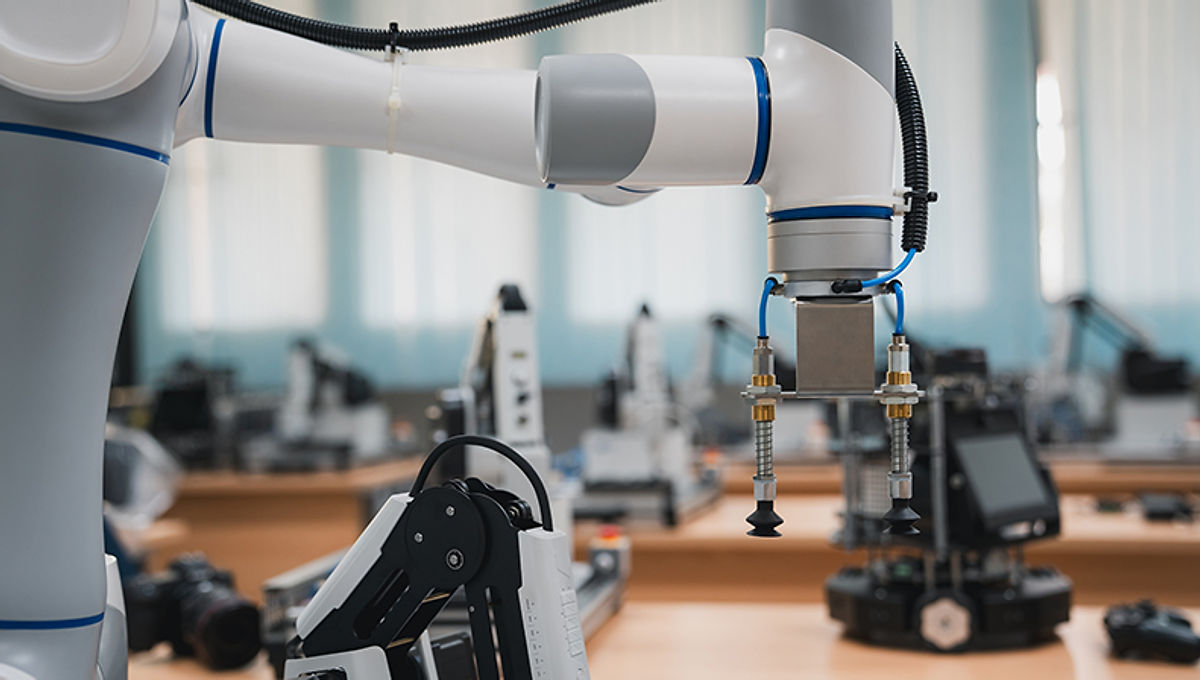
So, how do Robotic arms work? At their core, robotic arms are programmable machines designed to mimic human arm movements and functions. Unlike their biological counterparts, these mechanical robotic arms have enhanced strength, speed, and accuracy, making them ideal for demanding tasks.
Here’s a breakdown of the key components and principles that make these engineering marvels work:
Hardware Components:
Base and arm structure: This forms the foundation, usually made of sturdy materials like steel or aluminum, providing stability and support for the movements of mechanical robotic arms.
Joints: These act as the articulation points, allowing the robotic arm to bend and rotate in different directions. The number and type of joints determine the arm’s flexibility and range of motion. Common types include revolute joints (rotational) and prismatic joints (linear).
Actuators: These are the “muscles” of the robotic arm that convert electrical signals into physical movement. Common types include electric motors, hydraulic pistons, and pneumatic cylinders.
End-effector: This is the “hand” of the industrial robot, customized based on the specific task. It could be a gripper, welder, tool holder, or any other specialized equipment needed for the job.
Sensors: These provide feedback to the robotic arm’s control system, allowing it to monitor its position, forces exerted, and surrounding environment. Examples include force-torque sensors, vision sensors, and proximity sensors.
Control System:
Controller: This is the brain of the robotic arm, responsible for processing information, sending commands to the actuators, and ensuring precise movements. It interprets the programmed instructions and translates them into real-time control signals.
Software: This is the set of programs or algorithms that dictate the behavior of the mechanical arm. It defines the desired motions, interprets sensor data, and adjusts movements based on feedback.
Working principle:
The control system reads the programmed instructions and communicates them to the actuators.
The actuators then move the joints, causing the robotic arm to perform the desired motion. Sensors provide feedback about the arm’s position, forces involved, and surroundings. This allows the control system to adjust and refine the movements for optimal performance.
Why do we even need these Industrial Robots? Benefits of Robotic Arms
There are several reasons why robotic arms have become essential tools across industries:
Increased Efficiency and Productivity
What do industrial robots do best? They work tirelessly for extended periods without breaks, completing tasks much faster than humans. This significantly increases production output, leading to higher efficiency and productivity for businesses.
Enhanced Accuracy and Precision
Robotic arms excel at tasks requiring high precision and repeatability. They can perform complex motions with minimal variation, ensuring consistent and accurate results.
This is particularly important in sectors like manufacturing and healthcare.
Reduced Costs
While the initial investment in industrial robotic arms might be significant, the long-term cost savings can be substantial.
Automation reduces reliance on manual labor, minimizing labor costs and associated overheads. Additionally, these industrial robots can reduce material waste and improve product quality, further reducing the cost.
Improved Safety
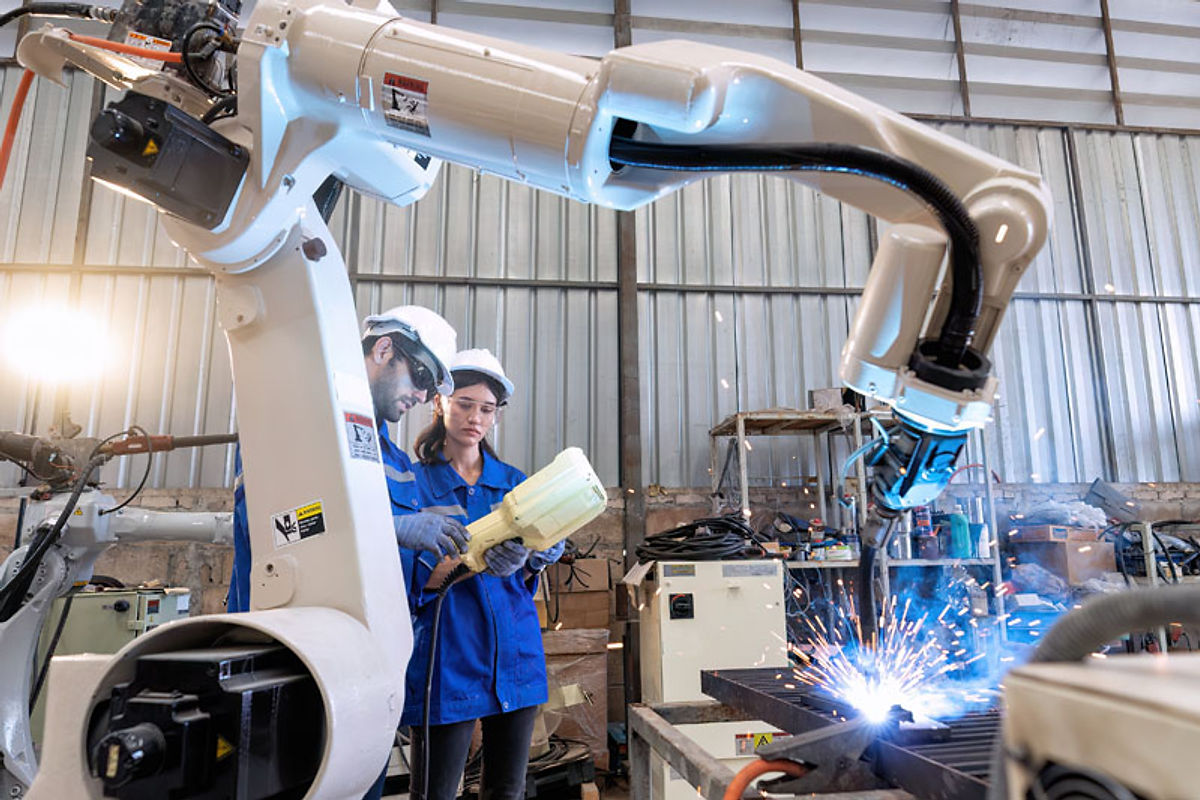
Robotic arms can perform hazardous tasks, like welding or handling heavy objects. This helps in reducing human exposure to risks and injuries.
Consequently, a safer work environment for employees can be created.
Addressing Labor Shortages
In some industries, there’s a growing shortage of skilled labor. Robotic arms can fill this gap, taking on tasks requiring specific skills or physical capabilities, ensuring businesses can function effectively.
New Possibilities and Innovation
They’re not just replacing human tasks—they’re enabling entirely new robotic arm applications, from space exploration to precision surgeries, pushing the limits of what’s possible.
This opens doors for innovation and pushes boundaries in various fields.
Revolutionizing Industrial Robots: Types of Robotic Arms
Let’s dive into the types of robot arms that power automation in countless industries:
Articulated Robotic Arms
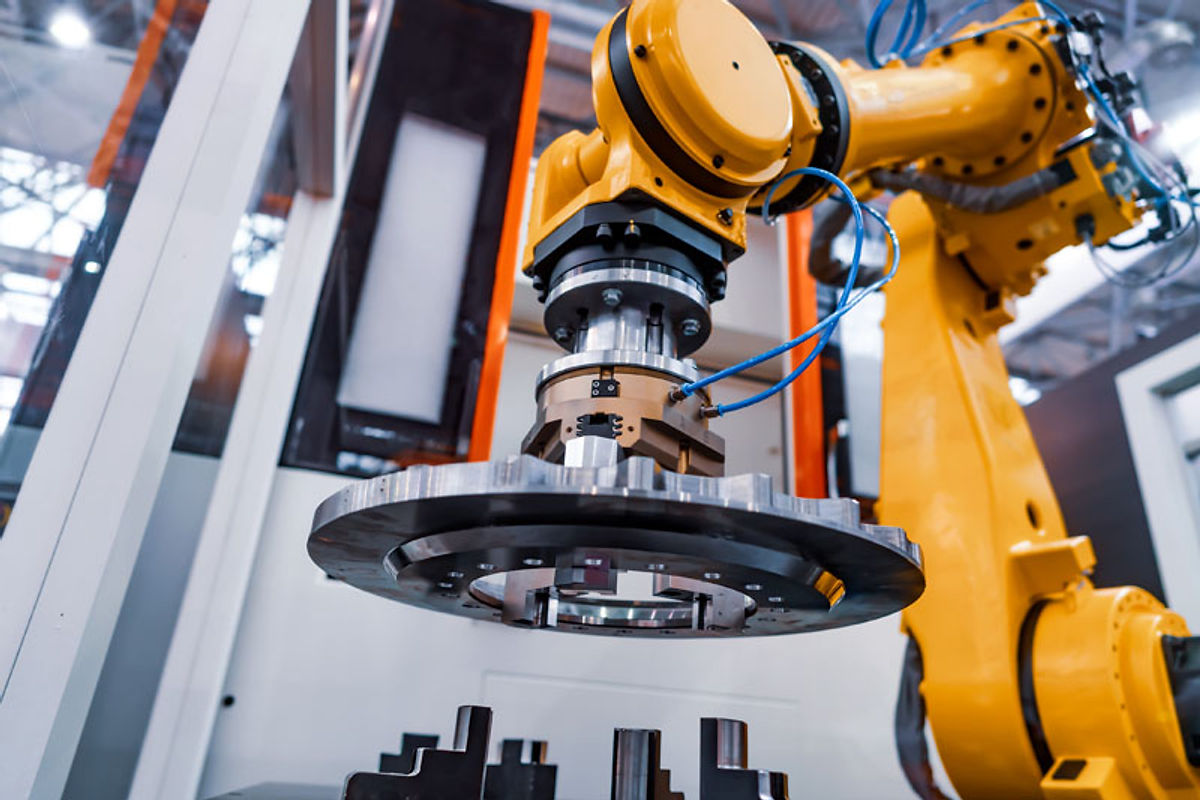
These adaptable champions are the most common robotic arm type. With five or more joints offering a wide range of motion they are awesome in mimicking the motion of a human arm. They are great at tasks that need a lot of flexibility and dexterity, like welding and painting.
Also, they are well suited as robotic arms in manufacturing and are frequently used in tasks like assembly. Six-axis robots, a popular subcategory, boast even greater maneuverability with their additional rotational joint.
Advantages:
High flexibility with multiple axes of motion.
Capable of complex, human-like movements.
Suitable for a wide range of payloads and tasks.
Applications:
Welding and painting in automotive production.
Assembly operations in electronics and consumer goods.
Material handling and palletizing.
Machine tending and packaging.
Collaborative Industrial Robots (Cobots)
Designed for safe interaction with humans, cobots bridge the gap between automation and human collaboration.
Their smaller size, lightweight construction, and safety features make them ideal for shared workspaces, assisting with tasks like material handling and quality inspection.
Advantages:
Safe to work alongside humans without barriers.
Easy to program and deploy for new tasks.
Adaptable for multiple applications.
Applications:
Material handling in mixed workspaces.
Assembly and screwdriving tasks.
Quality inspection and testing.
Packaging and palletizing in flexible production lines.
SCARA Robots (Selective Compliance Articulated Robot Arm)
Known for their speed and precision, SCARA robots excel in pick-and-place applications. Their unique design, featuring two parallel arms and a fixed vertical axis, allows for fast, precise movements within a defined plane.
This makes them perfect for tasks like electronic assembly and printed circuit board handling.
Advantages:
Extremely fast cycle times.
High repeatability for precision tasks.
Compact footprint for crowded workspaces.
Applications:
Electronic assembly, including PCB insertion.
Pick-and-place operations in packaging.
Screwdriving and fastening.
Small-parts handling in medical device production.
Cartesian Robots (Gantry Robots)
These rectilinear robots move along three linear axes (X, Y, and Z), offering predictable and precise movements within a cubic workspace.
They are frequently used for machine loading and unloading and are renowned for their cost-effectiveness and ease of use.
Advantages:
Simple design and programming.
High precision for linear tasks.
Cost-effective and easily scalable.
Applications:
Machine loading and unloading.
3D printing and CNC machining.
Pick-and-place for large items.
Inspection and metrology.
Cylindrical Industrial Robots
Compact and efficient, cylindrical robotic arms move along a vertical axis and rotate horizontally, offering a limited but focused range of motion.
They are typically used for simple tasks like spot welding and machine tool handling in space-constrained environments.
Advantages:
Simple and sturdy design.
Ideal for vertical assembly tasks.
Compact footprint for space-constrained environments.
Applications:
Spot welding in automotive lines.
Handling machine tools.
Simple material handling in tight spaces.
Assembly of vertical structures.
Spherical/Polar Robots
These less common robot arms offer a spherical workspace, ideal for tasks requiring omnidirectional reach.
Although not as widely used as other types, they can be found in applications like painting and material handling.
Advantages:
Large, spherical work envelope.
Robust joints for heavy loads.
Good for reaching around obstacles.
Applications:
Spray painting in automotive and furniture.
Heavy material handling.
Assembly of large or complex shapes.
Research applications in R&D labs.
Parallel/Delta Robots
Designed for high-speed applications, these parallel industrial robots leverage a unique, parallelogram-based design to achieve exceptional speed and precision.
They are often used in food processing, packaging, and other fast-paced tasks.
Advantages:
Extremely fast movement and cycle times.
High precision for small, light items.
Minimal moving mass, leading to energy efficiency.
Applications:
Food processing and packaging.
Pharmaceutical sorting and packing.
Electronics assembly.
Pick-and-place for lightweight products.
Anthropomorphic Robots
Although uncommon in industrial settings, these robots possess exceptional dexterity and resemble humans in that they have two or more arms.
Though still under development, they hold promise for future applications requiring human-like interaction and manipulation.
Advantages:
Human-like flexibility for complex tasks.
Potential to work in human-designed environments.
Ability to use standard tools and equipment.
Applications:
Research and development in robotics.
Advanced assembly tasks in aerospace or defense.
Healthcare and assistive technologies.
Future potential for highly adaptive factory roles.
Applications of Robotic Arms
The true power of robotic arms lies in their wide range of robotic arm applications across industries:
Robotic arms in Manufacturing
Robotic arms are the undisputed leaders of the factory floor. They automate tasks like painting, welding, assembly, and material handling, which increases safety, accuracy, and productivity.
Logistics and Warehousing
From sorting packages to palletizing goods, robotic arms streamline logistics and warehousing operations, ensuring efficient and rapid product flow.
Healthcare
Minimally invasive surgery, rehabilitation assistance, and medication dispensing are just a few ways robotic arms are revolutionizing healthcare, improving patient outcomes and reducing medical errors.
Agriculture
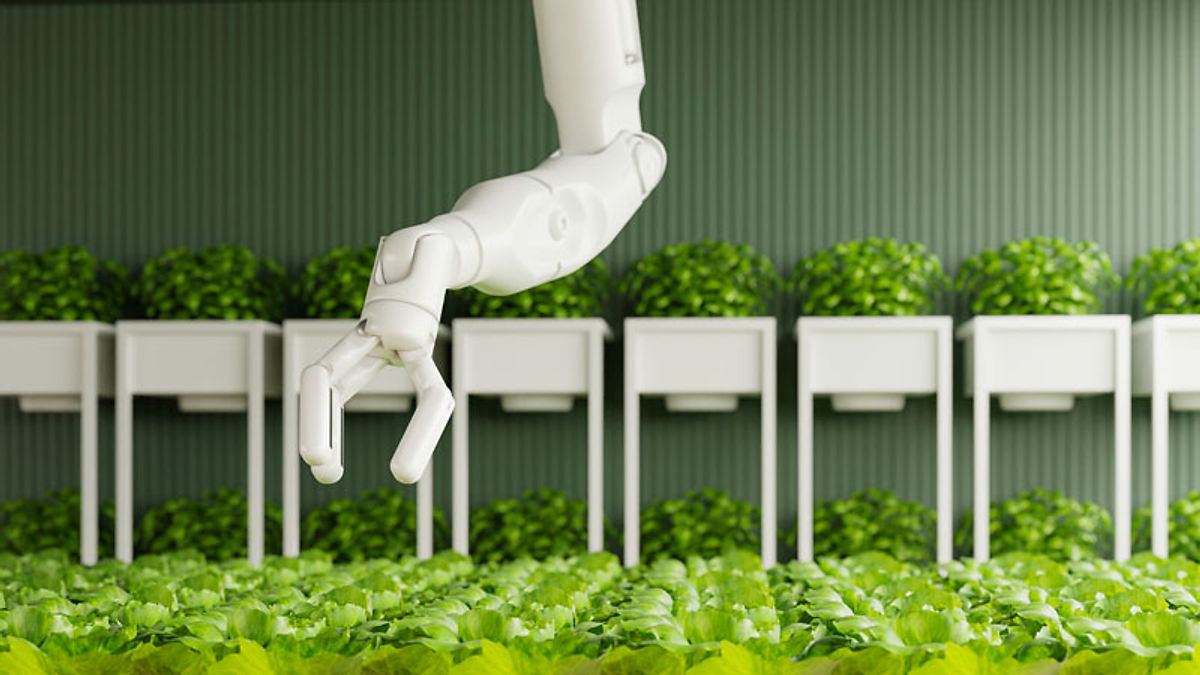
From planting and harvesting to sorting crops – these mechanical arms are increasingly contributing to sustainable and efficient agriculture, dealing with labor shortages and ensuring food security.
Construction
Robotic arms are improving safety and efficiency on construction sites by lowering human exposure to risks and accelerating project completion for tasks like welding beams and laying bricks.
Space Exploration
From assembling spacecraft to exploring alien landscapes, robotic arms play a crucial role in space exploration, pushing the boundaries of human reach and knowledge.
This concludes our exploration of what is a robotic arm, its mechanics, the types of robot arms, and the incredible range of robotic arm applications. As automation continues to evolve, the potential for these machines is truly limitless!
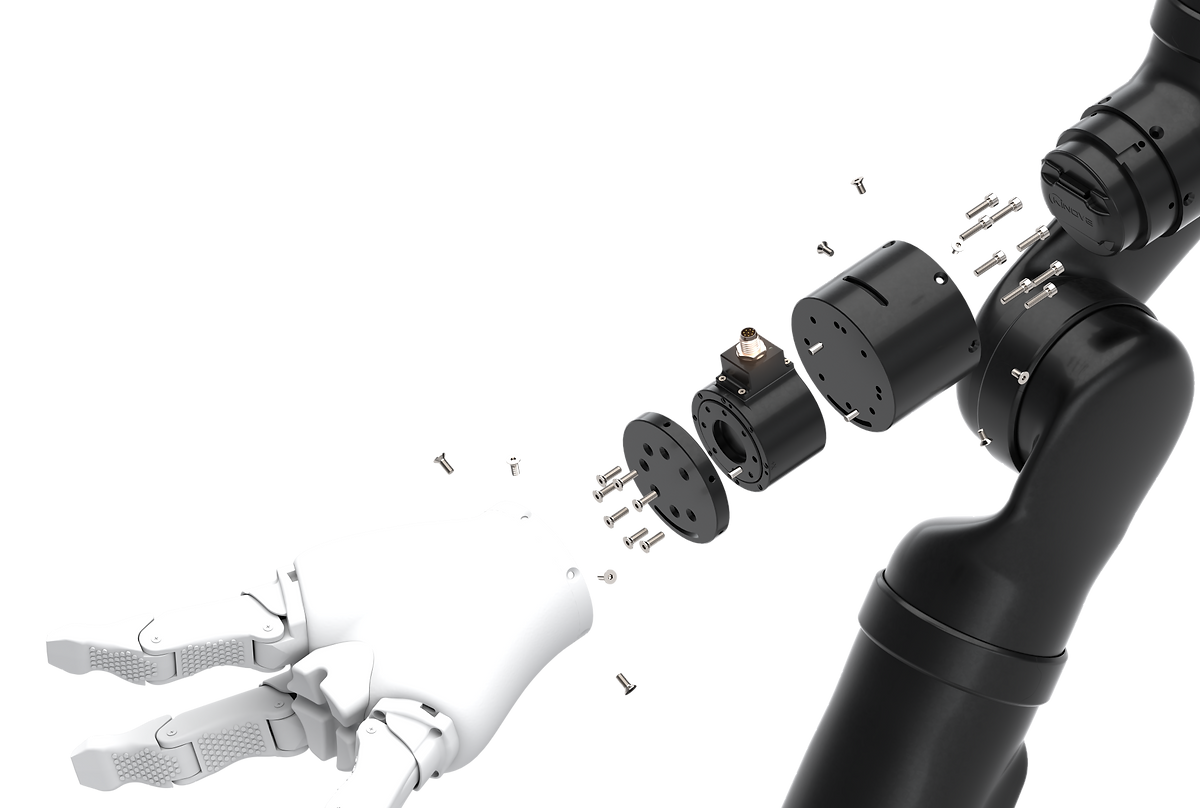
The Touch of Innovation: Force-torque technology and the Future of Industrial Robots
While robotic arms have come a long way, their capabilities are still limited by their lack of “touch.” This is where companies like Bota Systems come in, pioneering the development of advanced force-torque sensors that equip industrial robots with a sense of touch.
Force-torque sensors measure the forces and torques acting on the robot’s arm, enabling it to interact with objects more delicately and precisely.
Imagine a robotic arm assembling a delicate electronic device. With force-torque sensors, it can “feel” the pressure it applies and adjust its movements accordingly, preventing damage and ensuring perfect assembly.
This technology opens up exciting possibilities for industrial robots to handle fragile objects, perform complex tasks requiring fine motor skills, and even collaborate more seamlessly with humans.
Companies like Bota Systems are at the forefront of developing advanced force-torque sensors that are compact, accurate, and easy to integrate into robotic arms. Their vision is for robots to work and move as naturally and freely as humans. The key piece of this puzzle is the force-torque technology.
As force-torque technology becomes more sophisticated and affordable, we can expect to see its integration into a wider range of robotic arms. This will lead to a new generation of industrial robots with enhanced dexterity, safety, and adaptability.
Ready to enhance your automation? Explore Bota Systems’ force-torque sensors and discover how they can bring precision and flexibility to your robotic solutions.


