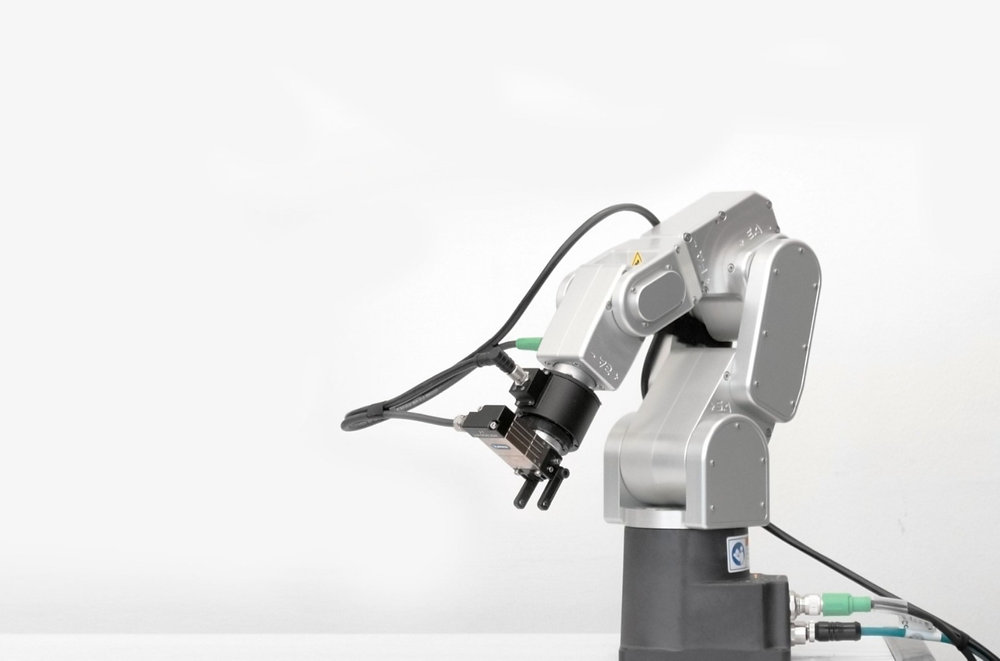
As technology continues to evolve rapidly, many businesses are integrating autonomous robots into their operations to stay ahead of the curve.
It’s no wonder the global autonomous robots market is expected to experience exponential growth. In 2021, it was valued at $2.4 billion and is projected to reach $10.5 billion by 2028. This represents a compound annual growth rate (CAGR) of around 23% for the forecast period 2016 to 2028.
But what exactly are autonomous robots, and how are they used? In this guide, we’ll explore these key questions to help you determine whether they’re suitable for your business.
What Are Autonomous Robots?
Autonomy is the ability to make decisions without external interference. As the name implies, autonomous robots can make independent decisions without human intervention.
These robots have advanced features that enable them to perceive their environment, make decisions, and execute various tasks with remarkable precision.
How Do Autonomous Robots Work?
Autonomous robots have various sophisticated components that allow them to work without human control. Let’s explore these key components in detail:
Sensors
Sensors are simply the eyes and ears of an autonomous robot. Sensors help robots to understand their environment. Some common examples of sensors include cameras, LiDAR, radar, sonar, and range-finding sensors.
Actuators
Our muscles help us to perform various actions, like holding everyday objects. Similarly, robots have muscles called actuators.
Actuators convert energy into physical motion, helping autonomous robots to perform mechanical movements, such as grasping objects or moving from place to place.
Controllers
Controllers are the robot’s brain. They analyze sensor data, make decisions, and send instructions to the actuator to execute required actions.
Machine Learning and Artificial Intelligence
Like humans, modern autonomous robots can learn from their experiences. Machine learning and artificial intelligence (AI) make this possible.
Instead of just following pre-set instructions, robots that employ machine learning and AI can learn from experience and adapt their behavior. For instance, Sony’s Aibo robotic dog can learn its owner’s preferences after several interactions and change its behavior.
Types of Autonomous Robots
There are various types of autonomous robots. Here are the most common:
Cleaning Robots
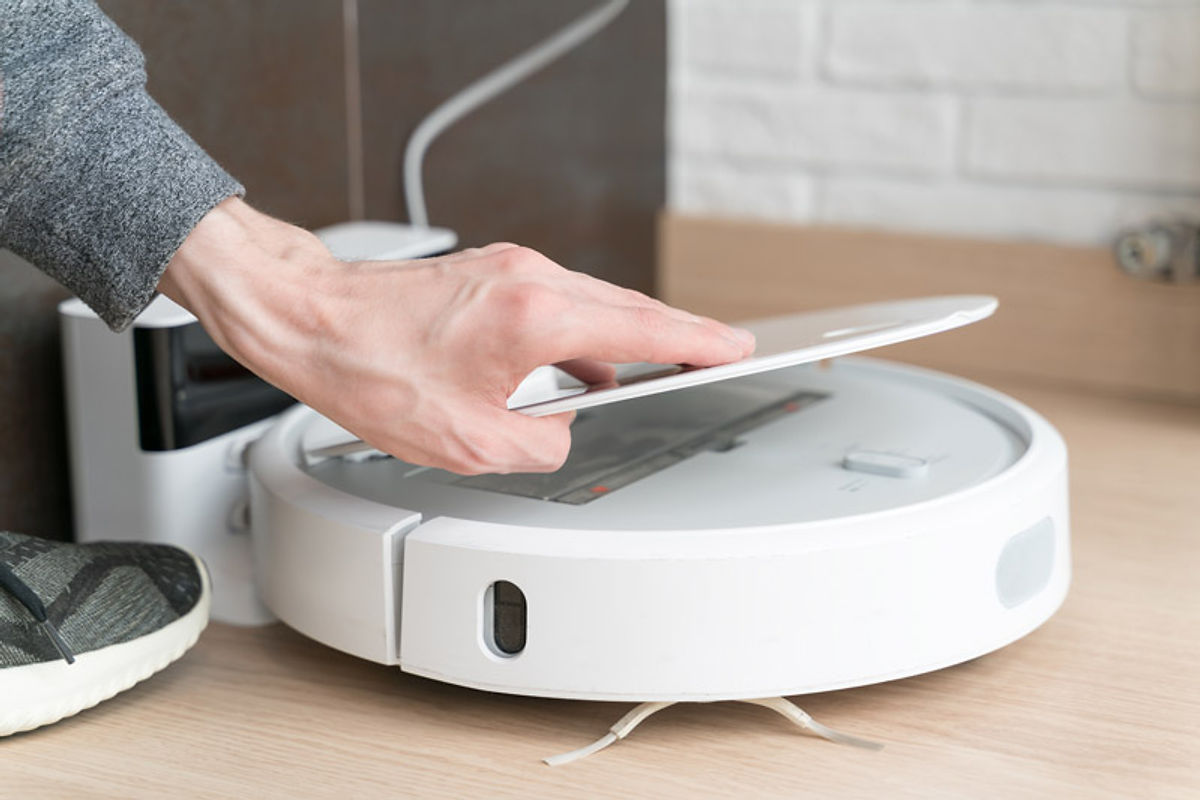
Cleaning robots are undoubtedly one of the most ubiquitous autonomous robots. These robots use sensors to map their environment, avoid obstacles, and clean areas efficiently without human intervention.
Generally, cleaning robots are programmed to clean a specific area, such as a hospital corridor or living room. iRobot’s Roomba vacuum cleaner is a prime example of a cleaning robot. The latest model of the Roomba vacuum cleaner is a sophisticated autonomous robot that can vacuum, mop, and even clean itself once it’s done.
Picking Robots
Picking robots are mostly used in warehouses and manufacturing facilities to retrieve and transport products. They are often employed in warehouses that handle large shipments or have demand spikes.
Most picking robots use vision systems to identify, grasp, and transport objects from place to place.
Sorting Robots

Like picking robots, sorting robots are mostly used in warehouses. Most sorting robots use vision systems to sort items based on their shape, size, height, weight, and other characteristics before they’re dispatched.
Autonomous Vehicles
Autonomous vehicles, also known as driverless or self-driving cars, are robots that control their own operations and require no human intervention to move from place to place. These vehicles use various technologies, including cameras, lasers, sonar, and AI, to navigate.
What Are Autonomous Robots Used For?
Autonomous robots have a variety of use cases. Here are some sectors where they’re often employed:
Manufacturing
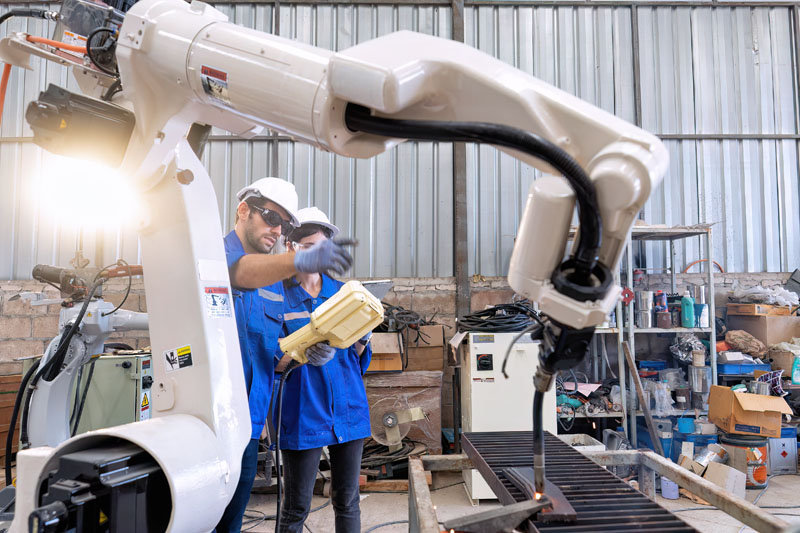
Autonomous robots are commonplace in many manufacturing facilities. From assembling parts and welding to painting components, manufacturers use autonomous robots to perform various tasks.
Unlike human workers, autonomous robots can perform tasks with utmost precision and speed. This makes them perfect for repetitive, time-sensitive, and delicate tasks where small errors can prove costly, such as assembling small electronic components.
Autonomous robots are also flexible. With just a few changes to their programming, they can shift from assembling one product to another to cater to evolving market demands.
And best of all? Autonomous robots can work tirelessly round-the-clock, resulting in increased output.
Many car manufacturers use autonomous robots to automate many of their processes, such as assembly, painting, welding, and material handling. For instance, BMW uses robots to assemble custom products on the factory line.
Logistics and Warehousing
Autonomous robots have transformed warehouse operations. In the past, human workers had to perform various repetitive and mundane tasks in warehouses. Well, not anymore. Nowadays, warehouses use autonomous robots to locate items, track inventory, and transport products from place to place.
As a result, autonomous robots have relieved employees in warehouses from performing time-consuming and burdensome repetitive tasks, allowing them to focus on other core tasks. They have also helped businesses to streamline their operations, resulting in faster deliveries to customers.
Amazon uses autonomous robots in its warehouses to streamline operations. The company’s first autonomous mobile robot, Proteus, uses computer vision and machine learning to deliver packages to delivery trucks.
Healthcare
Healthcare workers are at high risk of contracting various diseases due to their exposure to contaminants. That’s where autonomous robots come in. They can perform various functions such as disinfection and transport of medical supplies, preventing healthcare workers from coming into contact with potential contaminants.
Additionally, since autonomous robots carry out repetitive mundane tasks, such as delivering linen, medication, and medication supplies to patients, they allow healthcare professionals to dedicate more time to higher-level tasks and patient care.
RoomieBot is a prime example of a healthcare robot used in the healthcare sector. Hospitals in Mexico used the robot that Roomie developed during the COVID-19 pandemic to take patients’ vitals, such as body temperature and blood oxygen level, when they arrived at the hospital.
Eve is another good example. The healthcare robot is used at the UCSF San Francisco Medical Center at Mission Bay to transport supplies to where they’re required, allowing healthcare professionals to focus on other essential tasks.
Agriculture
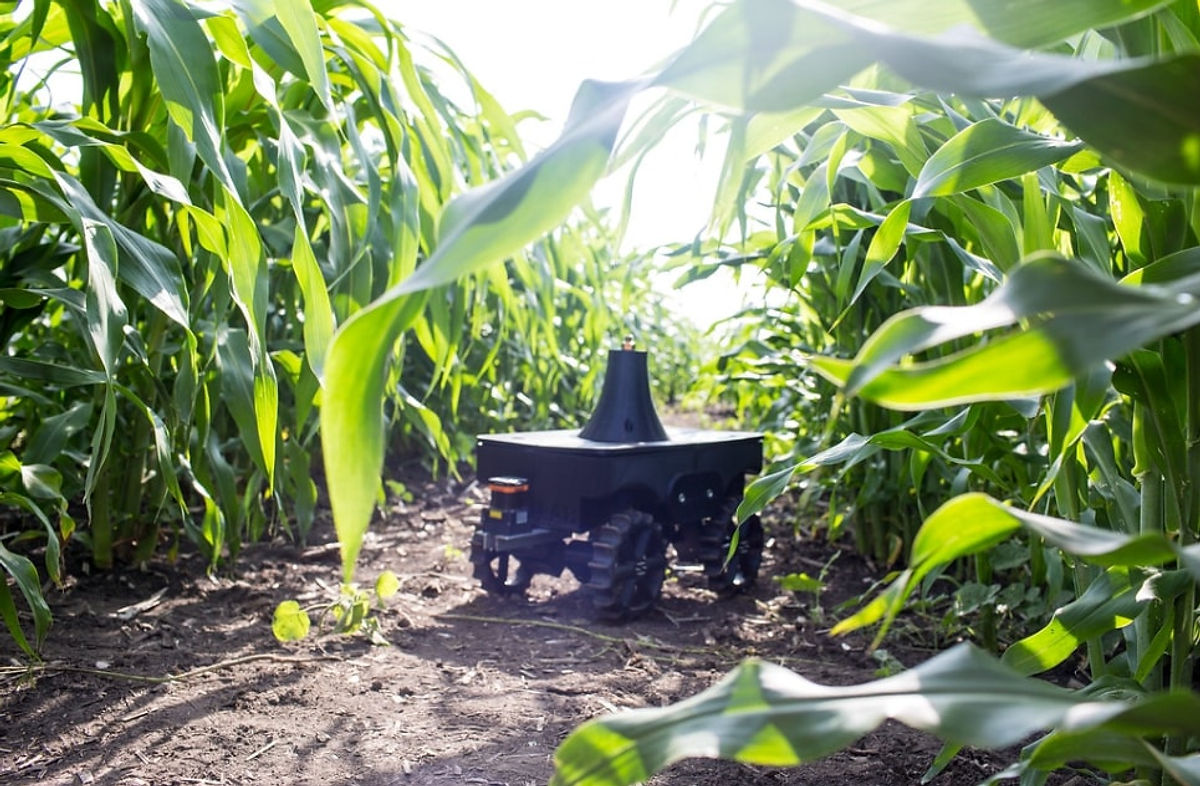
The use of autonomous robots is also gaining traction in the agriculture sector. In the sector, autonomous robots are used to perform various functions, such as planting seeds, harvesting crops, eliminating weeds, evaluating soil quality, to name but a few tasks.
For example, in the United States, New Zealand, and Europe, farmers are using robots that can pick, sort, and pack apples. The autonomous apple-packers use suction to delicately collect apples from a conveyor and place them in display trays. Subsequently, they use computer vision to position the apples, so that the sides with vibrant colors face upwards.
Disaster Response
Autonomous robots are often used after disasters such as building collapse to rescue people who may be trapped under the debris. This puts humans out of harm’s way.
For instance, researchers from the University of Colorado Boulder developed a robot that can find survivors in collapsed mines, caves, and buildings. The robot uses advanced algorithms and sensors to navigate challenging environments with ease.
Research
Autonomous robots are also used to perform complex research. For example, researchers at Virginia Tech developed a life-like autonomous robotic jellyfish designed to assist with military surveillance, clean oil spills, and patrol the ocean.
Streamline Your Processes With Autonomous Robotics

As autonomous robots continue to revolutionize various industries, the need for precision and adaptability in these machines becomes ever more critical.
Bota Systems, a leader in advanced sensor technology, plays a pivotal role in ensuring that autonomous robots perform their tasks with unparalleled accuracy. Our force torque sensors are essential for enabling robots to interact effectively with their environment, whether it’s in manufacturing, healthcare, or disaster response.
Contact us today to learn more about how our force torque sensors can help you stay ahead of the curve.