The rehabilitation robotics market is growing exponentially due to advancements in robotics technology and the growing demand for robotics solutions in the healthcare industry. In 2024, the rehab robotics market was valued at $428 million, and analysts expect it to reach $1.03 billion by 2030.
So, what are rehabilitation robots exactly? In this blog post, we’ll explore types of rehab robots, their uses, and how they are transforming the healthcare industry.
What Is a Rehabilitation Robot?
A rehabilitation or rehab robot is a machine designed to improve movement in individuals with physical impairments by providing targeted assistance and repetitive exercises.
Types of Rehabilitation Robots
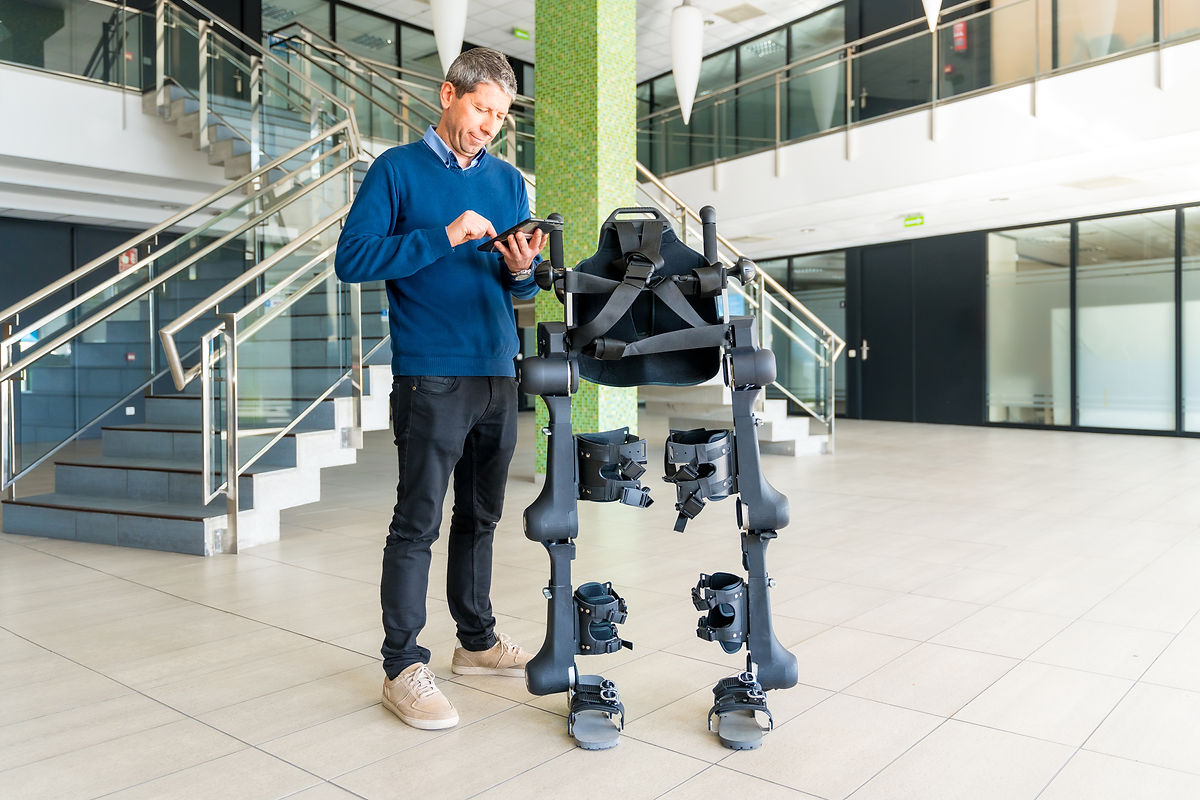
There are primarily two kinds of rehabilitation robots: exoskeleton and end-effector robots.
Exoskeleton robots are the most common type of rehab robot. They are wearable mechanical devices that help individuals move and are designed to improve the wearer’s physical abilities. Exoskeleton robots have motors, sensors, and hydraulic systems that move the joints.
On the other hand, end-effector robots are machines that use end-effectors to help individuals regain mobility. End-effectors are devices that attach to the end of a robot’s arm, enabling it to grasp or manipulate objects.
While exoskeleton and end-effector robots both help with rehabilitation, there are several key differences in how they operate. Here’s how they differ:
Connection: Exoskeleton robots are connected to the patient at multiple points, while end-effector robots are connected to one distal point, like the hand to the shoulder.
Movement: Exoskeleton robots move the patient’s joints along a pre-programmed trajectory, while end-effector robots generate movements from the distal end of the extremity.
Applications: Exoskeleton robots are primarily used to improve motor function in patients with spinal cord injuries (SCIs) and other mobility impairments, while end-effector robots are mainly used for hand and arm rehabilitation.
Pros of Exoskeleton Robots
Because of the differences in how they operate, exoskeleton robots are better suited for certain purposes than end-effector robots. Some of their advantages include:
Improve Motor Recovery
Exoskeleton robots can exercise multiple joints, making them better suited for treating severe motor impairments.
Improve Body Posture
Exoskeleton robots can help enhance body posture because they are more closely aligned with the human body.
Enhance Physical Endurance
Exoskeletons can increase walking and standing time during rehabilitation, helping patients to maintain relatively active lifestyles.
However, while exoskeletons excel at various tasks, they can be difficult and time-consuming to set up.
Pros of End-Effector Robots
Here are some pros of end-effector robots over their exoskeleton counterparts:
Easy to Set Up
End-effector robots are easier to set up because they don’t aid with the movement of multiple joints.
Less Costly
End-effector robots are more affordable compared to exoskeletons, making them better suited for patients looking for a low-cost solution to help with hand and arm rehabilitation.
However, because of their limited range of motion and inability to exercise multiple joints, end-effector robots may struggle to exercise specific joints.
Uses of Rehabilitation Robots
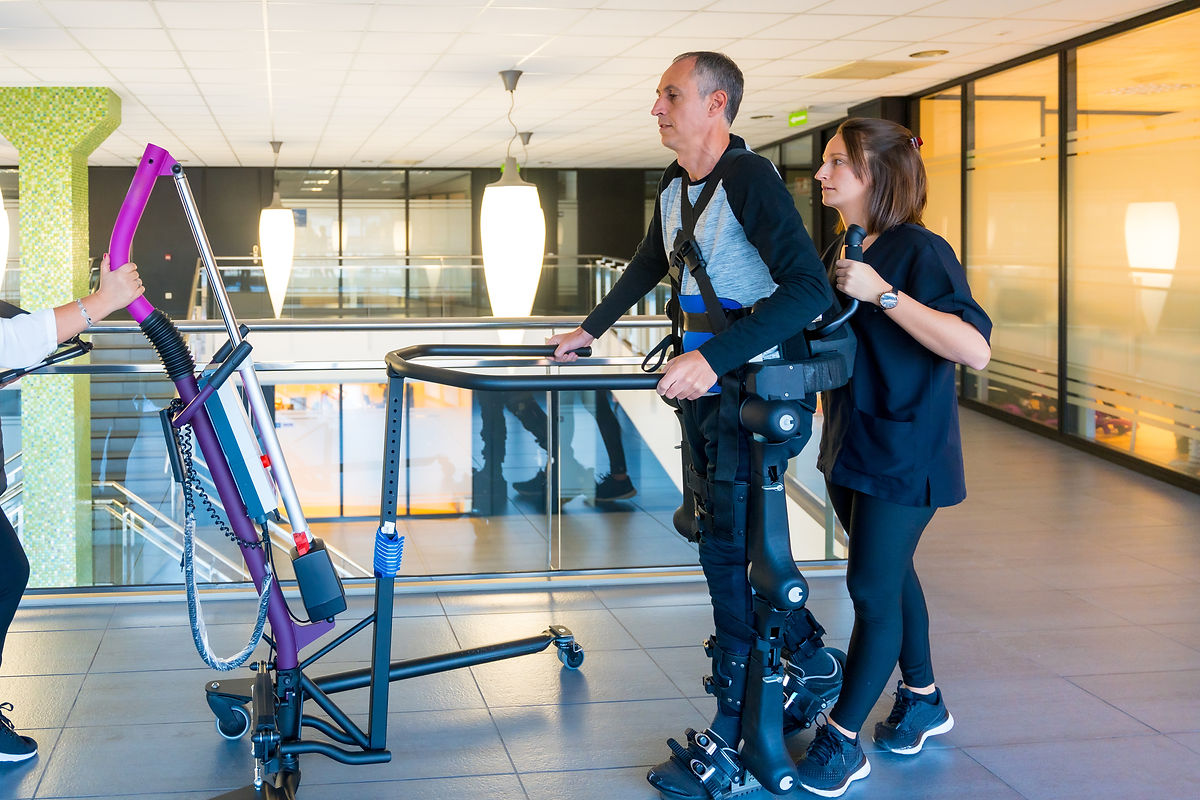
Rehab robots have a variety of applications. Here are some of their common uses:
Spinal Cord Injury Rehabilitation
Rehabilitation robots can help individuals regain walking ability and speed after spinal cord injuries. For example, in one three-month study, individuals with chronic incomplete spinal cord injuries (iSCI) managed to improve their gait function with the help of exoskeletons.
Stroke Rehabilitation
Annually, roughly 15 million people worldwide get a stroke. Of these individuals, about 50% have some permanent or chronic disability, with mobility being a common impairment. Rehab robots can help stroke survivors regain their mobility.
Elderly Care
Many seniors have chronic conditions that affect their mobility. About 35% of people aged 70 and most people over 85 have mobility challenges due to conditions like Parkinson’s disease, arthritis, and ataxia.
Robotic solutions like exoskeletons can help seniors with personalized physical activity exercises, helping them regain motor function and maintain their independence.
Post-Surgery
Some patients may experience mobility issues after surgery. For instance, about four out of ten older cardiac surgery patients experience mobility issues post-surgery. Robots can help with rehabilitation after surgery.
Orthopedic Rehabilitation
Orthopedic procedures such as joint, knee, shoulder, or hip replacement can affect mobility. Robots can help with rehab after orthopedic procedures. For instance, in one study, patients who underwent robotic-aided treatment after getting wrist injuries at work realized improved wrist functionality after a three-week treatment.
How Rehab Robots Have Revolutionized Healthcare: 8 Success Stories
The integration of rehab robotic solutions like exoskeletons and end-effector robots has transformed the healthcare industry. From helping to restore motor function in individuals with injuries to helping patients with neurological impairments regain mobility, here are eight success stories of rehab robots.
MIT-Manus Helps Stroke Patients Perform Reaching Movements
The first rehab robot used in clinical trials was the MIT-Manus, developed in 1989. A novel invention at the time, the MIT-Manus, helped stroke patients reach across a tabletop to grasp objects if they couldn’t perform the task themselves.
Lokomat Assists With Rehab After Neurological Impairment
The Lokomat is a popular rehab robot that’s been used in hundreds of rehabilitation studies with various patients. It is a robotic gait training system that offers body-weight supported treadmill training to strengthen the muscles and improve the joint range of motion.
ARMin III Helps Stroke Patients Regain Mobility
The ARMin III is an arm therapy exoskeleton with an ergonomic shoulder actuator that has helped stroke patients regain arm movements by supporting assisted motion through its multiple degrees of freedom.
HAL Helps Patients With Severe Injuries Regain Their Independence
Hybrid Assistive Limb (HAL) is a lightweight power assistive exoskeleton that’s available as a full-body, lower-body, and one-legged exoskeleton. The robot that was developed by the Japanese robotics company Cyberdyne in the early 2000s helps patients work on their movement patterns.
In Australia, rehab centers are using HAL to help people regain their strength and ability to move without assistance. For example, following a balcony fall and a 10-month stay in hospital, one patient who developed quadriplegia managed to regain some mobility and even dance at his wedding.
WREX Enhances Upper-Extremity Function
Upper-extremity function is limited in individuals with muscular weakness. The Wilmington Robotic Exoskeleton (WREX) is an upper limb orthosis that has helped individuals with neuromuscular disabilities to move their arms in three dimensions.
Andago Helps Patients With Neurological Injuries Walk Faster
The Andago is a unique mobile robot. The robot developed by Hocoma has helped patients with stroke or brain trauma injuries transition faster from assisted walking to unsupported walking.
NEUROExos Helps Stroke Survivors With Physical Rehabilitation
The NEUROExos is a sophisticated elbow exoskeleton that has helped stroke patients regain some form of mobility. It features a double-shelled link that creates a comfortable interface between the user and the robot. It also has a four-degree-of-freedom passive mechanism, allowing the patient’s elbow and robot axes to remain aligned during movement.
WIM Helps People Walk More Easily
We Innovate Mobility (WIM) is a wearable exoskeleton that enhances gait. The exoskeleton that was launched in 2024 by South Korean robotics manufacturer WIRobotics has assisted various people to walk more easily, including seniors and people with lower body injuries.
The advanced exoskeleton comes with a mobile app that provides comprehensive walking stats, including speed, symmetry, and agility. It also leverages AI and big data to provide individuals with tailored exercise plans.
Leverage Rehab Robots to Enhance Healthcare Outcomes
Rehabilitation robots have transformed healthcare, helping patients recover from physical impairments and regain their independence. They also support therapists by reducing the strain of repetitive movements, minimizing the risk of injury.
A key part of this success comes from sensors, for example, force-torque sensors, which ensure robots deliver the right amount of pressure and assistance for each patient. By providing real-time feedback and adaptive responses, these sensors make rehab robots safer, more precise, and more effective.
Want to see how they can enhance your rehab robots? Contact us today!