Service robots perform various tasks across different industries. From helping hotel guests check into their rooms to delivering items, service robots enhance the customer experience and enable businesses to streamline their operations.
The service robotics market is experiencing exponential growth. It was valued at $41.5 billion in 2023 and is forecasted to reach $84.8 billion by 2028, representing a CAGR of 15.$%. This growth is primarily due to technological advancements and the automation surge across different sectors.
With the growing prevalence of service robots in business settings, overlooking their significance undermines a company’s ability to stay competitive.
Here, we’ll explore the various use cases of service robots and how to determine if they’re suitable for your business.
What Are Service Robots?
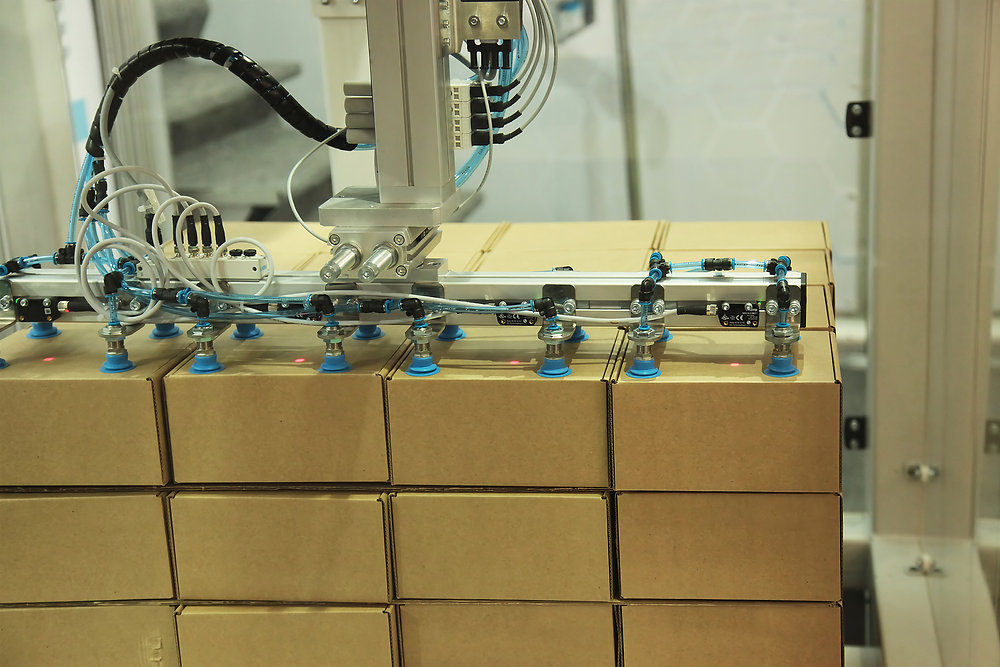
Service robots encompass a variety of robots used across various industries, excluding robots used for traditional industrial applications like assembly, palletizing, and welding. Service robots typically handle tedious, dirty, and sometimes risky tasks that require exceptional precision.
Some common types of service robots include:
Industrial service robots
Domestic robots
Medical robots
Delivery robots
Agricultural robots
Logistics robots
Customer service robots

Applications of Service Robots Across Different Industries
Businesses across various industries use service robots. Service robots generally supplement human employees in their daily tasks, allowing them to focus on the core aspects of their work.
Here are various industries that employ service robotics and their common applications:
Healthcare
Hospitals often use service robots for cleaning and disinfection to enhance patient and healthcare workers’ safety. Commonly known as sterilization or disinfection robots, these service robots come in two variants: solution-based and ultraviolet (UV) sterilization robots. The former uses spray disinfectant solutions to sterilize surfaces, while the latter uses UV light.
For instance, LightStrike6 — a UV sterilization robot developed by Xenex Disinfection Services — was used in hospitals to eradicate SARS-CoV-2, the COVID-19-causing virus, during the pandemic.
Besides cleaning and disinfecting surfaces, hospitals use service robots to aid in patient care tasks like dispensing medicine, lifting and transporting patients, and even providing emotional support.
For example, in 2021, Hanson Robotics launched a nursing robot that can provide patients with companionship, measure responsiveness, and even detect temperature changes.
Retail
Many retailers use service robots to enhance shoppers’ in-store experiences. For example, in 2017, home improvement retailer Lowe’s launched the Lowebot, a sophisticated service robot that helps customers easily find products in their stores.
Besides improving the customer experience, retailers use service robots to streamline their operations, deploying them for tasks like product retrieval, cleaning, and inventory management. For instance, in 2016, Target tested a robot worker called Tally to track store inventory.
Logistics
The global e-commerce market was valued at $18.98 trillion in 2022 and is forecasted to reach $47.73 trillion by 2030. As e-commerce sales continue to spike, more logistics businesses are using logistics service robots to cope with rising consumer demand for goods and labor shortages.
For instance, e-commerce giant Amazon uses service robots to automate order fulfillment across its warehouses. Amazon also uses service robots to deliver packages to consumers and businesses.
As a result, it’s no wonder the logistics robot market is one of the fastest-growing service robot segments. As of 2021, the global logistics robots market was valued at $7.11 billion and is expected to reach $21.01 billion by 2029, representing a compound annual growth rate (CAGR) of 16.7% during the forecast period.
Hospitality
In the hospitality sector, service robots are used to streamline operations and improve customer experiences. Hotels, for instance, use service robots to welcome guests, check them in, and deliver their luggage to rooms. For instance, Connie, Hilton’s robot concierge, answers guests’ inquiries, helping them to navigate the hotel.
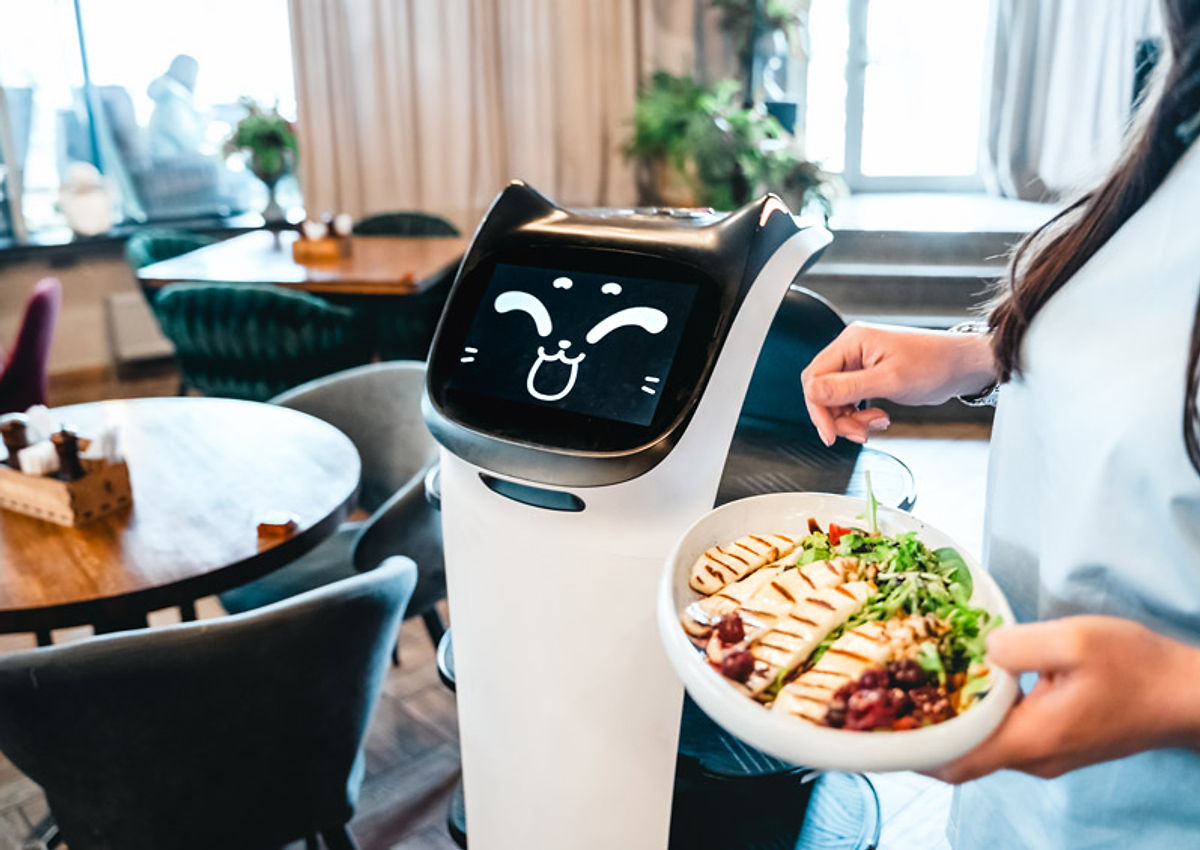
Besides hotels, restaurants leverage service robots to take orders, deliver food, and prepare simple dishes. Large chain restaurants like Wendy’s, White Castle, and McDonald’s employ robot chatbots to take orders at drive-through restaurants.
Education
In the education sector, service robots help enhance learning by teaching and guiding students and providing personalized lessons tailored to specific needs. Educational institutions also use them for administrative tasks like record-keeping, scheduling meetings, and answering queries.
Research institutions also leverage robots to conduct scientific research and experiments. For instance, researchers use Nao, a smart humanoid service robot, as a research assistant to teach programming and perform research into human-robot interactions.
Agriculture
Many industries use service robots indoors or within relatively well-controlled environments. In contrast, service robots in the agricultural sector work outdoors, often in harsh conditions.
Commonly known as agricultural robots, service robots in the agriculture sector help with tasks like planting, harvesting, and weeding. Farmers also use them for aerial imaging to track crop growth, detect diseases, and predict yields.
For instance, Vegebot, an agricultural robot developed by researchers at the University of Cambridge, uses machine learning to help farmers harvest lettuce.
Benefits of Service Robots
Service robots offer many benefits for businesses looking to streamline their operations and enhance customer experiences. Here are some of the top perks of service robots:
Increased Safety
Workplace safety is a top priority for many workers. In fact, 97% of employees consider their physical safety extremely important. Service robots can protect workers from potential hazards in high-risk workplaces.
For instance, cleaning and disinfecting robots in hospitals clean and sterilize surfaces, protecting health workers from contracting infectious diseases due to exposure to pathogens.
Enhanced Productivity
Service robots can work tirelessly, round-the-clock. Unlike humans, they don’t require breaks. As a result, they can boost productivity and allow human employees to work on higher-level tasks rather than repetitive, mundane tasks. For instance, delivery service robots can transport items 24/7 without changing shifts or taking breaks like humans.
Cost-Savings
Service robots cost thousands of dollars. While the initial investment in them may be high, service robots can enhance productivity and efficiency, potentially offsetting initial investment expenses in the long term.
Greater Precision
Service robots perform tasks with remarkable accuracy and thoroughness compared to human workers. For example, agricultural robots can harvest vegetables with exceptional precision without bruising them. This results in improved efficiency and product quality.

Is a Service Robot Suitable for A Business?
Service robots offer various benefits. However, there are certain factors to consider before employing them. Here are some issues that may make getting service robots a worthwhile investment:
Labor Shortages
Many companies globally are struggling to fill job vacancies, particularly those in the manufacturing, logistics, and healthcare sectors. For instance, in the United States, three out of five employers can’t find suitable employees for vacancies.
Companies struggling to recruit talent for vacancies might want to employ service robots. For instance, hotels might benefit from deploying service robots if they can’t find suitable talent for a concierge role.
Increased Consumer Demand
As businesses scale, they often face a spike in product demand. Businesses struggling to fulfill orders due to increased consumer demand might want to integrate service robots into their operations.
For instance, e-commerce businesses might want to employ service robots in their warehouses to streamline order fulfillment and keep up with larger order volumes.
Reduced Employee Productivity
Many jobs involve repetitive, mundane tasks that can be easily automated. Employees working in the logistics industry often perform repetitive tasks like retrieving products, sorting them, and tracking inventory. Service robots can handle these tasks, allowing human employees to focus on other core aspects of their work.
Running a business that often requires employees to perform repetitive and dull tasks, service robots might greatly benefit the business.
Streamline Your Operations With Service Robots
Bota Systems offers force torque sensors that are ideal for service robots deployed across different industries. They are durable, reliable and easy to integrate.
Contact us today to discuss our cutting-edge solutions with one of our experts.