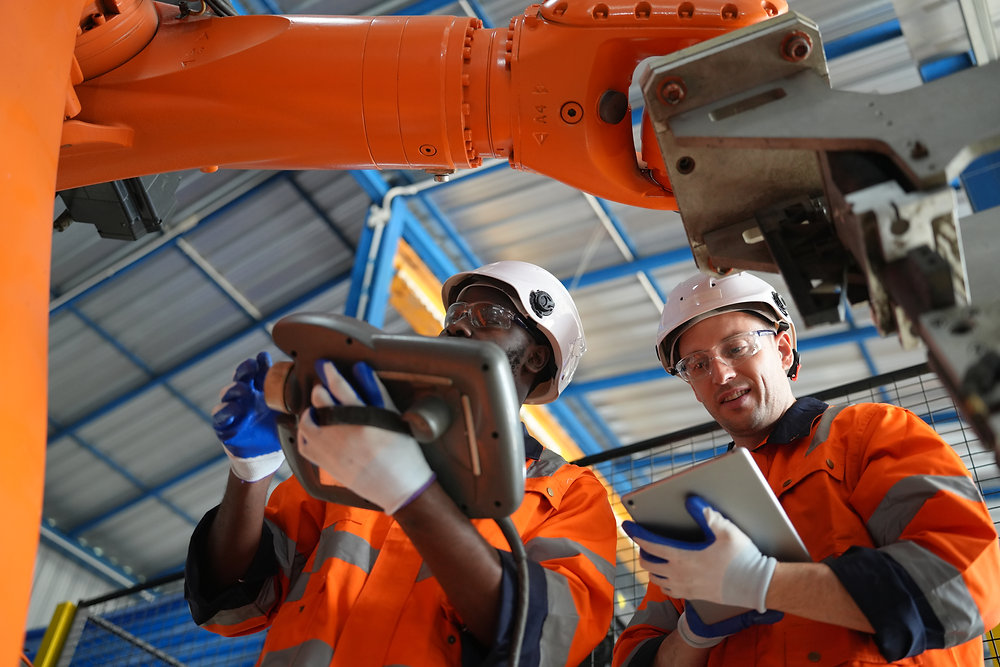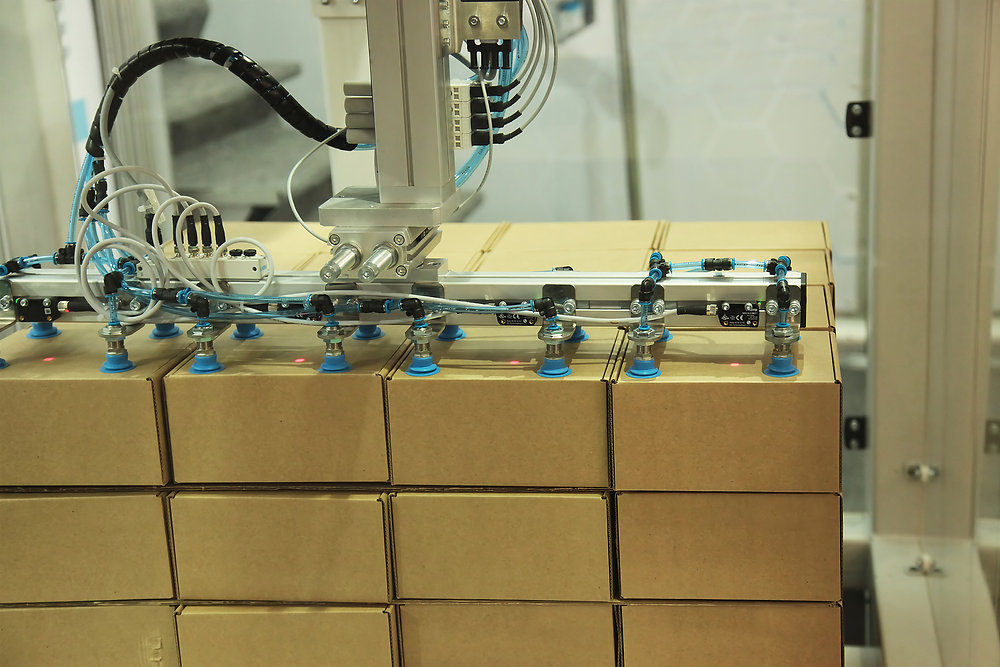
A robot can only do what its joints allow. A 6-axis industrial arm welding car frames and a humanoid robot folding laundry are both shaped by the joint types in their kinematic chain.
There are 6 main robot joint types, each giving a different kind of freedom of motion. Which ones you use determines what tasks a robot can perform, how much payload it can handle, and how precisely it can position its end-effector.
What Are Robot Joints?
Robot joints are the components that allow movement and rotation within robotic systems, analogous to human joints.
They facilitate various robot movement types, such as rotation, sliding, and pivoting, which enable robots to perform tasks with dexterity and precision.
Each joint type has a unique robot joint design that suits specific purposes, from heavy-duty industrial operations to delicate tasks in fields like surgery and art.

Types of Robot Joints
There are several types of robotic joints, each designed to provide different ranges and types of motion. Here’s a look at the primary joint types:
1. Rotary Joints (Revolute Joints)
Rotary joints are perhaps the most common in robotic arms and are often referred to as revolute joints.
They allow rotational movement around a single axis, similar to a door hinge. In robotic systems, rotary joints are essential for applications that require precise rotational movement, such as in manufacturing and welding.
2. Prismatic Joints (Sliding Joints)
Prismatic joints, also known as sliding or linear joints, allow linear movement along a single axis.
This type of joint enables robots to extend or retract their parts, much like a telescope. The prismatic joint is especially useful in applications that require precise linear positioning.
3. Cylindrical Joints
Cylindrical joints combine the movements of rotary and prismatic joints, allowing both rotation and sliding along a single axis. This combination provides greater flexibility and is often used in roboticapplications that require both linear and rotational motion.
4. Spherical Joints
Spherical joints, similar to human shoulder joints, allow rotation around three perpendicular axes. They offer a wide range of motion, which makes them essential in applications requiring high flexibility.
5. Planar Joints
Planar joints provide movement across a plane, allowing two linear movements and one rotational movement within the same plane.
This type of joint is commonly used in robotic joint setups that require limited movement across a flat surface.
6. Universal Joints
Universal joints allow rotation around two perpendicular axes. They are commonly used in mechanical and robotic applications where flexibility is required without full rotational freedom.
Universal joints are effective in types of joints engineering where two elements need to transmit torque at variable angles.
Advantages and applications of various types of robot joints
| Robotic Joint Type | DOF | Advantages | Applications | Example |
|---|---|---|---|---|
| Rotary Joints | 1 | Simple design, high precision, and efficiency in rotational movements. | Robotic arms, animatronics, and mechatronics applications. | Articulated robotic arms in automotive manufacturing use multiple rotary joints to move and position parts with precision. |
| Prismatic Joints | 1 | Offers straightforward linear motion, and when combined with rotary joints, enables complex motion. | Common in robotic grippers, conveyor systems, and animatronic setups where sliding motion is needed. | Cartesian robots use prismatic joints to move in straight lines along the X, Y, or Z axes, perfect for pick-and-place tasks. |
| Cylindrical Joints | 2 | Provides two degrees of freedom, increasing functionality without complex mechanics. | Robotics where versatile movement is needed, such as inspection robots or robotic arms with variable reach requirements. | Cylindrical joints are common in assembly robots, allowing them to rotate around an axis and slide along it for enhanced flexibility. |
| Spherical Joints | 3 | Provides three degrees of freedom, ideal for highly flexible robots. | Used in robotic arms for full rotational freedom, especially in tasks needing wide-reaching capabilities. | Humanoid robots and complex robotic arms use spherical joints for free movement in multiple directions. |
| Planar Joints | 3 | Simple design with sufficient flexibility for planar tasks. | Assembly line robots or robotic systems in planar workspaces. | Planar joints are seen in robots that work in confined spaces or planar work environments like inspection robots. |
| Universal Joints | 2 | Simple, robust design, offering flexible rotation in two directions. | Used in industrial robots, animatronics, and robot elbow joints where controlled rotation is essential. | Many industrial robotic arms utilize universal joints in their structures for controlled yet flexible motion. |
Degrees of freedom in robot joints
Degrees of freedom (DOF) refers to the number of independent ways a rigid body can move in space. In robotics, each DOF represents one axis along which a joint can rotate or translate.
A single revolute joint gives you 1 DOF: rotation around one axis. A spherical joint gives you 3: it can rotate around X, Y, and Z independently. Stack six revolute joints in series and you get a 6-DOF arm that can reach most positions and orientations within its workspace.
The DOF column in the table above tells you how much motion each joint type contributes on its own. The total DOF of a robot is the sum across all its joints, though redundant joints (more than 6) are added intentionally to improve dexterity or avoid obstacles.
In practice, more DOF means more flexibility but also more complexity in control. A 6-axis industrial arm can weld from almost any angle; a 3-DOF SCARA arm is faster and simpler but locked to planar tasks.
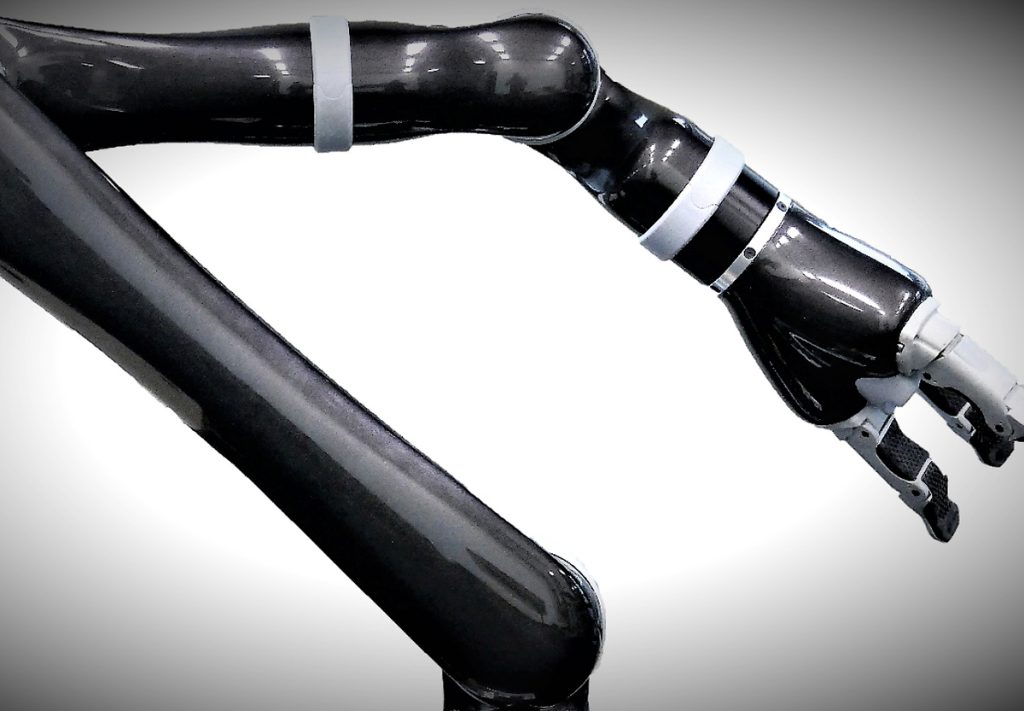
Components of a Robot Joint
Understanding the anatomy of a robot joint is essential to appreciate how different types of robot joints operate.
Each joint comprises multiple mechanical and electrical components that work together to enable precise and controlled movement.
Mechanical Components of a Robot Joint
Actuators
Actuators are the primary drivers of motion in robotic joints. They convert energy (typically electrical, hydraulic, or pneumatic) into mechanical movement.
Electric motors, such as servo motors, are a common type of actuator frequently used in various robot joints. They Provide precise control of movement and are ideal for applications requiring high accuracy.
There are also hydraulic and pneumatic Actuators that generate high force and are suited for heavy-duty tasks, like those in industrial settings.
Gears and Gearboxes
Gears are crucial for controlling the speed and torque of a joint’s movement. They transmit power from the actuator to the moving parts and often modify the force applied to ensure that the joint operates at the desired speed and strength.
Types of gears commonly used in robot joints include:
Spur Gears: Simple and effective for straightforward power transmission.
Harmonic Drives: Provide high precision and are commonly used in robotics for smooth, backlash-free movement.
Planetary Gearboxes: Efficient for handling high loads, commonly used in robotic arms.
Bearings and Bushings
Bearings support the rotating or sliding parts within a joint by reducing friction and wear. This is essential for smooth and efficient movement, especially in high-speed or heavy-load applications.
Common types include:
Ball Bearings: Used in joints requiring rotational movement.
Linear Bearings: Used in prismatic joints for sliding motion.
Roller Bearings: Provide high load capacity and durability, suitable for heavy-duty applications.
Structural Components
The structural parts include the frames, links, and housings that provide stability and support to the joint.
These components are typically made of lightweight yet strong materials like aluminum, steel, or carbon fiber to balance durability with ease of movement.
Springs and Dampers
Springs and dampers control and absorb shock during movement, making the joint’s operation smoother.
This is especially important for applications that require repeated motions or deal with variable forces. Springs can also help in maintaining tension or restoring position when a force is applied.
Electrical Components of a Robot Joint
Sensors
Sensors are critical for monitoring the position, speed, and torque within a joint, enabling accurate control and feedback in robotic systems.
Common types of sensors include:
Encoders: Measure the angle or position of the joint, allowing precise control over movement.
Force and Torque Sensors: Detect applied force and torque, important for tasks requiring gentle or exact pressure.
Proximity Sensors: Help avoid collisions by detecting the presence of objects nearby.
Control Boards and Processors
Control boards or embedded processors interpret commands and manage the joint’s movement by controlling actuators and reading sensor data.
They process real-time feedback and adjust the joint’s operations accordingly, maintaining smooth and accurate movements. Microcontrollers like Arduino or Raspberry Pi, as well as industrial-grade PLCs (Programmable Logic Controllers), are often used to handle these tasks.
Amplifiers and Drivers
Amplifiers and drivers modulate the electrical signals sent to the actuators, allowing for finer control over movement.
For instance, servo motors require servo drivers that interpret control signals and adjust the motor’s position precisely. Amplifiers are used to increase the power output to the actuators, essential in applications requiring high force.

How does a Robot Joint work?
In operation, the control system sends a signal to the actuator based on input from sensors or programmed instructions.
The actuator then moves the joint either rotationally (in a revolute joint) or linearly (in a prismatic joint) through the gearing system, which modifies the speed and torque as needed. Sensors continuously provide feedback to the control system, allowing adjustments in real time, ensuring the joint moves accurately and smoothly to complete the task.
This closed-loop process of signal transmission, movement, and feedback allows robotic joints to perform precise and repeatable actions across various applications.
To make this concrete: a revolute joint in a 6-axis industrial arm typically uses a brushless DC servo motor paired with a harmonic drive gearbox. The harmonic drive eliminates backlash (the small amount of play you’d get in a standard spur gear), which is what allows positional repeatability in the 0.02-0.05 mm range common in precision assembly.
At the joint level, a force-torque sensor mounted between the gearbox output and the link can measure the actual torque being applied, not just what the motor is commanded to do. That feedback closes a second control loop around the mechanical compliance of the joint itself. It’s how cobots detect unexpected contact and stop within milliseconds.
Whether it’s a robotic arm joint assembling products on an industrial line or an animatronic joint mimicking lifelike movements, each component within the joint plays a role in ensuring efficient and accurate operation.
What do Robotic Joints do?
The functions of robotic joints largely depend on their type and application.
Here are some core functions:
Precision Movement: Robotic joints facilitate precise positioning, critical in fields like electronics assembly and medical robotics.
Increased Range of Motion: Joints enable complex movements and allow robots to operate in multidirectional spaces.
Efficient Task Execution: Proper joint selection contributes to a robot’s efficiency, making it possible to perform tasks faster and with greater accuracy.
Weight Bearing and Load Distribution: Some joints, such as prismatic and cylindrical joints, can handle significant weight, making them ideal for industrial robots that lift heavy objects.
Applications of Robotic Joints
The joint configuration varies significantly across types of robots. A SCARA arm uses a different combination than a delta robot or a humanoid. Robotic joints are used across various industries, including:
1. Manufacturing and Automation
In manufacturing, robotic joints play a critical role in robotic arm joints used for assembling, welding, and packaging products. High precision and durability are essential, and rotary and prismatic joints are frequently used.
2. Medical Robotics
Robotic joints enable precise movements for surgical procedures, diagnostics, and even rehabilitation. Here, the choice of joint type is based on the need for high precision and sensitivity.
Spherical and cylindrical joints are commonly used in this field for their ability to mimic human movements.
3. Animatronics and Entertainment
Animatronic joints allow characters in theme parks, movies, and other entertainment venues to move realistically. Universal and spherical joints are ideal in this field due to their range of motion and lifelike movements.
4. Agriculture
Robots equipped with advanced joints are used for tasks such as planting, harvesting, and sorting crops.
Cylindrical and planar joints are beneficial here as they allow robots to reach and maneuver in open fields with varying landscapes.
5. Inspection and Surveillance
Robots with types of joints mechanical suited for rotational and linear movements are commonly used in surveillance.
These robots are equipped with cylindrical and rotary joints to enable them to move across varying terrains and perform tasks in restricted spaces.
6. Aerospace and Defense
In aerospace, robotic joints allow robots to perform tasks in extreme conditions, like in space or underwater. Joints like universal and spherical are used to ensure durability and flexibility, essential for the demanding environments.
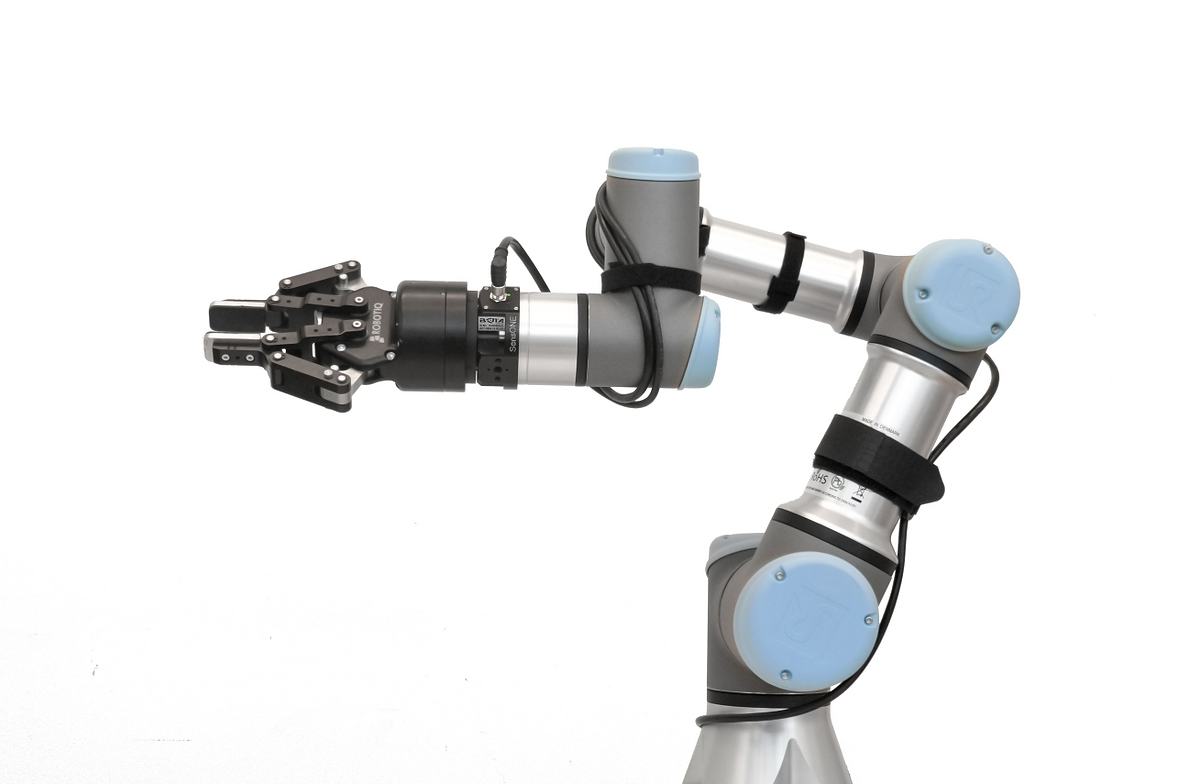
Bota Systems is at the forefront of advancing robotic joint technology
At the joint level, sensing is where most systems still have a gap. Actuators and gearboxes have matured. Control algorithms are getting better fast. But measuring what a joint is actually feeling (the external forces and torques at the point of contact) still requires a dedicated sensor.
Bota Systems builds 6-axis force-torque sensors and robot joint torque sensors designed to fit into standard robot wrist and joint assemblies without adding bulk. If you’re working on a system that needs real contact feedback (for safe HRI, precision assembly, or manipulation research), Get in touch.
Frequently Asked Questions
How many types of robot joints are there?
The 6 standard robot joint types are: rotary (revolute), prismatic (sliding), cylindrical, spherical, planar, and universal. Most industrial robot arms use combinations of revolute and prismatic joints.
A 6-axis industrial arm, for example, uses 6 revolute joints stacked in series.
What is the most common robot joint?
Revolute (rotary) joints are the most common. They allow rotation around a single axis, which is the fundamental motion needed for articulated robot arms. A standard 6-axis industrial robot has all 6 joints as revolute joints.
What is the difference between a revolute and prismatic joint?
A revolute joint rotates, giving 1 degree of rotational freedom around an axis. A prismatic joint slides, giving 1 degree of linear freedom along an axis. Most articulated arms use revolute joints.
Cartesian robots (gantry systems) use prismatic joints to move linearly along X, Y, and Z axes.
How do joints affect a robot’s degrees of freedom?
Each joint adds one degree of freedom (DOF) to a robot’s kinematic chain. A revolute or prismatic joint each contributes 1 DOF.
A spherical joint contributes 3 DOF. To reach any point in 3D space with any orientation, a robot needs at least 6 DOF, which is why 6-axis arms are the standard in industrial automation.
What sensors are used in robot joints?
The most common are encoders (for position feedback), force-torque sensors (for contact force measurement), and current sensors built into the motor driver (for torque estimation). In cobots and surgical robots, dedicated force-torque sensors at the wrist or joint provide the sensitivity needed for safe human interaction.