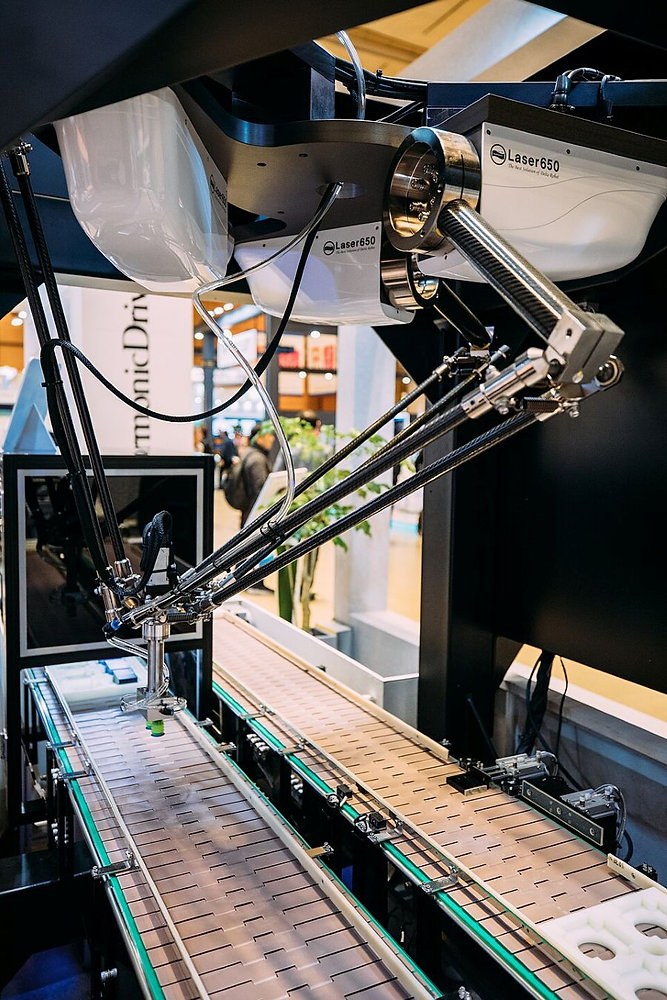
Technology is making things easier daily, which will continue with the growing numbers in the robotics industry. According to Statista, the robotics market is expected to reach USD 50.80 in revenue in 2025 and will reach USD 73.1 billion by 2029. Despite the overlapping terms between robotics and artificial intelligence (AI), there is an actual difference that shows they’re two different things.
According to research, the market for AI technology is huge and amounts to around USD 200 billion. While these topics are so similar, there are many differences, and with these terms getting quite confusing, it is time to explore what each means and look at the advantages and disadvantages.
What Are Robots?
Robots are machines programmed to perform various roles and execute the code without human intervention. These machines utilize sensors to perfect different tasks. While robots can work alone, there are instances where humans control them.
However, robots are essential because they enable people to perform specific tasks without a human workforce. That enables people to carry out more complicated tasks that need critical thinking.
Types Of Robots
There are different types of robots, each with unique features, varying in size and shape, and different features. That depends on robotics applications, such as giving directions, stocking shelves, welding, etc. Below are some of the most common robots:
Autonomous Mobile Robots (AMRs)
These vehicles move around and make accurate time decisions as they go. Their technology is so good that cameras and sensors such as force torque sensors assist in ingesting information regarding the surroundings. These robots quickly analyze the environment and decide whether to pick a precise parcel or choose an ideal surface that needs disinfecting.
Cobots
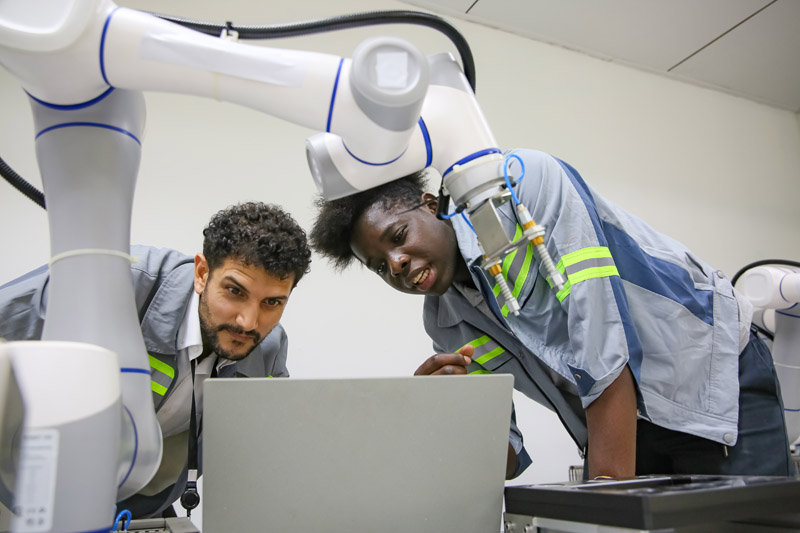
These are designed to work alongside humans. The global cobot market grew in revenue by $1 billion in 2023 and will grow at a 20% rate between 2024 and 2028. While most robots work in isolated areas, cobots operate together with humans, thus reducing repetitive activities and eliminating strenuous tasks. The best part is that cobots can learn more by mimicking human movements.
Articulated Robots
These are also known as robotic arms and are meant to eliminate the function of a human arm. These could have two to 10 rotary joints with each additional axis that ensures a great degree of motion.
The articulated robot market is expected to reach USD 17 billion by 2032, with the trend in articulated robots expected to have been on the rise for the last couple of years, increasing over the last couple of years. That makes sense because these articulated robots are ideal for material handling, arc welding, and machine tending.
What’s AI?
Artificial intelligence (AI) refers to the act of replicating human intelligence through machines, primarily computers. These are different types of AI applications, including natural language processing (NPL) and expert machine vision and speech recognition systems.
AI needs specialized software and hardware for training and writing machine learning algorithms. While no single speech language is used in AI, C++, Java, and Python are popular.
How Does AI Operate
AI systems operate by taking in lots of data, analyzing the data or patterns and correlations, and then using them to make predictions.
For instance, a Chabot can generate an exchange, whereas an image recognition tool can identify and describe images by looking at different examples.
Differences Between Artificial Intelligence And Robots
Although the terms artificial intelligence (AI) and robotics are often used interchangeably, they represent two distinct fields with unique functionalities.
While robotics focuses on the design and operation of physical machines, AI is concerned with developing intelligent software that can process information, learn, and make decisions.
1. Nature and Function
Artificial Intelligence: AI is a branch of computer science that enables machines to learn, process data, and make decisions without human intervention. It operates in a digital environment and is commonly used in software applications such as virtual assistants, chatbots, and data analytics systems.
Robotics: Robotics is an engineering field that focuses on building physical machines capable of performing tasks in the real world. Robots rely on mechanical components such as sensors, actuators, and motors to interact with their surroundings.
2. Physical vs. Non-Physical Existence
AI: AI can exist purely in software form without any physical body. Examples include AI-powered recommendation systems, fraud detection software, and virtual assistants like Siri or Alexa.
Robots: Robots are tangible machines with physical components designed to perform specific tasks, such as assembling products in factories or assisting in medical surgeries.
3. Interaction with the Environment
AI: AI interacts with data and information rather than the physical world. It analyzes patterns, processes natural language, and makes decisions based on complex algorithms.
Robots: Robots interact directly with the physical environment, responding to external stimuli through sensors and actuators. Examples include autonomous vacuum cleaners, robotic arms, and drones.
4. Intelligence and Learning Ability
AI: AI systems, particularly those based on machine learning and deep learning, can analyze vast amounts of data, learn from past experiences, and improve over time. For instance, AI-powered chatbots become better at responding to customer queries through continuous learning.
Robots: Traditional robots follow pre-programmed instructions and do not necessarily learn from experience. However, AI-powered robots can integrate machine learning to enhance their decision-making and adapt to new scenarios.
5. Level of Automation
AI: AI systems automate cognitive tasks such as decision-making, data analysis, and language translation.
Robots: Robots automate physical tasks such as assembly line operations, delivery services, and medical procedures.
6. Application Areas
AI: Common applications of AI include natural language processing (e.g., chatbots), financial forecasting, cybersecurity, and autonomous vehicles.
Robotics: Robots are widely used in industries like manufacturing (robotic arms), healthcare (surgical robots), and logistics (automated warehouse robots).
7. Dependency on Each Other
AI Can Exist Without Robots: AI does not require a physical form and is often used independently in various industries.
Robots Can Exist Without AI: Traditional robots can function without AI by following predefined instructions, such as industrial robots that perform repetitive tasks without adaptive learning.
8. Integration of AI and Robotics
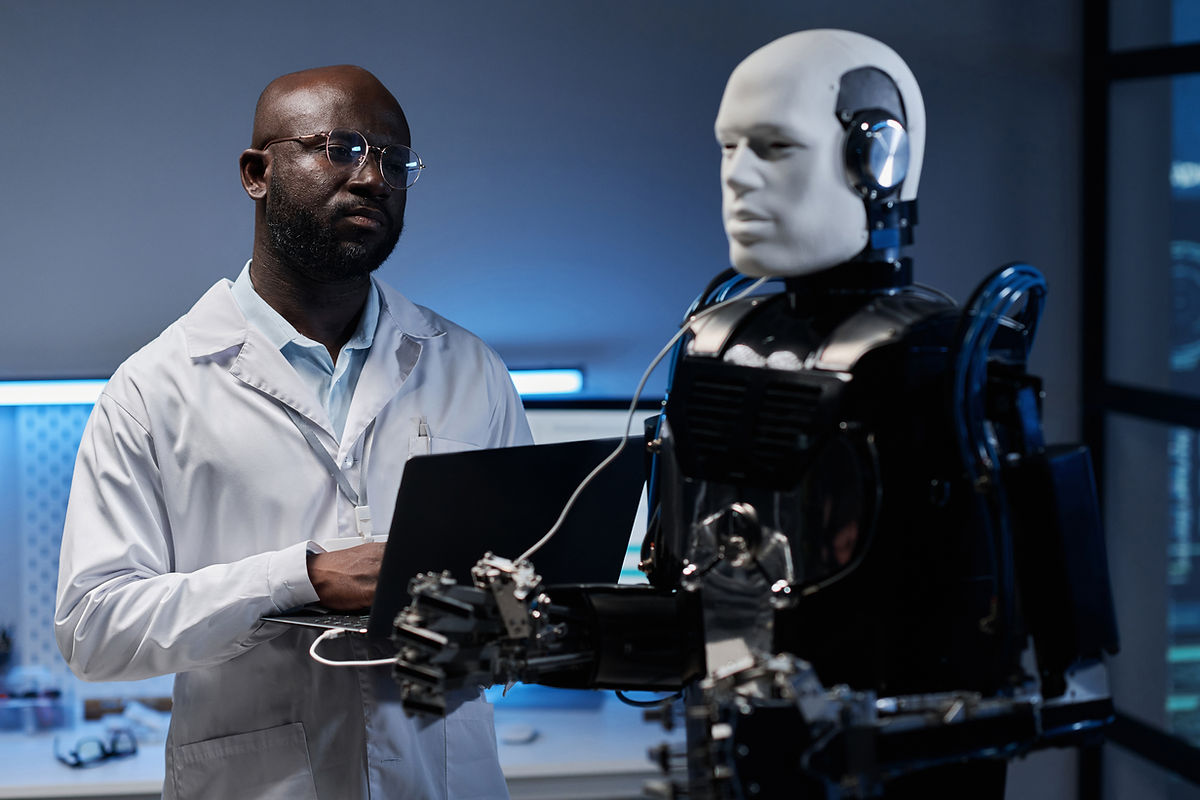
AI and robotics are increasingly being combined to create intelligent robots that can perceive, analyze, and act based on real-time data. Examples include self-driving cars and humanoid robots that interact naturally with humans.

Similarities Between Artificial Intelligence and Robots
Despite their differences, AI and robotics share several similarities, particularly in their objectives and applications. Both fields aim to enhance automation, efficiency, and human productivity. Here are some of the key similarities:
1. Goal of Automation
Both AI and robotics are designed to automate tasks and reduce human involvement in repetitive, complex, or hazardous activities.
AI automates cognitive tasks, such as data analysis and decision-making, while robots automate physical tasks, such as material handling and welding.
2. Dependence on Data and Sensors
AI processes large datasets to recognize patterns and improve decision-making.
Robots use sensors to collect environmental data, allowing them to navigate, detect obstacles, and perform assigned tasks efficiently.
3. Ability to Improve Efficiency and Productivity
AI enhances productivity by analyzing large datasets, optimizing workflows, and predicting trends in fields like business intelligence, healthcare, and finance.
Robots increase efficiency by performing precise and repetitive tasks in industries like manufacturing and logistics, reducing human error and operational costs.
4. Use of Advanced Algorithms
AI relies on machine learning, deep learning, and neural networks to continuously improve decision-making.
AI-powered robots use path-planning algorithms, computer vision, and predictive analytics to execute tasks with higher accuracy and autonomy.
5. Contribution to Various Industries
AI is used in fields such as healthcare (AI-driven diagnosis), finance (fraud detection), and marketing (personalized advertising).
Robots are widely employed in manufacturing (assembly lines), healthcare (robot-assisted surgery), and agriculture (automated harvesting machines).
Together, AI-powered robots are revolutionizing sectors like autonomous transportation, smart warehousing, and precision agriculture.
6. Capability to Operate Independently or Together
AI functions independently in software applications like voice assistants, recommendation engines, and automated trading systems.
Robots can function independently in automated assembly lines, drones, and robotic exoskeletons.
When combined, AI-powered robots can perform complex tasks autonomously, such as self-driving cars making route decisions in real time.
7. Enhancing Human Capabilities
AI augments human intelligence by providing real-time insights, predictive analytics, and automation in decision-making.
Robots enhance human physical abilities, assisting in tasks such as lifting heavy objects, conducting delicate surgeries, and performing space exploration missions.
8. Advancing Technological Innovations
AI and robotics drive advancements in smart cities, autonomous systems, and Industry 4.0.
AI-powered robots contribute to innovations such as humanoid assistants, AI-driven supply chain automation, and next-generation defense systems.
How Artificial Intelligence Is Changing Robotics
The idea of robots being powered by artificial intelligence is pretty cool. The market size of AI robotics is expected to reach USD 22.52 billion in 2025, growing annually at a CAGR of 23.7%, thus resulting in USD 64.35 billion by 2030.
Several companies are using AI-powered robots to bring the technology closer to humans, thus solving their problems quickly and transforming their businesses or changing their demands. AI-powered robots also keep workers safe.
AI-powered robots have different types of sensors, including cameras, vibration sensors, accelerometers, and environment and proximity sensors that can analyze data in real time. Some of the most common AI-powered robots include autonomous mobile robots, cobots, and robotic arms.

Benefits Of Adding AI To Your Robotics Operations
While adding AI to an already existing operation can be overwhelming initially, the benefits outweigh the challenges experienced.
Increases efficiency and productivity: Most companies have much to deal with, including handling more demands as the customers want quick delivery. Stakeholders are looking for high-quality products, thus increasing efficiency.
Adds workers’ safety: Companies, especially those dealing with oil and gas, need to use AI for data collection, safety inspection, and also other tasks to keep humans operating in their companies safe.
Improves accuracy: AI robots understand the environment pretty well, allowing them to conduct simple tasks, including quality-control inspections. Since they can check the quality of the goods in line, it becomes easy to handle different tasks, saving time and money.
Conclusion
While robots are different from AI since robots need to be physically programmed, whereas AI doesn’t, some similarities show how closely these two fields are related. They can work together to increase productivity and efficiency in a company while at the same time keeping people safe.
Notably, AI and robots are also different in that AI simulates human intelligence, whereas robots interact with the regular world.
Force torque sensors, like those offered by Botasys, play a crucial role in enabling robots to interact with their environments more precisely and safely. These sensors allow robots to detect force and pressure, making them more adaptable and responsive in various applications. Contact us to understand more about robotics and AI and how you can incorporate these technologies into your firm.