Industrial robots have made life easier for most people across the globe. They help perform highly repetitive tasks effectively and with utmost precision, thus aiding in potentially life-saving medical procedures and manufacturing processes.
According to Fortune Business Insights, in 2022, the global robotics market was valued at USD 16.78 billion and is expected to grow to USD 41.02 billion by 2030.
Factory robots are also helpful in multiple environments, such as vacuum chambers and dangerous areas like radioactive zones, minefields, or other spaces harmful to humans.
These machines can be equipped with specialized grippers designed for delicate items, or robotic arms outfitted with grippers specifically tailored for lifting heavy loads. Read on to understand what an industrial robot is, the different types, and their functions.
What Is an Industrial Robot?
These programmable machines can perform highly repetitive tasks requiring high speed and precision, thus making them a versatile tool.
What do industrial robots do?
Due to their programmable nature, they can handle various operations, including assembling, welding, and managing different materials.
Manufacturing robots are ideal for streamlining a company’s operations, minimizing expenses, and avoiding accidents while handling hazardous tasks.
Types of Production Robots
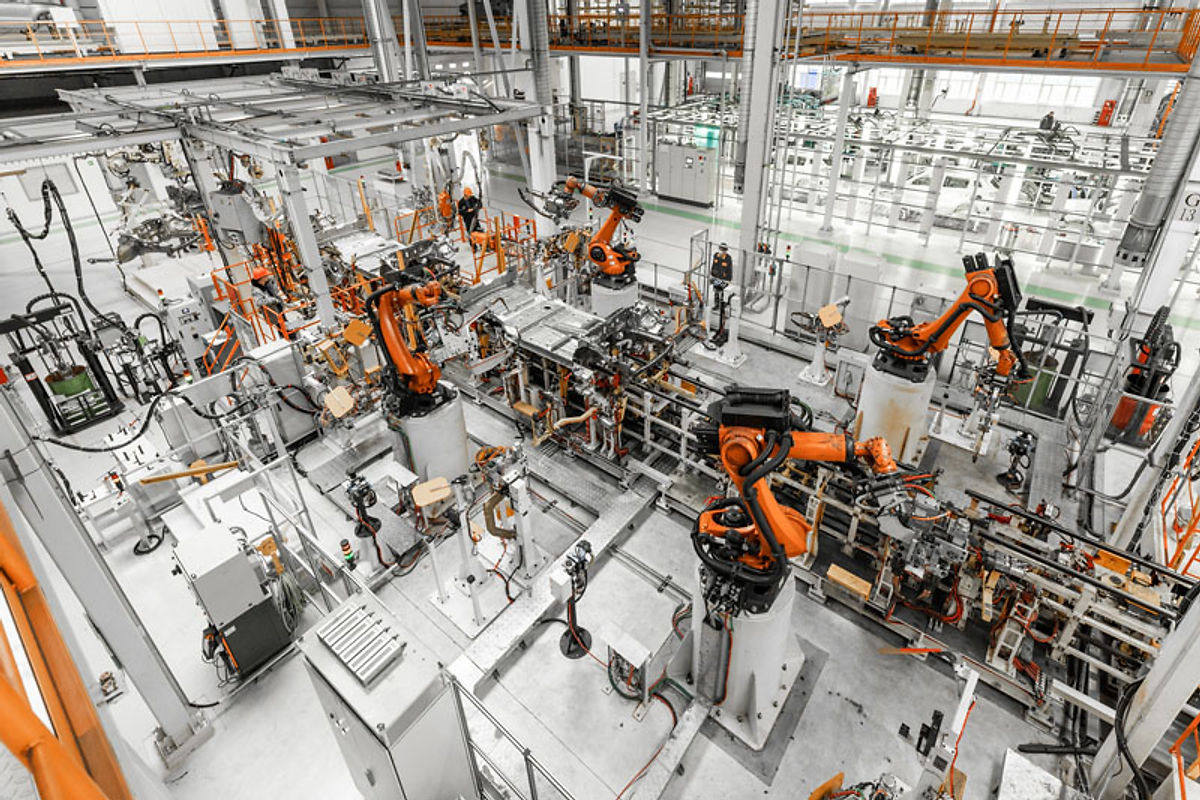
Robots in industry automation have helped solve some of the most complex and challenging tasks and come in different shapes and sizes.
Here is a list of some of the most common types, explaining their advantages and disadvantages:
Articulated Robots
These are the most common industry robots. They resemble human arms and have parts analogous to an elbow, wrist, and shoulder. Servo motors power the rotary joints.
Articulated robots have between two and ten joints, allowing them to have a flexible range of motion to handle many dynamic tasks. The more the number of joints, the smoother the task becomes.
A robotic arm might be attached to a gripper that could be as simple as a cup or as detailed as a hand structure with fingers that can easily pick objects. Since these machines have a huge motion range, they can perform many different applications.
Advantages
Articulated robots offer great flexibility due to their multiple rotary joints, suitable for different motions.
These robots work at an incredible speed, thus increasing productivity.
Disadvantages
Articulated robots have complex structures, thus making it challenging to create, operate, and maintain them.
The rotary joints are made through a complicated procedure and require more consideration during manufacturing.
Functions of Articulated Robots
Metalwork
Packaging
Printing
Machine tending
Polar Robots
They are also called spherical robots or industrial robotics with one linear and two rotational joints. The robots move along polar coordinates, forming a spherical range.
However, these robots are considered obsolete since articulated robotic arms can easily replace them. Thus, while they’re effective, you should consider the machine’s task before selecting this type of industrial robotics.
Advantage
Polar robots have robust joints, making lifting heavy objects easy.
Disadvantages
Polar robots have a complex design due to the large number of joints.
These robots are too bulky since the design doesn’t maximize the available working space.
Functions of Polar Robots
Planetary exploration
Biomechanics
Prototyping
Underwater exploration
Research and development
Cartesian Robots
It is one of the most commonly used industrial robots, also referred to as gantry robots. These robots move along the x, y, and z axes, thus performing linear movements. You can use these manufacturing robots in material handling, drilling, 3D printing, and more.
Advantages
These are simple robots since they only move along the axes.
Cartesian robots have accurate movements due to the ease of design and operation, thus making them easy to control.
The robots are affordable due to their simple structure and reconfiguring ability.
Disadvantages
These robots are ideal for specific movements, making it hard for them to adapt to other changes.
Cartesian robots are slow and thus limited to particular operations.
Functions of Cartesian Robots
Pharmaceutical and food handling
Wrapping and packaging
3D printing
Microelectronics
Assembly automation
SCARA Robots
The Selective Compliance Assembly Robot Arm (SCARA) refers to robots in industrial automation with two parallel joints.
Although these machines are faster than Cartesian robots and move along the three axes in a lateral position, they still lack the accurate precision that Cartesian robots have. SCARA robots help insert parts like circuit boards into single planes.
Advantages
It is one of the most articulate robots with a repeatability pattern.
It can easily be mounted on a hard surface floor, making it more resilient to shocks.
Disadvantage
The robots are designed to handle light to moderate weight, making them unstable to handle heavy objects.
Functions of SCARA Robots
Packaging and packing
Quality testing
Handling materials
Circuit board replacement
Laboratory automation
Pipetting
Sample handling
Assisted surgeries
Collaborative Robots Vs. Industrial Robots
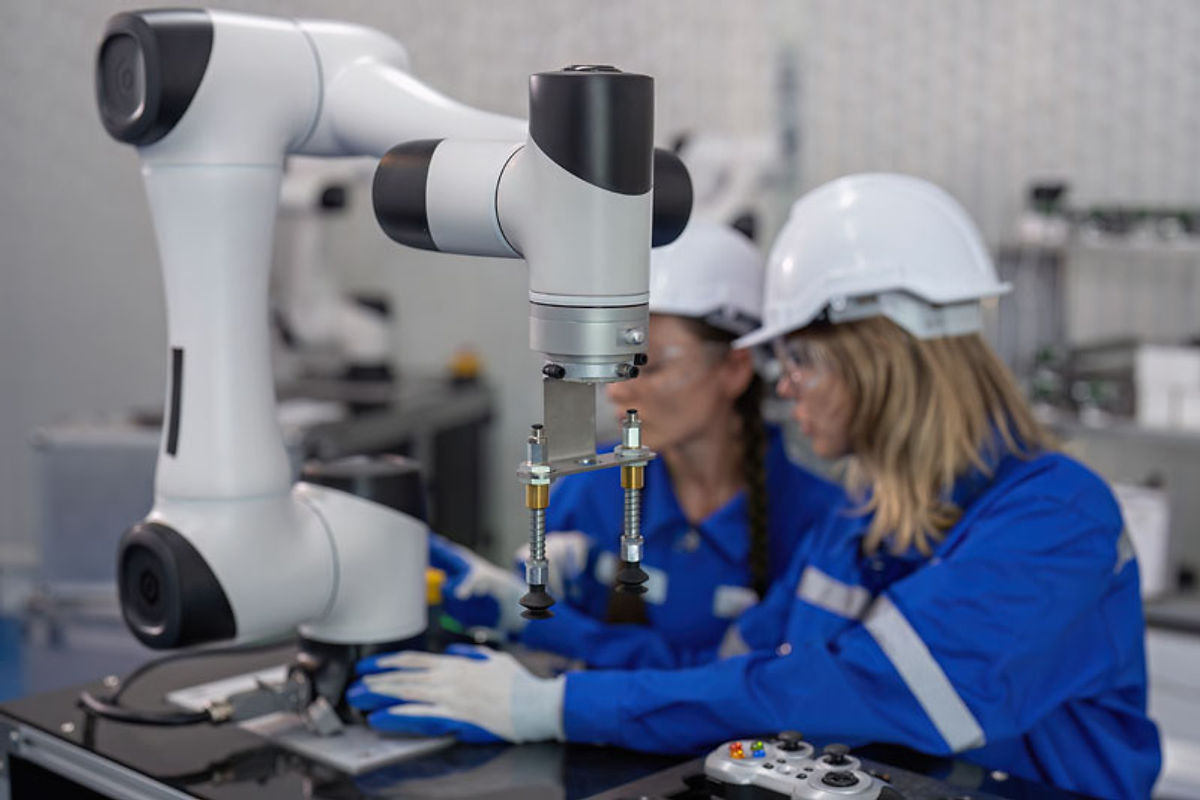
It is also referred to as a cobot and works together with humans in different industrial environments. It has tools that interact with the operators safely, such as touch screens, controllers, and human-machine interfaces. The robots use various sensors to detect unexpected human behavior and operate safely.
The huge difference between cobots and industrial robots is that industrial robots usually work from a fenced area away from humans, while cobots directly interact with people. However, they both share common parts, such as sensors, planners, and different mechanisms.
Advantages
Cobots are safe for humans to work with, unlike other industrial robots.
Cobots are easy to configure since they are adaptable to different applications.
These robots have a friendly user interface built based on human behavior.
Disadvantages
Cobot industrial robots undergo a rigorous approval process depending on the country, which can be lengthy.
Cobots require adequate space to ensure the people using them are safe.
Functions of Collaborative Robots
Handling fragile objects
Welding
Quality and inspection control
Palletizing
Pros of Industrial Robots
What do industrial robots do best?
There is a connection in every aspect of the manufacturing process, making it easy to collect information.
Robots boost the production level in any working environment by assisting people in the manufacturing industry to produce more with the same number of resources.
Increased load capacity since manufacturing robots have a higher power than humans and reduce work hazards, thus improving safety in a working environment.
Cons of Industrial Robotics
What challenges do industrial robots present?
The price tag isn’t accurate since there are a lot of hidden expenses after integrating industrial robots, such as maintenance expenses.
Industrial robots are sometimes dangerous for use on the factory floor, and some older models lack the sensory capacity to detect humans around.
What Is the Future of Robots in Industrial Automation?
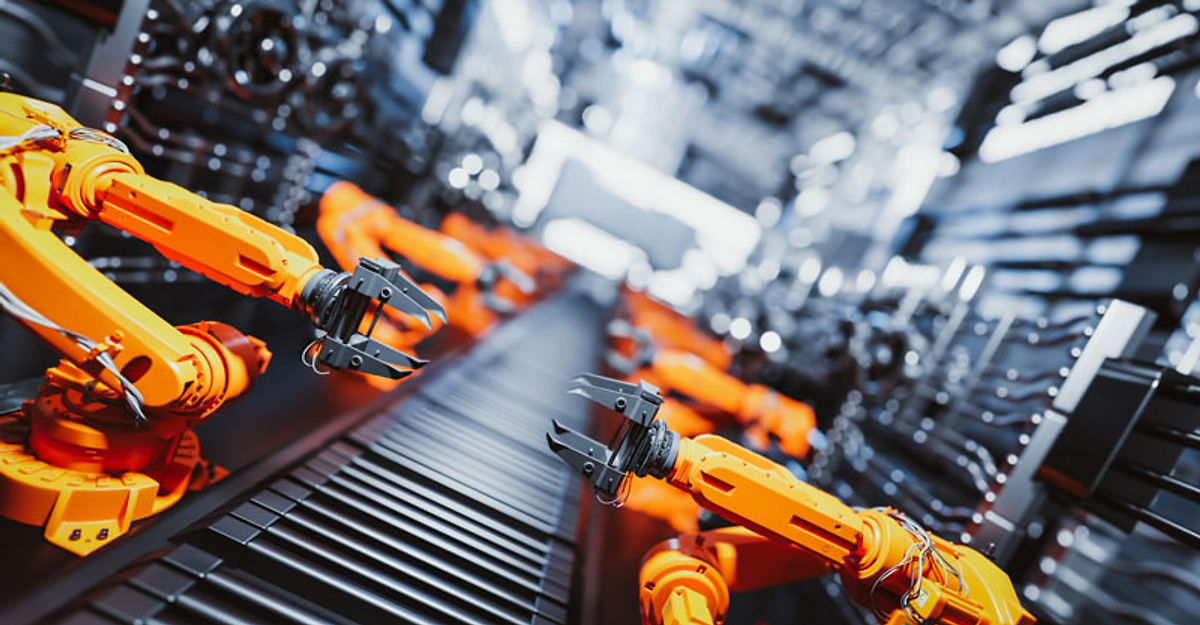
Factory robotics is constantly evolving, and with the increase in skills and labor shortages, this evolution will not stop anytime soon.
With time, this technology will become more accessible and affordable than ever, which is great news for small manufacturing businesses. Robots will adapt to producing high-quality goods and services backed by automation services and artificial intelligence.
Based on a report from McKinsey, machines and automation will shift how people work, reducing activities that require manual and physical skills by 18% and those requiring cognitive skills by 28%.
In the future, robots in industry won’t just revolutionize factories. They’ll also help with household chores like cooking and cleaning, freeing up time for other pursuits.
Conclusion
Industrial robots are essential for performing repetitive tasks more quickly and reliably than humans. Because they’re programmable, they can easily integrate with new technologies, driving the next generation of manufacturing.
What are industrial robots? They are the future of production—tools that work without supervision, enabling uninterrupted, efficient manufacturing.
Read more here about robots, robotic sensors, and the different robotic accessories you might want to invest in.
Bota Systems and Their Force Torque Sensors
Bota Systems is a leading provider of high-precision force torque sensors designed to enhance the capabilities of industrial and collaborative robots.
Their sensors enable robots to sense and respond to subtle forces and torques in real time, making delicate tasks like polishing, assembly, and quality inspection safer and more precise. By integrating Bota Systems’ advanced sensing technology, manufacturers can improve process consistency, reduce errors, and enable robots to handle complex interactions that traditionally required human dexterity.
Learn more about Bota Systems and discover the right force torque sensor for your automation needs.