Have you ever thought about using robots for the world’s dirtiest or most dangerous jobs?
In one remarkable application, an autonomous robot is navigating the sewer systems of Zurich—not just seeing, but feeling its environment through a sense of touch.

Why Do Robots Need a Sense of Touch?
Humans rely on five primary senses—sight, hearing, smell, taste, and touch—to perceive and interact with the world. When it comes to tasks like inspection, recognition, and manipulation, sight and touch are especially crucial.
When visual data is limited or unavailable, tasks become more difficult. But tactile feedback allows us to gather key details such as texture, hardness, size, and weight. Even without sight, we can recognize objects by touch alone.
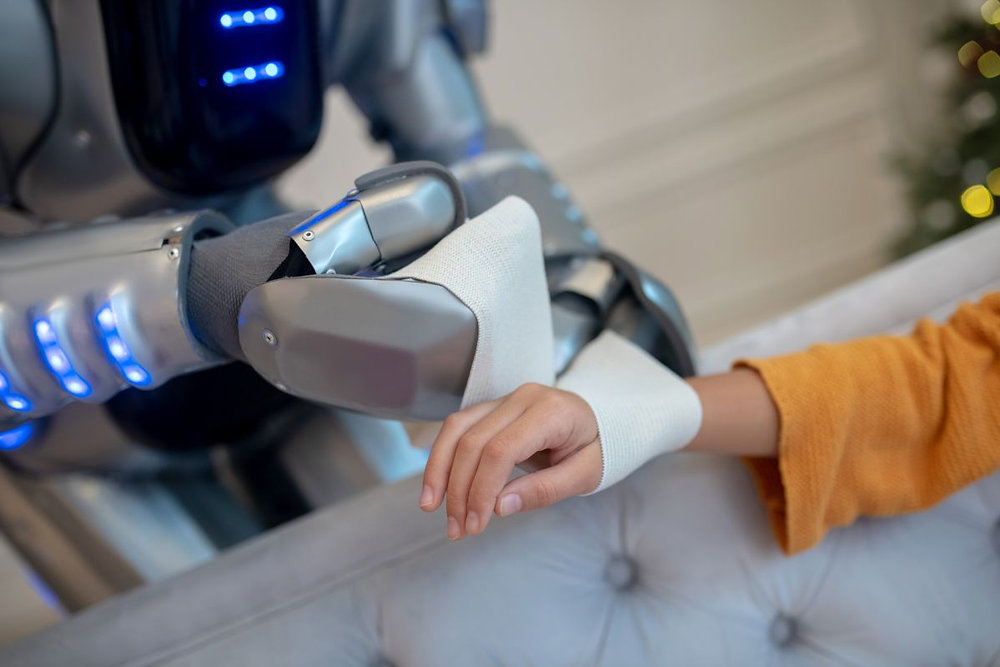
This same principle applies to robotics: giving robots the ability to “feel” enhances their capability in unstructured or low-visibility environments.
Sewer Inspection with a Quadruped Robot
In a real-world application, a quadruped robot is used to inspect aging sewer infrastructure in Zurich. Each of the robot’s feet is equipped with Rokubi force/torque sensors from Bota Systems, giving it a powerful sense of touch.
As the robot walks, it interacts with the sewer floor and identifies structural deterioration—such as damaged or weakened concrete—that signals the need for maintenance.
With thousands of kilometers of sewer lines to monitor, automating these inspections offers huge benefits:
Reduced human exposure to hazardous environments
Faster inspections with consistent data collection
Improved maintenance planning based on precise tactile feedback
For experimental results, see this publication [1].
UAVs with Force Feedback for Inspection
Sewer systems aren’t the only environments where tactile sensing can improve robot performance. Unmanned Aerial Vehicles (UAVs) equipped with force-torque sensors are also proving valuable in complex inspection tasks.
Applications include:
Bridge and building surface inspection
Ship hull and pressure vessel monitoring
Wind turbine and power plant evaluation
An omnidirectional UAV, equipped with a Rokubi sensor, can perform contact-based inspections. The force sensor allows it to:
Detect contact with surfaces
Measure interaction forces
Limit applied pressure to avoid damage
This enables the UAV to interact delicately with structures, even at odd angles or in hard-to-reach places—improving inspection reliability and safety.
For experimental results, see this publication [2].
Why Choose Bota Systems Force Torque Sensors?
Bota Systems develops high-performance force torque (FT) sensors tailored for lightweight robotic systems, including UAVs and mobile platforms operating in harsh or dirty environments.
Key benefits include:
Impact resistance for rugged tasks
High accuracy for delicate force measurement
Easy integration with standard robotic systems
Compact and lightweight design
Whether you’re building mobile robots for field service or aerial manipulators for precision inspection, our sensors deliver reliable, real-time force feedback.
Get in touch with our team to discuss your project, request a demo, or explore how our sensors can accelerate your development and start building robots that feel the world.
Publications:
[1] H Kolvenbach, G Valsecchi, R Grandia, A Ruiz, F Jenelten, M Hutter, “Tactile Inspection of Concrete Deterioration in Sewers with Legged Robots”, 12th Conference on Field and Service Robotics (FSR 2019).
[2] Karen Bodie, Maximilian Brunner , Michael Pantic, Stefan Walser , Patrick Pfandler , Ueli Angst , Roland Siegwart and Juan Nieto, “An Omnidirectional Aerial Manipulation Platform for Contact-Based Inspection”, Robotics: Science and Systems 2019 15 (19).