
Automation technologies and the integration of robotics in supply chains have greatly improved how companies operate. There has been an increased demand to revolutionize how goods move from one point to another. The goal has been to ensure timely deliveries and manage the costs while offering optimal customer service.
Logistics robots have been the ideal solution for supply chain automation while maximizing your products’ safety. According to Precedence Research, the global logistics robotics market in 2023 was valued at $8.78 billion.
It is meant to surpass $39.55 billion by 2033, giving it a 16.24% compound annual growth rate (CAGR) between 2024 and 2033. Here, we shall explore what logistic robots are, what’s causing the increased use of logistic robotics, and how beneficial they could be to your business.
What Are Logistics Robots?
Robotics in logistics involves introducing automated methods that help organize and care for products from one phase to the next, thus increasing the flow of goods in your warehouse. Unlike manual labor, these solutions are primarily valuable for warehouses, offering your company significant improvement.
It leads to productivity gains and substantial profitability in your enterprise. One example of logistic automation is using automated guided vehicles (AGVs) in transportation and warehouse facilities. AGVs are critical in streamlining your supply chain and reducing the logistics costs.
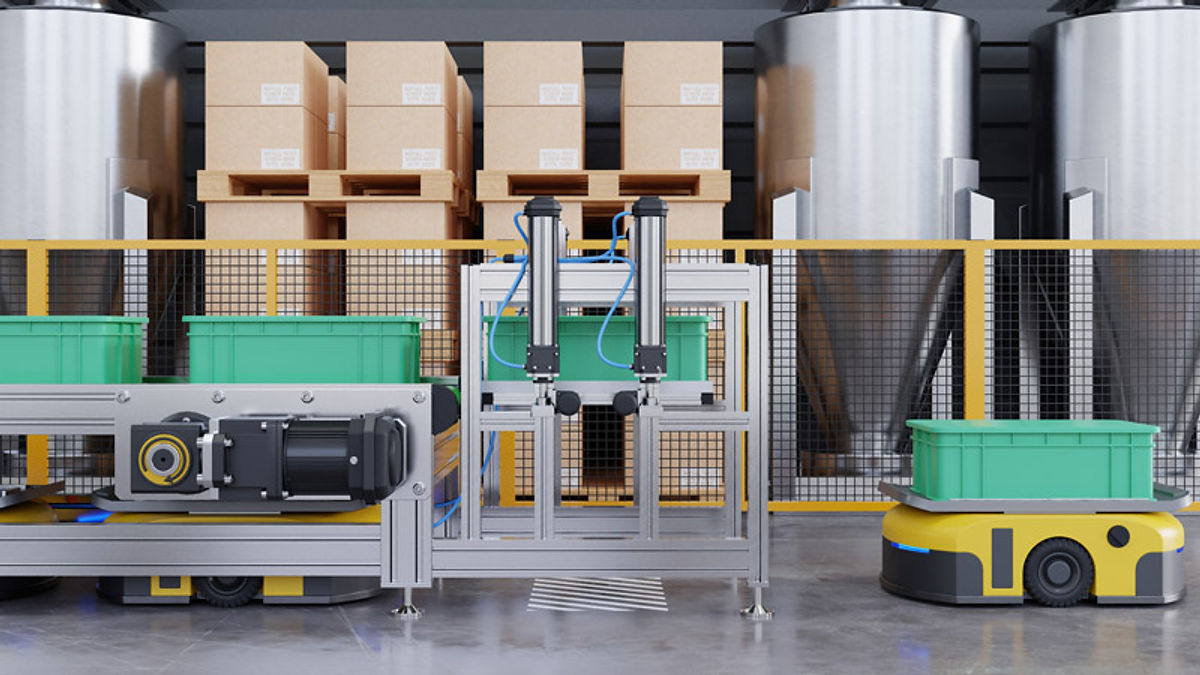
Types Of Logistic Robotics
The advancement in the warehouse industry has improved thanks to the availability of different robots to perform different warehouse tasks. These machines increase efficiency by taking the quickest route to transport goods and keeping employees safe. Here are the types of warehouse robots:
Picking Robots
These machines are equipped with a vision system and arms to make it easy to pick and place different items in the right place within the warehouse. Such robots in logistics have a gripping element, allowing them to handle goods without errors.
Storage Robots
These machines travel up and down the aisle in a warehouse, thus assisting in slotting and removing products from the racks.
AGVs and AMRs
Automated guided vehicles (AGVs) and autonomous mobile robots (AMRs) are essential tools in a warehouse, with the main difference being the navigation system used.
AMRs are equipped with AI to move items without human intervention. On the other hand, AGVs travel along a defined wire or laser-guided system when moving items within the warehouse.
UAVs and Drones
Unmanned aerial vehicles (UAVs) are a recent adaption in warehouse logistics robots, and their promising abilities are incredible.
Such a solution will help companies provide fast deliveries and reduce costs. The Global Drone Logistics and Transportation Market is valued at $11.20 billion, with a growth projection of $29 billion by 2027.
Medical Robots
Logistic robots help transport laboratory specimens, medicine, and other hospital supplies.
Collaborative Robots (Cobots)
These advanced robotic systems work alongside humans in a warehouse. Most have cobot sensors and safety features such as force and power limits. The equipment helps perform different quality checks and pack the products.
Goods-to-person Robots
These machines deliver selected items to the warehouse operators, thus removing the need to go to a warehouse. The logistic automation robots include conveyor belts and cranes, best used in warehouses with high volume orders.
Automated Labeling Robots
Robotic transportation isn’t the only thing most people need to know. There is also a need to handle the labeling process automatically.
Such machines help the operators automatically label products in a warehouse, ensuring precision applicators are put in the desired spot every time. The robots have sensors and cameras to ensure everything runs smoothly in the warehouse.
Benefits Of Robotics In Supply Chain
Most organizations are considering implementing automated solutions in their companies to increase agility and productivity.
CEOs are rapidly investing in automated methods to streamline their supply chains, with 89% reporting that critical investments in supply chains should include generative AI capabilities.
Automation is what drives growth in most companies. Here are the possible benefits of automating your supply chain:
1. Increase Your Inventory Visibility
Automation is the stem for all the visibility you need for your products. Your company will avoid overstocking products that might become obsolete with time. You will also ensure there is no understocking in your enterprise.
2. Sustainability Goals
The ideal way to achieve your sustainability goals is through automation. Robotic transportation, for instance, enhances optimized routes, reduces emissions, and cuts down on transportation costs. It also allows you to utilize your space and fully organize your products.
3. Remote Connections
You can view the robots’ work from any part of the world. Some of the logistic robots do not need human intervention during operations. Therefore, you can leave your job and still handle the aspects of your business.
3. Inventory Management
Robots in warehousing are ideal for managing inventories, ensuring safety, and better control. Poor inventory management is one of the most significant risks in most companies, and it could lead to shipping errors and incorrect stocking errors.
Drones allow for accurate and updated inventory in real-time by reviewing the tasks and costs and identifying the mistakes.
4. Order Shipments
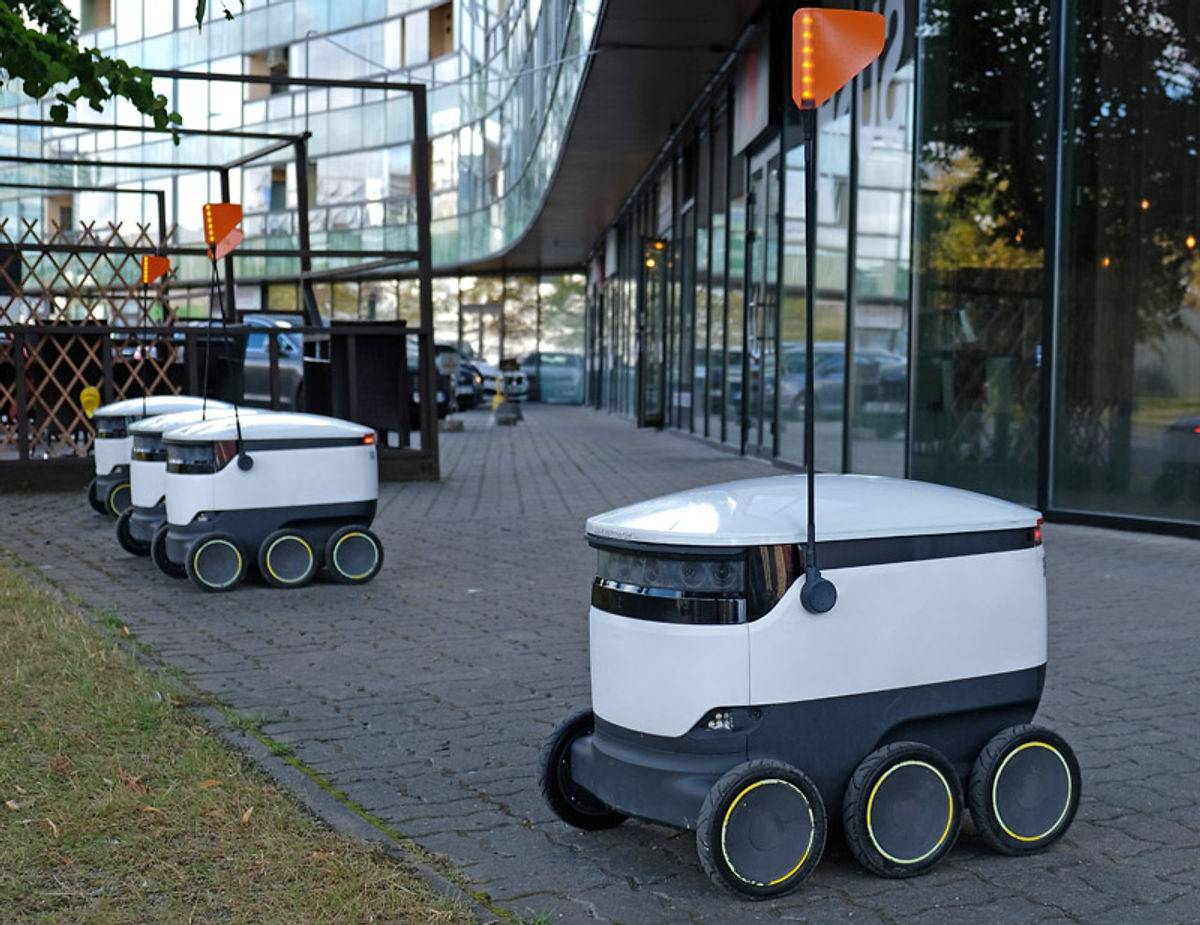
Robots in the supply chain are helpful in warehouses and other sections of product movement. Drones and autonomous vehicles are crucial in shipping small orders or large goods to different customers.
A controller can review the vehicle’s signals and follow everything in real time, ensuring customer satisfaction. Companies such as Amazon, UPS, and Domino’s Pizza have experimented with small delivery robots to improve their logistic system in their warehouse.
Amazon is the best example of a company that has successfully integrated robots into its supply chain management. The giant company employs over 200,000 robots alongside human employees to assist with picking, packaging, and shipping.
Robotics applications in different industries and their logistics
Mobile robotics have been a game changer in most industries, offering productivity and efficiency. The number of robots in the supply chain will hit 158,000 units in 2022, with staff shortage being the most significant reason for logistic automation. Many of these robots were meant for different industries, as indicated below:
Hospitality: Robot use grows, with more than 24,500 units sold in 2022. Most of the robots in this industry help provide information and telepresence.
Medical Robots: There were about 4,900 units of surgical robots sold, with 3,200 sold for non-invasive procedures.
Agriculture: There was increased growth of 18%, with about 8,000 units shipped in 2022 for agricultural use. Over 5,800 units sold in this sector focused on milk and barn cleaning services.
Professional Cleaning: Floor cleaning robotics grew with a 10% increase in selling to 4,900 units.
There was also an increment in robotics use in gardening, such as lawn mowing services, with over 1.1 million units sold in 2022. Besides education and social interaction, robots were also on sale, indicating that the growth isn’t limited to the industrial robots alone but expanding to the rest of people’s daily lives.
Considerations In Choosing The Right Warehouse Logistic Robots
When selecting the ideal robots in warehousing, some key factors can make the process easy and straightforward, as indicated here:
Have the proper navigation and safety controls.
The robots should have an integration process, allowing your company to incorporate these machines into your warehouse.
The operating environment should be ideal as it impacts your robot’s performance and durability.

Should Robotic Transportation Be A Cornerstone Of Your Business?
The simple answer is yes. Robots make work easy and efficient by reducing the workload among your staff and ensuring there is no room for errors. Different types of logistic robots are beneficial to the supply chain.
Although companies still have a long way to go before robotic transportation becomes a full-time thing in enterprises, there are still significant achievements that technology has achieved, and their impact cannot be ignored.
Force Torque Sensors For Logistics Robots
Force torque sensors play a critical role in enhancing the capabilities of robotic transportation systems. These sensors provide precise measurements of force and torque, enabling robots to handle delicate and complex tasks with improved accuracy and safety.
By integrating force torque sensors, logistic robots can better adapt to varying load conditions, ensuring the secure and efficient transport of goods within the supply chain.
Robots equipped with force torque sensors reduce workload, minimize errors, and increase operational efficiency. Contact us to explore cutting-edge robotic solutions that can elevate your business operations.