Assembly is a critical part of the manufacturing workflow. It is the stage where various components are combined to make a product whole. It is a critical stage that determines whether products meet quality standards or are rejected.
Since assembly is a delicate process, it must be done accurately. That’s where assembly line robots come in handy. These robots can perform various tasks with utmost precision and streamline your operations.
It’s no wonder the worldwide global-to-human-robot ratio was 1:71 in 2023, a ratio that’s gradually expected to change as more companies integrate robots into their operations. But are assembly robots right for your business?
Here, we’ll explore the various types of assembly line robots and their applications. We will also evaluate the advantages and disadvantages of integrating them into assembly lines.
What Is An Assembly Line Robot?
An assembly or production line robot is a programmable machine designed to perform various tasks along a production line, replacing or complementing human workers. Some of these tasks include screwing, welding, and packaging.
While the composition of assembly line robots varies depending on their design and purpose, here are the core components most assembly robots share:
A robot arm: This is a mechanical part that extends the robot’s reach and flexibility.
End effector: This is a tool attached to the end of the robotic arm to enable the robot to pick up the parts it needs to assemble.
Sensors: Sensors act as the robot’s eyes and ears, providing guidance on where objects are, how much force to apply when installing parts, and how to position parts correctly.
Controller: This is the brain of the robot. It interprets pre-programmed instructions and delivers signals to operate the arm and end effector.

Types of Assembly Line Robots
There’s no one-size-fits-all assembly line robot. There are various types, each with unique qualities. Here are some of the most common types:
1. Articulated Robots
Articulated robots have rotating joints that allow them to move in multiple directions. With anywhere from two to ten joints, articulated robots excel in tasks requiring exceptional precision and flexibility, such as welding car parts, painting complex designs, and material handling.
Their adaptability makes them suitable for various applications, especially where complex movements are required. As a result, articulated robots are the most common type of assembly robot used in robotic assembly, accounting for over 60% of industrial robot shipments as of 2017.
However, articulated robots are slower than other robots due to their multiple joints. Nonetheless, what they lack in speed, they make up for by being able to lift heavy objects and access hard-to-reach areas to install components.
2. SCARA Robots
SCARA (Selective Compliance Assembly Robot Arm) robots have a unique arm structure with two or three rotational joints. This design makes them ideal for high-speed, high-precision applications in a horizontal plane, like pick-and-place tasks, packaging products, and applying adhesives.
However, while they excel in fast, repetitive tasks, SCARA robots can’t handle heavy payloads.
3. Delta Robots
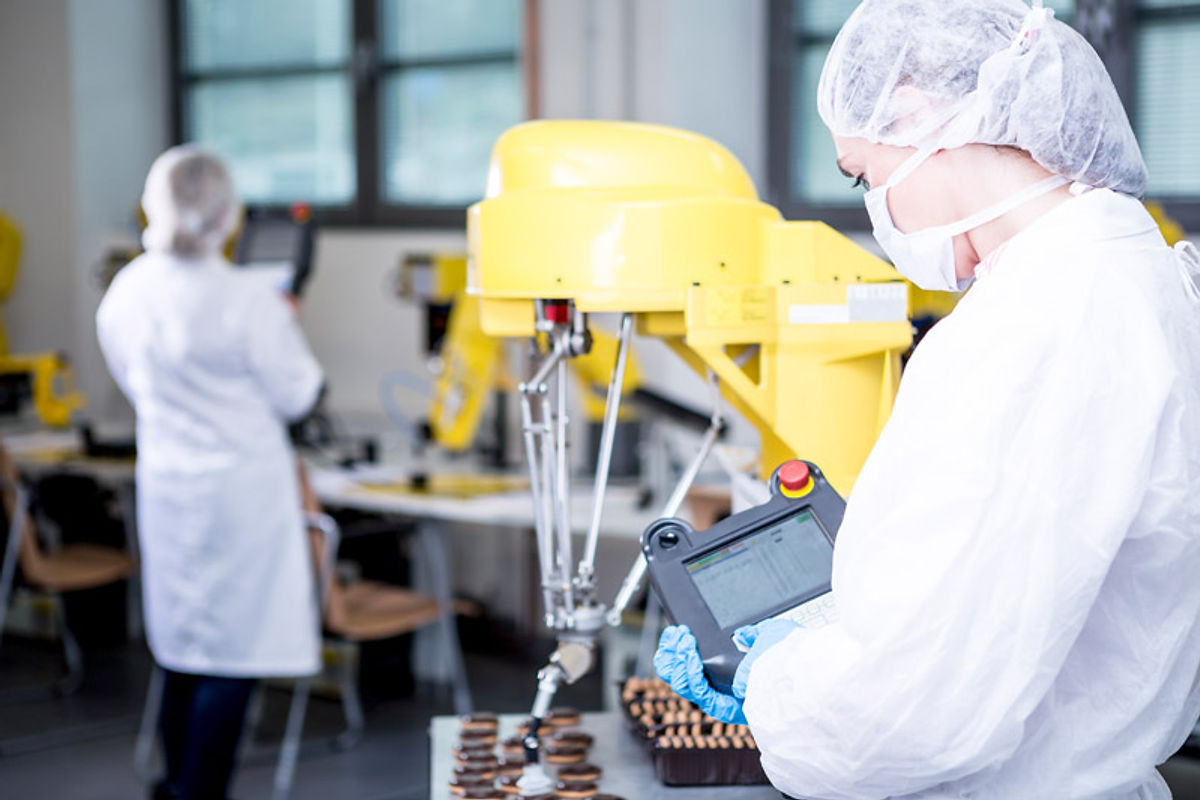
Delta robots have a distinct triangular structure with three arms that move vertically. When integrated into assembly lines, delta robots are mounted overhead. This gives them better stability and reduces the force exerted on them when they’re lifting parts during assembly.
This makes delta robots perfect for tasks that require quick, repetitive motions, such as packaging, sorting, and material transfer. As a result, delta robots are ideal for high-speed production lines where time is of the essence.
However, due to their structure, delta robots can’t handle heavy payloads.
4. Collaborative Robots
Collaborative robots or cobots, as the name implies work collaboratively with human workers. They are typically smaller, lighter, and have safety features that allow them to operate safely alongside human workers.
Cobots are versatile and intuitive and can assist with various tasks, such as fastening, drilling, or retrieving components.
As the worldwide demand for robots increases in the logistics and e-commerce industries, the global market for cobots is forecasted to expand from $1.9 billion in 2024 to $11.8 billion by 2030, representing a compound annual growth rate (CAGR) of 35.2%.
Applications of Assembly Robots
Assembly line robots are used in various industries. As a result, their use cases vary from industry to industry. Here are some common applications of production line robots:
Automotive Manufacturing
Vehicles consist of many parts that vary in size. Robots are integral to the car assembly process and it’s estimated there are more than 1,400 industrial robots for every 10,000 employees in the automotive industry.
Assembly robots consolidate these parts, performing tasks such as welding body parts, installing windshields, and painting car frames.
Articulated robots are especially common in the automotive industry because of their ability to access hard-to-reach areas and install delicate components with remarkable precision.
Electronics Industry
Manufacturers in the electronics industry often handle components smaller than a grain of rice, such as integrated circuits, transistors, and capacitors. Assembly line robots can handle and assemble these tiny parts with remarkable precision. Robots are critical to the assembly of these components, and as of 2023, the electronics industry had the highest robot market share after the automotive industry.
They are pivotal in placing components on circuit boards, applying adhesives, and performing intricate soldering tasks.
SCARA robots are especially common in the electronics industry because they handle repetitive tasks quickly and accurately.
Food and Beverage Industry
Hygiene and speed are critical in the food and beverage industry. Assembly line robots can handle repetitive tasks quickly and hygienically, making them suitable for high-volume production lines in the food and beverage industry.
Assembly robots can meticulously fill bottles, label products, and ensure consistent product weights, among other tasks, making them perfect for the food and beverage sector.
Healthcare Industry
Assembly robots are used for various tasks in the healthcare sector, such as filling vials, packaging medication, and assembling delicate medical devices. Their precision ensures accurate dosage and handling while also maintaining the stringent hygiene standards required by the industry.
For instance, industrial robots are used to fill and close vials at Zellwag Pharmtech and to assemble medical syringes at the Farason Corporation.
E-Commerce Fulfillment
Speed is critical in the fast-paced e-commerce industry. In e-commerce, assembly robots are used in pick and pack operations, navigating warehouses to retrieve products and prepare them for shipment.
For example, American e-commerce giant Amazon has over 750,000 mobile robots scattered across its warehouses globally that handle various tasks, such as identifying products, retrieving them, and delivering them to designated stations.
Custom Product Assembly
Certain industries, such as bespoke manufacturing, require customized solutions. Assembly line robots can adapt to the unique needs of different production lines. Workers can program them to achieve particular tasks, ensuring they assemble products that meet customer’s specifications and preferences.
Advantages of Assembly Robots
Integrating assembly line robots into your operations can offer several benefits for your business. Here are some of their key benefits:
Increased Production Speed
Robots operate at high speeds that human workers can’t match. As a result, they can increase your production output and enable you to respond swiftly to spikes in demand, keeping you ahead of the competition.
Enhanced Product Quality and Consistency
Assembly robots work with utmost precision. Unlike human workers who might experience fatigue, resulting in inconsistencies, robots always deliver consistent, high-quality results. This consistency is crucial for maintaining brand reputation and customer satisfaction.
In fact, according to a Syracuse University study, workplaces that deployed one robot for every 1,000 workers decreased the Occupational Safety and Health Administration (OSHA) accident rate by 15.1%.
Enhanced Worker Safety
Assembly line robots alleviate human workers from potentially dangerous tasks such as lifting heavy objects, welding, or working with hazardous materials. This reduces the risk of workplace injury, boosts employee morale, and allows workers to take on more engaging and less physically demanding tasks.
Greater Flexibility
Modern assembly line robots are highly adaptable, as they can be reprogrammed to handle different tasks. This flexibility allows for quick adjustments to production lines to support the introduction of new products or changes in product design.
Reduced Labor Costs
While the initial purchasing and installation costs of assembly robots might be significant, the long-term savings can be substantial. In fact, it’s estimated robots can cut labor costs by nearly 18%.

Disadvantages of Assembly Line Robots
While assembly robots offer many benefits, integrating them into your operations can have downsides. Here are some drawbacks to consider:
High Initial Investment
Robots are a significant financial commitment, as they cost thousands of dollars. Beyond purchasing the robots, you may need to consider other costs like infrastructure changes, programming and staff training.
So, carefully weigh the potential long-term benefits against the initial investment to ensure it aligns with your budget.
Programming and Maintenance Requirements
Robots don’t work autonomously. You’ll need skilled personnel to program them for specific tasks and maintain them. Consider the cost of training or hiring robotics engineers before integrating them into operations.
Flexibility Limitations
Robots excel at various tasks. But if your industrial assembly line requires frequent changes, they might not be suitable. This rigidity could impede your operations.
Dependency
Relying heavily on automated systems can result in dependency, and operations can grind to a halt if a robot malfunctions. This can be a huge concern, especially if you work in an industry where high-speed assembly is critical.
Force Torque Sensors for Assembly Line Robots
In 2023, the assembly robot market was valued at $14,832.0 million, and it’s expected to reach a valuation of $44,446.9 million by 2033. As more manufacturers integrate assembly line robots into their operations, integrating force torque sensors is vital for staying competitive.
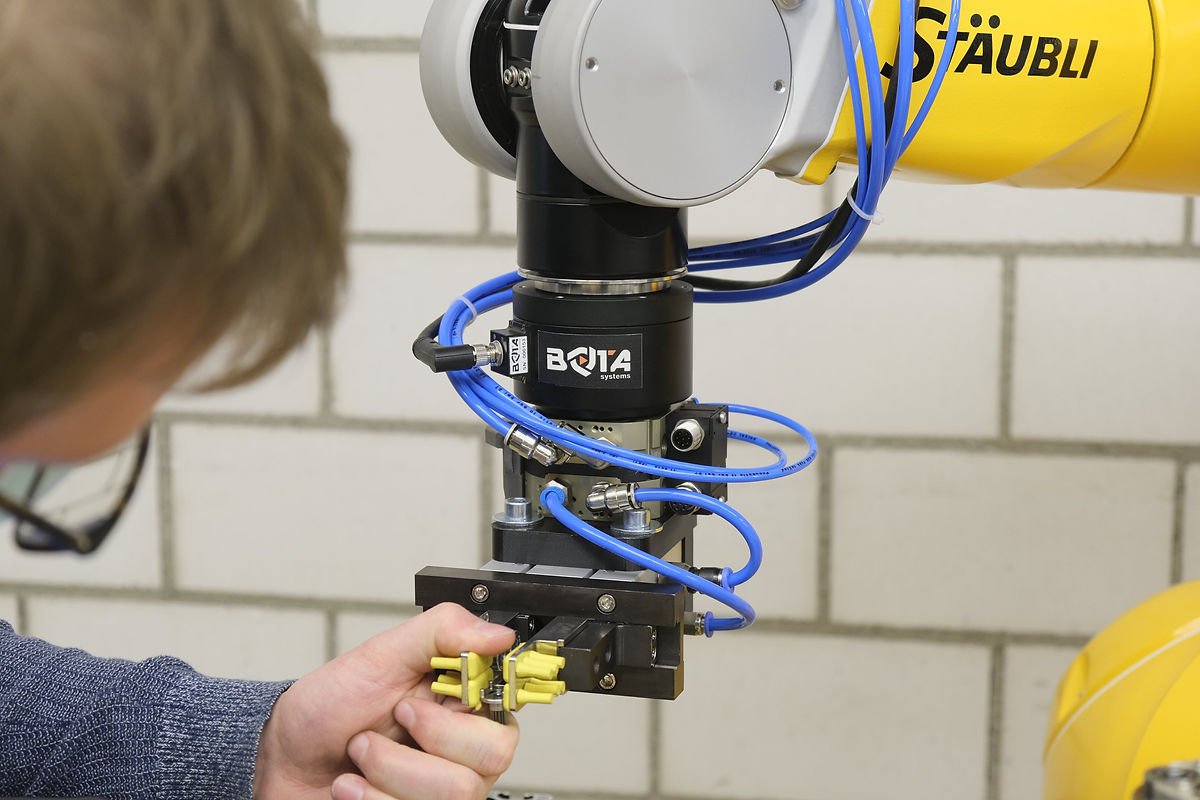
Force torque sensors provide real-time feedback to adjust movements based on force and torque. They ensure precise assembly, improve product quality, and enhance worker safety. As manufacturers invest more in automation, integrating force torque sensors will be crucial for staying competitive.
Contact us today, and we’ll help you choose the most suitable force torque sensor for assembly line robots.