
Automation has become a cornerstone of modern manufacturing, with robots taking over tasks that demand speed, accuracy, and consistency. One of the most widely used—and often underrated—industrial robots is the SCARA robot.
Known for its rapid cycle times and precise assembly capabilities, the SCARA design strikes a unique balance between efficiency and simplicity, making it a go-to solution for high-volume production.
What is a SCARA Robot?
The term SCARA stands for Selective Compliance Assembly Robot Arm. It refers to a type of industrial robot designed for fast, precise, and repeatable movements, especially in assembly and pick-and-place tasks.
Unlike fully flexible six-axis arms, the SCARA arm offers selective compliance:
Rigid in the vertical axis – ensuring stability and accuracy.
Flexible in the horizontal plane – allowing for smooth, high-speed insertion and assembly.
This makes SCARA robots ideal for operations like fitting parts together, packaging, and material handling.
SCARA Robot Design and Structure
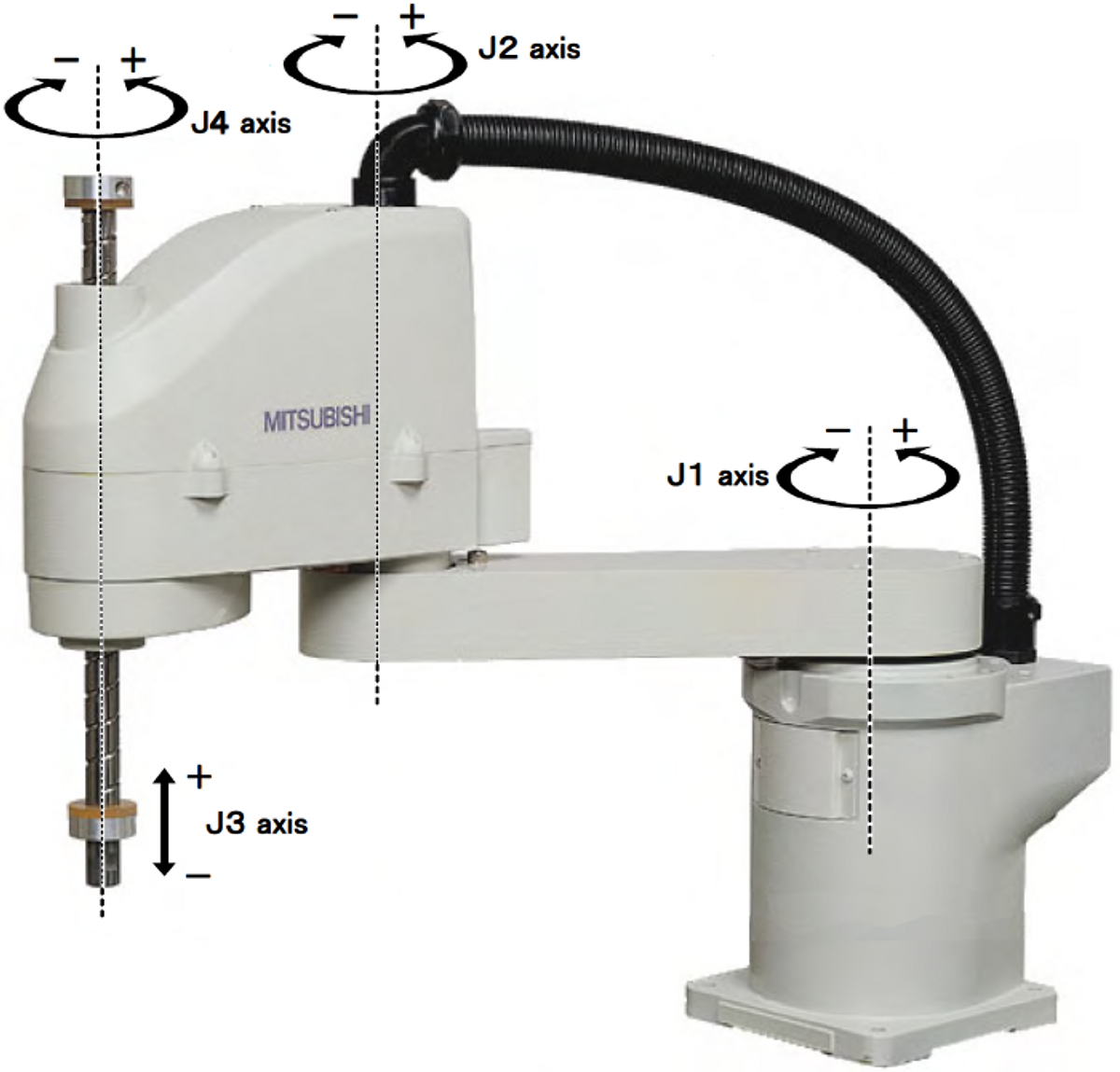
A typical SCARA robotic arm consists of:
Base: Mounted on a surface, it anchors the arm.
Two parallel rotary joints: Provide movement within a horizontal plane.
Vertical movement axis: Enables up-and-down operations.
End effector (gripper or tool): Performs tasks such as picking, placing, screwing, or soldering.
The SCARA manipulator design makes it highly efficient for repetitive and delicate movements, reducing cycle times in production.
Materials Used in SCARA Robots
The materials used in SCARA robot design depend on the manufacturer and application. Common construction materials include:
Aluminum alloys for lightweight strength.
Steel for durability and rigidity.
Composite materials for high strength-to-weight ratios.
Lightweight materials are especially important because less inertia = faster, smoother movements.
Why SCARA Robots Are So Fast
The efficiency of SCARA robots comes from their streamlined architecture. With selective compliance, the arm is stiff in the vertical axis but flexible in the horizontal plane. This selective motion reduces unnecessary movement, resulting in extremely fast and smooth operations.
By limiting degrees of freedom to only what is needed, SCARA robots can complete tasks in fractions of a second, outperforming more complex robotic systems in repetitive assembly tasks.
Modern SCARA systems also integrate force-torque sensors, such as those developed by Bota Systems, to achieve even greater precision. These sensors provide real-time feedback on contact forces, enabling robots to:
Insert delicate parts without damage.
Compensate for misalignment.
Perform tasks like force-controlled assembly, polishing, or testing.
This combination of speed and sensing makes SCARA robots extremely versatile in advanced manufacturing.
SCARA Robot Applications
The speed and precision of SCARA robots make them ideal for various industries. Here are some common applications:
Application | Examples / Industries |
Assembly | Small parts assembly in electronics, automotive, consumer goods |
Pick-and-place | Rapid sorting and packaging of products |
Material handling | Moving components between workstations |
Soldering and gluing | Precision electronics manufacturing |
Because of their compact design and reliability, SCARA robots are especially popular in electronics and medical device manufacturing.
See SCARA robots in action:
SCARA vs. Other Robots
Robot Type | Strengths | Weaknesses |
SCARA | Very fast, precise, compact, cost-effective for 2D tasks | Limited flexibility, lower payloads |
Six-axis arm | High versatility, complex 3D movements | Slower, larger footprint, higher cost |
Cartesian | High precision in straight-line tasks | Limited speed and flexibility |
Delta | Extremely fast pick-and-place | Limited payload, smaller work envelope |
If you need speed and precision in 2D assembly, SCARA usually wins. If you need complex 3D motion, a six-axis robot is better.
Benefits of SCARA Robots
SCARA robots deliver several advantages that make them highly valued in industrial settings:
Speed: Their limited axes of motion allow for lightning-fast cycle times, making them perfect for high-volume production lines.
Precision: With excellent repeatability, SCARA arms ensure consistent quality in delicate operations such as circuit board assembly.
Compact footprint: Their streamlined design saves valuable floor space in manufacturing environments.
Cost-effectiveness: Compared to more complex six-axis robots, SCARA systems provide outstanding performance for 2D tasks at a lower investment.
Ease of integration: They can be seamlessly incorporated into existing automation lines with minimal adjustments.
Limitations of SCARA Robots
While versatile, SCARA robots are not suited for every task:
Limited flexibility: They are designed mainly for 2D operations, and struggle with tasks requiring complex 3D movements.
Restricted range: Their reach is smaller compared to articulated arms, making them less suitable for large workspaces.
Payload limitations: SCARA robots are typically designed for lightweight to moderate loads, and are not ideal for heavy-duty lifting.
Specialization: They excel in speed and precision for assembly but may fall short when broad versatility is required.
How to Choose a SCARA Robot
Choosing the right SCARA robot requires careful evaluation of operational needs:
Payload capacity: Match the robot’s strength to the weight of the items it will handle.
Reach: Consider the size of the workspace and the range the robot arm must cover.
Speed and accuracy: Ensure the model selected can meet the cycle time and precision your processes demand.
Integration compatibility: Check that the SCARA robot works smoothly with your existing automation and control systems.
Manufacturer support: Opt for reputable SCARA robot manufacturers that provide technical support, training, and long-term service.
By aligning these factors with production requirements, companies can maximize both efficiency and return on investment.
Final Thoughts

SCARA robots stand out for their speed, reliability, and precision in assembly and handling tasks. They are a vital tool in industries that rely on high-volume production and accuracy, such as electronics, automotive, and medical devices. Their compact design and cost-effectiveness make them one of the most popular robotic solutions worldwide.
When enhanced with force-torque sensing technology from Bota Systems, SCARA robots gain the ability to handle not only speed and repeatability but also sensitive, force-controlled operations—further expanding their role in smart factories.
Ready to enhance your automation with advanced force-torque sensing? Contact Bota Systems today to learn more.